


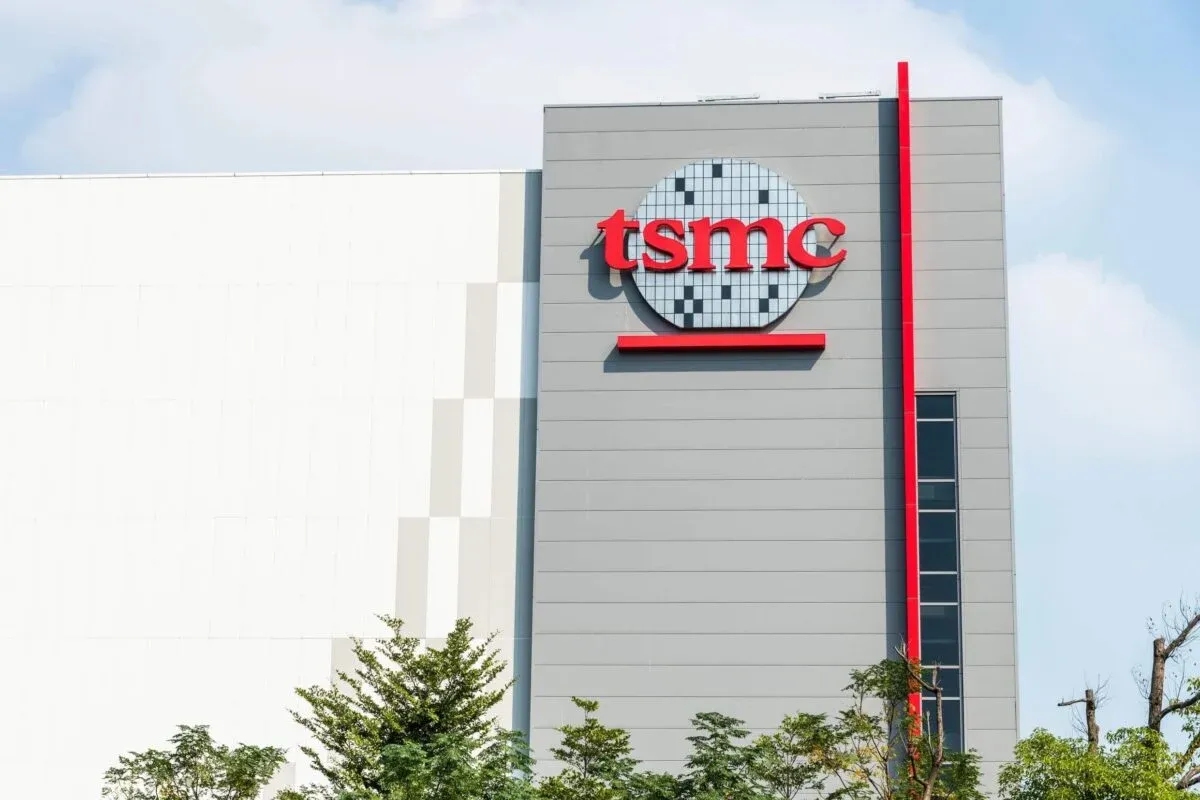
Key Highlights
- For the first time in more than ten years, AI processors have replaced smartphones as the primary revenue catalyst for TSMC
- Nvidia’s contribution to TSMC’s total revenue has reached approximately 19%, surpassing Apple’s 17% share
- February revenue hit NT$317.66 billion (~$10.1 billion), marking a 22.2% increase compared to the previous year
- The opening two months of 2026 show nearly 30% year-over-year growth, representing the company’s most robust off-peak performance on record
- TSM shares currently trade at approximately 23x forward earnings, with analyst consensus targeting $423.50—suggesting potential upside exceeding 24%
For more than a decade, Apple dictated TSMC’s operational rhythm. Every autumn brought a wave of iPhone component orders, and the semiconductor giant’s fortunes ebbed and flowed accordingly. That chapter has definitively closed.
Taiwan Semiconductor Manufacturing Company Limited, TSM
Artificial intelligence processors have now permanently displaced mobile devices as the central pillar supporting TSMC’s business operations. Industry analysts have dubbed this transformation the “Nvidia Flip.”
By the close of 2025, Nvidia had secured its position as TSMC’s primary revenue source, contributing an estimated 19% of total sales—narrowly eclipsing Apple’s 17% contribution. Nvidia has further locked in commitments exceeding $95 billion in orders extending through 2027.
This represents far more than a simple customer ranking shuffle. It signals a fundamental reconfiguration of TSMC’s entire operational model.

AI accelerators are physically larger, architecturally more intricate, and deliver superior margins compared to mobile system-on-chips. These advanced processors demand sophisticated Chip-on-Wafer-on-Substrate (CoWoS) packaging technology—a capability where TSMC maintains near-monopolistic control.
Every wafer manufactured for Nvidia’s Blackwell architecture or the forthcoming Rubin platform generates substantially higher profitability than equivalent mobile chip production. The iPhone-centric business model emphasized volume throughput. The Nvidia-driven paradigm prioritizes value extraction.
The financial results validate this strategic pivot. February’s consolidated revenue reached NT$317.66 billion (approximately $10.1 billion)—representing a 22.2% climb versus the comparable period twelve months earlier. Historically, February ranks among the weakest months due to post-holiday slowdowns and Lunar New Year disruptions.
This year defied that pattern entirely.
Unprecedented Performance During Traditional Slow Period
The combined January-February 2026 revenue shows growth approaching 30% year-over-year. This marks the most powerful start to any calendar year in TSMC’s corporate history.
Traditional semiconductor cycles mirrored consumer purchasing behavior—robust holiday quarters followed by dormant winter months. That cyclical pattern is disintegrating. Artificial intelligence infrastructure investment operates independent of seasonal fluctuations. Nvidia, Broadcom, and the dominant cloud infrastructure providers are locked in relentless competition, demanding maximum chip allocation from TSMC’s production capacity.
TSMC’s cutting-edge 3nm and 5nm manufacturing processes are operating at full capacity. The transition toward 2nm technology (N2) is progressing faster than originally projected, with production yields already achieving 65–75%—an exceptionally strong performance for such an early phase in new node development.
To maintain this accelerated pace, TSMC is elevating its 2026 capital investment to $56 billion.
Attractive Valuation Despite Strong Performance
Notwithstanding the stock’s impressive trajectory, TSM currently trades at approximately 23x projected earnings per share of $14.54 for the current fiscal year. This represents a reasonable valuation multiple for an enterprise commanding roughly 70% of the worldwide advanced semiconductor foundry market, while Samsung maintains approximately 7% market share.
Manufacturing processes at 7nm and smaller geometries now generate 77% of wafer-based revenue. High-Performance Computing—the segment encompassing AI acceleration hardware—currently represents 55% of quarterly revenue.
Wall Street maintains a Strong Buy consensus rating on TSM, with seven Buy recommendations and one Hold rating. The average analyst price objective stands at $423.50, indicating potential appreciation exceeding 24% from present valuation levels.
TSM currently trades near $340, positioned roughly 13–14% beneath its 52-week peak, partially attributable to oil price volatility stemming from ongoing Middle Eastern geopolitical developments.
Get 3 Free Stock Ebooks
Discover top-performing stocks in AI, Crypto, and Technology with expert analysis.
- Top 10 AI Stocks - Leading AI companies
- Top 10 Crypto Stocks - Blockchain leaders
- Top 10 Tech Stocks - Tech giants


