


TLDRs:
- Unitree Robotics completes pre-IPO regulatory review, moving closer to listing on China’s stock exchange.
- The company’s humanoid robots drive investor interest despite quadruped sales dominating revenue.
- China’s eldercare robot pilots create new opportunities for suppliers and AI tech firms.
- Unitree targets a US$7 billion valuation amid scaling challenges and commercialization risks.
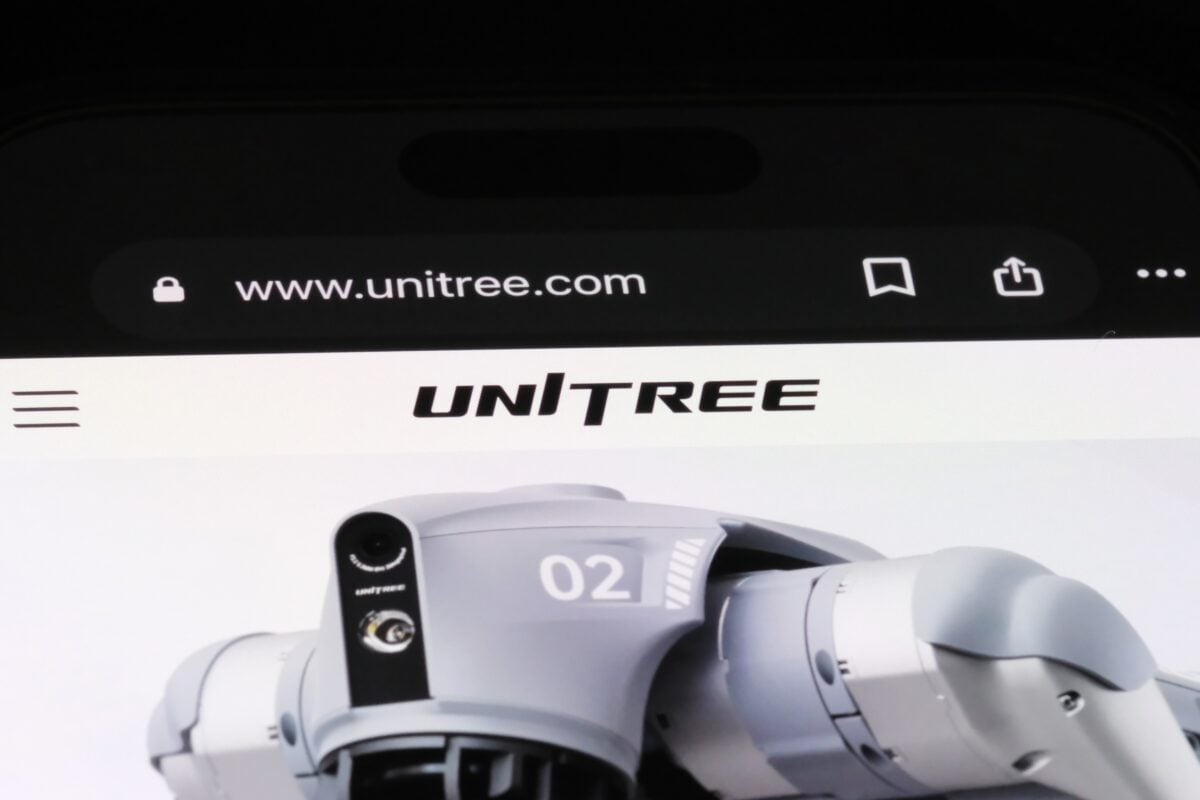
Unitree Robotics, a leading Chinese humanoid robot manufacturer, has taken a critical step toward an onshore initial public offering (IPO), completing its pre-IPO tutoring with the Zhejiang Securities Regulatory Bureau.
The milestone marks a pivotal moment in the company’s journey to expand its market presence and attract investors amid growing interest in robotics and artificial intelligence in China.
Pre-IPO Tutoring Completed Successfully
The pre-IPO process required Unitree to transition into a joint-stock limited company, a necessary step for public listings in China.
The company made this change in May 2025 and subsequently worked closely with Citic Securities, which oversaw regulatory compliance, corporate governance, and accounting systems.
While the filings did not disclose a specific fundraising target or anticipated listing date, the completion of pre-IPO tutoring is widely seen as a significant advancement for Unitree’s ambitions in the public markets.
Humanoids Take Center Stage for Growth
While Unitree’s quadruped robots remain the backbone of its revenue, accounting for roughly 70% of global shipments in 2024, investor focus has increasingly shifted toward the company’s humanoid models.

Unitree reported shipping over 400 units of its H1, H1-2, and G1 bipedal robots, which positions the company as a global leader in commercial humanoids. Compared to UBTECH Robotics, whose humanoid sales amounted to only RMB 35 million in 2024, Unitree’s humanoid portfolio represents a high-growth opportunity despite modest current revenue from this segment.
The company’s reported US$7 billion valuation underscores investor optimism that commercial breakthroughs in humanoid robotics could significantly outpace profits from quadrupeds. However, industry experts caution that scaling production and extending applications beyond research labs will be critical over the next three to five years to meet these ambitious expectations.
China’s Eldercare Pilots Boost Demand
Government-led initiatives are expected to provide a key growth catalyst for Unitree and its technology partners. Between 2025 and 2027, China’s Ministry of Industry and Information Technology, in partnership with the Ministry of Civil Affairs, will run pilot programs for intelligent eldercare service robots.
These initiatives are designed to create market demand for robotics subsystems and enabling AI technology.
Unitree produces 90% of its core components internally and offers cost-competitive models such as its Go2 quadruped priced at RMB 9,997, a fraction of the cost of comparable alternatives like Boston Dynamics’ Spot. The eldercare pilots offer an avenue for AI and cloud service providers to refine multimodal perception technologies, combining visual, audio, and tactile inputs to improve robot recognition and movement in live environments.
Market Valuation Signals Ambitious Targets
The IPO move aligns with Unitree’s broader strategy to cement its position as a leader in both quadruped and humanoid robotics. With profitability sustained for five years and revenue surpassing RMB 1 billion in 2025, the company aims to capitalize on growing commercial interest in humanoids, cost-efficient robotics, and intelligent service solutions.
While execution risks remain, particularly in scaling production and commercial deployment, the combination of internal expertise, government-backed pilots, and investor confidence positions Unitree as a company to watch in China’s rapidly evolving robotics sector.
As Unitree edges closer to its IPO, the industry will be observing not just its financial performance but also its ability to translate technological innovation into market-ready solutions that can meet China’s expanding demand for service and eldercare robotics.
Get 3 Free Stock Ebooks
Discover top-performing stocks in AI, Crypto, and Technology with expert analysis.
- Top 10 AI Stocks - Leading AI companies
- Top 10 Crypto Stocks - Blockchain leaders
- Top 10 Tech Stocks - Tech giants


