



TLDR
-
Major U.S. equity benchmarks declined as heightened geopolitical tensions in the Middle East prompted widespread selling across risk-sensitive assets.
-
Crude oil surged dramatically, with Brent temporarily pushing past the $82 mark before retreating slightly later in the session.
-
All three major indexes posted losses as market participants worried about rising inflation and potential energy supply shocks.
-
Energy producers and military contractors rallied while airline operators and technology shares faced significant headwinds.
-
Market attention has shifted toward inflation trajectories and the approaching employment report for further trading cues.
American equity markets experienced significant pressure as conflict escalated across the Middle East region. Risk appetite diminished sharply while petroleum prices climbed steeply.
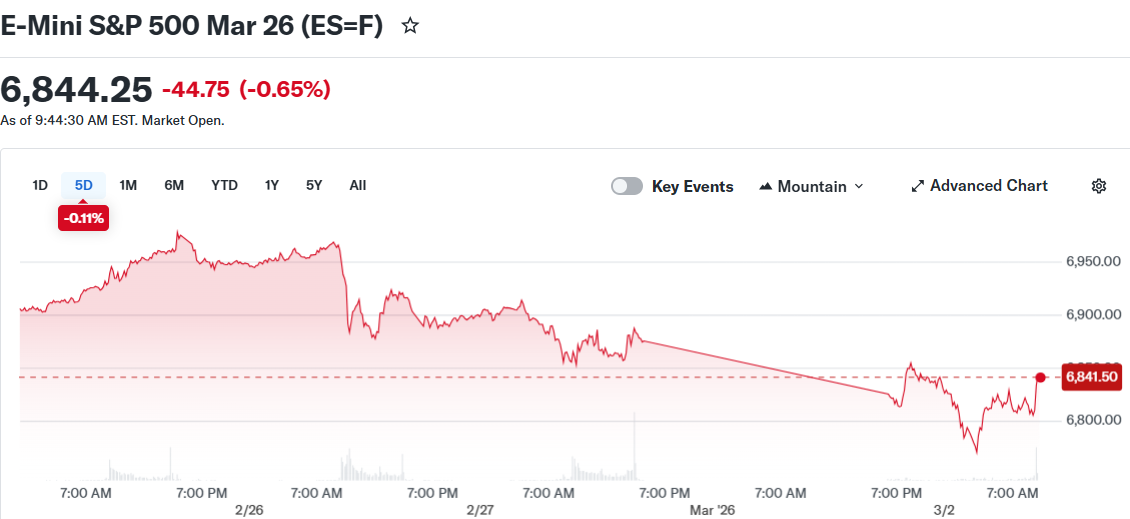
The Dow Jones Industrial Average shed over 500 points during the opening hours. Both the S&P 500 and Nasdaq Composite dropped approximately 1% amid heightened market turbulence.
The downturn emerged after military operations involving the United States, Israel, and Iranian forces. Retaliatory actions and warnings targeting critical energy facilities heightened investor anxiety.
Oil prices jumped considerably as market participants anticipated possible production interruptions. Brent crude temporarily spiked 13% beyond $82 before settling under $80 per barrel.
West Texas Intermediate saw similarly robust gains. Trading activity centered around $73, representing approximately an 8% advance.

Energy Markets and Inflation Pressures
The strategically vital Strait of Hormuz captured significant attention among commodity traders. Potential shipping interruptions through this critical waterway intensified supply worries.
Roughly 20% of worldwide petroleum output transits through this narrow passage. Reduced tanker movement has amplified concerns regarding tighter availability.
Elevated energy costs carry implications for broader price stability. Market participants are evaluating how persistent commodity strength might impact central bank decisions.
Government bond yields advanced throughout the trading day. Expectations for imminent Federal Reserve rate reductions diminished amid inflation worries.
Gold prices rose as portfolio managers rotated into defensive holdings. The greenback strengthened relative to other global currencies.
Sector Performance and Market Outlook
Energy sector equities advanced alongside rising crude. ExxonMobil posted gains while aerospace and defense contractors like Lockheed Martin attracted investor interest.
Transportation-linked companies struggled. Major carriers such as Delta Air Lines retreated on elevated jet fuel expense concerns.
The technology sector broadly underperformed. Artificial intelligence and enterprise software stocks experienced continued turbulence.
Fixed income securities weakened as yields expanded, mirroring inflation anxieties connected to elevated energy expenses. Portfolio rebalancing occurred across multiple asset categories.
The forthcoming employment situation report has emerged as a critical indicator. Analysts anticipate slower job creation relative to last month’s figures.
International markets remain highly reactive to Middle Eastern developments. Petroleum price trajectories and inflation dynamics continue shaping investment decisions.
Get 3 Free Stock Ebooks
Discover top-performing stocks in AI, Crypto, and Technology with expert analysis.
- Top 10 AI Stocks - Leading AI companies
- Top 10 Crypto Stocks - Blockchain leaders
- Top 10 Tech Stocks - Tech giants


