


TLDR
- Wendy’s (WEN) Q4 global system-wide sales dropped 8.3% and U.S. same-restaurant sales fell 11.3%, prompting the company to declare 2026 a “rebuilding year” under new turnaround plan Project Fresh
- The fast-food chain plans to close 5% to 6% of U.S. restaurants (roughly 298 to 358 locations) in the first half of 2026 as part of system optimization efforts
- International business continues growing with Q4 sales up 6.2% for the 21st straight quarter, 121 net new international restaurants in 2025, and development agreements for 338 future locations
- Wendy’s launched permanent Biggie Deals value platform priced at $4, $6, and $8 in January, moving away from limited-time discounting to compete for budget-conscious consumers
- Company guided 2026 to flat system-wide sales with adjusted EBITDA of $460-$480 million and adjusted EPS of $0.56-$0.60, while generating $205 million in free cash flow for 2025
Wendy’s (WEN) stock jumped 4% Thursday after the fast-food chain announced plans to close hundreds of underperforming U.S. restaurants while rolling out a permanent value menu to win back cash-strapped customers. The moves come as the company posted disappointing fourth-quarter results and labeled 2026 a “rebuilding year.”
The Dublin, Ohio-based burger chain reported global system-wide sales declined 8.3% in Q4 2025. U.S. same-restaurant sales fell 11.3%, driven by lower traffic that was partially offset by higher average checks.
The decline was worse than the 8.5% drop Wall Street analysts expected. Global same-store sales dropped 10% year-over-year in the October to December period.
Interim CEO and CFO Ken Cook attributed the weakness to lower marketing spend after front-loading advertising earlier in 2025. He also cited tough comparisons to the prior year’s SpongeBob collaboration and the decision to delay new chicken sandwich launches into 2026.
Chief Accounting Officer Suzie Thuerk reported total adjusted revenue of $439.6 million, down $19.7 million from the prior year. Adjusted EBITDA came in at $113.3 million with adjusted EPS of $0.16.
U.S. company-operated restaurant margin fell to 12.7% due to traffic declines, commodity inflation, and labor rate inflation. U.S. digital sales grew 2% year-over-year and digital mix reached an all-time high of 20.6% in the quarter.

Closing Hundreds of Restaurants
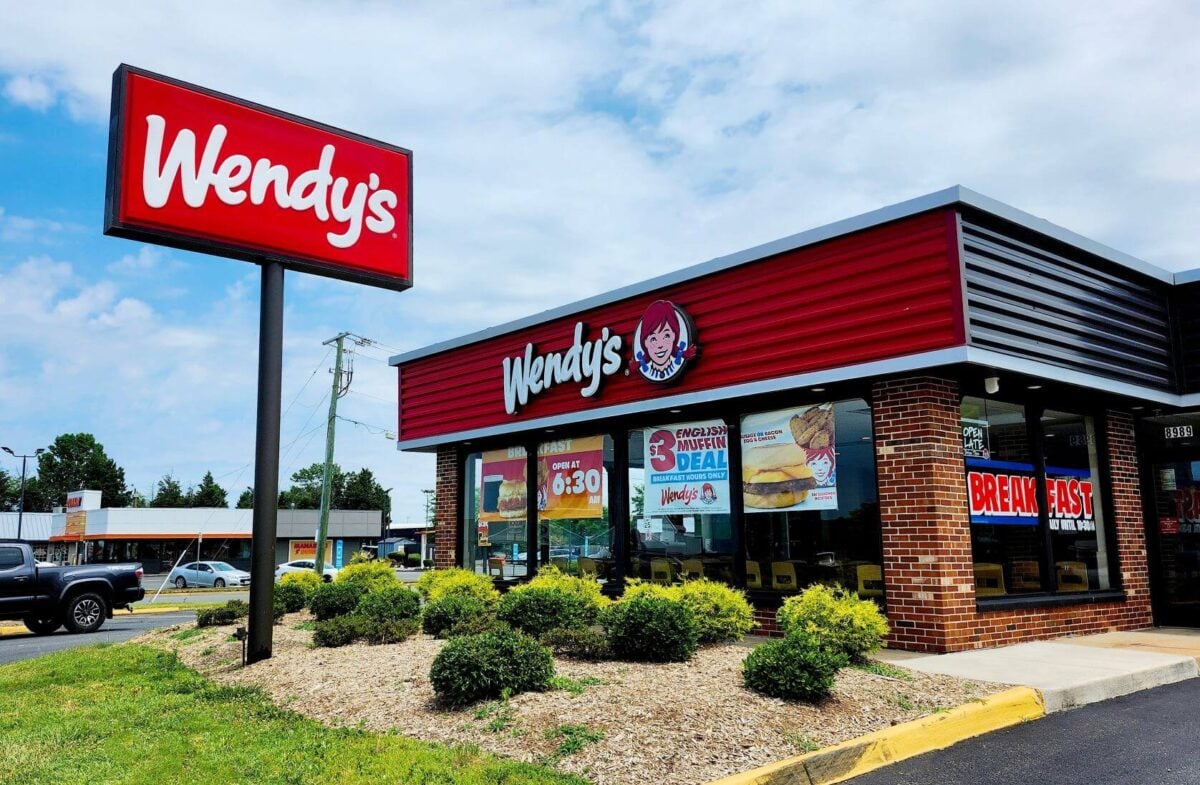
Management plans to close 5% to 6% of U.S. restaurants in the first half of 2026. That works out to between 298 and 358 closures based on the year-end 2025 store count of 5,969 locations.
The company closed 28 restaurants in Q4 2025 and expects to ramp up those closures in the coming months. Cook said franchisees will also get flexibility to adjust operating hours to match demand, particularly during breakfast.
The closures are part of Project Fresh, a system-wide turnaround plan addressing marketing, menu, operations, and store footprint issues. Cook said U.S. company-operated restaurants outperformed the broader U.S. system by 310 basis points in same-restaurant sales for 2025.
About 20% of franchisees have fully adopted the operational program, with broader adoption expected to drive benefits in the second half of 2026. Thuerk said the outperformance was 410 basis points in the fourth quarter.
International Growth and Value Platform
While U.S. operations struggled, international system-wide sales increased 6.2% in Q4, marking the 21st consecutive quarter of growth. The company opened 59 new international locations in the quarter, including in Armenia and Scotland.
For the full year, international system-wide sales rose 8.1%. Wendy’s opened 159 restaurants internationally with 121 net new restaurants in 2025, a record for the international business.
The company entered seven new markets during 2025, including Australia and Romania, expanding from 31 to 38 international markets. Wendy’s signed development agreements for 338 future restaurants.
In January, Wendy’s launched Biggie Deals as a permanent everyday value platform priced at $4, $6, and $8. The move mirrors rival McDonald’s (MCD) focus on value meals to attract budget-conscious diners eating out less frequently.
Cook said the company completed a consumer segmentation study showing a major segment comes to Wendy’s for an “everyday quality upgrade,” especially hamburgers with fresh, never frozen beef. He admitted this was underemphasized in 2025 when the company had “zero hamburger innovation.”
New menu items planned for 2026 include a Cheesy Bacon Cheeseburger, Chicken Tenders Ranch Wrap, and an updated Girl Scout Thin Mint Frosty. A revamped chicken sandwich lineup is also coming later this year with new buns and upgraded chicken fillets.
Wendy’s generated $345 million in operating cash flow and $205 million in free cash flow for 2025. The company returned $330 million to shareholders through dividends and share repurchases.
The fast-food chain repurchased 14.4 million shares for approximately $200 million through the end of fiscal 2025. It ended the year with $340 million in cash and net leverage of 4.8x.
For 2026, Wendy’s guided to flat system-wide sales, adjusted EBITDA of $460 million to $480 million, and adjusted EPS of $0.56 to $0.60. The company expects free cash flow of $190 million to $205 million.
Thuerk said the flat sales outlook reflects roughly 2% growth from base business improvements and international expansion, a 2% benefit from a 53rd week, offset by a 4% impact from optimization initiatives. First-quarter U.S. same-restaurant sales are expected to be down year-over-year with sequential improvement through the year.
Cook noted January ended down about 8% for U.S. same-restaurant sales due to weather disruption. Wendy’s announced a regular quarterly dividend of $0.14 per share with about $35 million remaining on its share repurchase authorization through February 2027.
Get 3 Free Stock Ebooks
Discover top-performing stocks in AI, Crypto, and Technology with expert analysis.
- Top 10 AI Stocks - Leading AI companies
- Top 10 Crypto Stocks - Blockchain leaders
- Top 10 Tech Stocks - Tech giants


