



TLDR
- The Dow Jones fell 465 points (0.8%) on Thursday, pulling back from record highs, while the S&P 500 dropped 1.2% and Nasdaq declined 1.8%
- Technology stocks led the sell-off, with Nvidia falling 4%, Tesla down 6%, and Disney dropping 8% after mixed earnings results
- President Trump signed a bill ending the 43-day government shutdown, the longest in U.S. history, which lasted over six weeks
- Key economic reports from October, including jobs data and inflation numbers, may never be released according to the White House
- Markets now show only 49% odds of a Federal Reserve rate cut in December, down from 62.9% the previous day
U.S. stocks retreated on Thursday as investors processed the end of the longest government shutdown in American history. The Dow Jones Industrial Average dropped 465 points or 0.8%, stepping back from record highs reached the previous session.
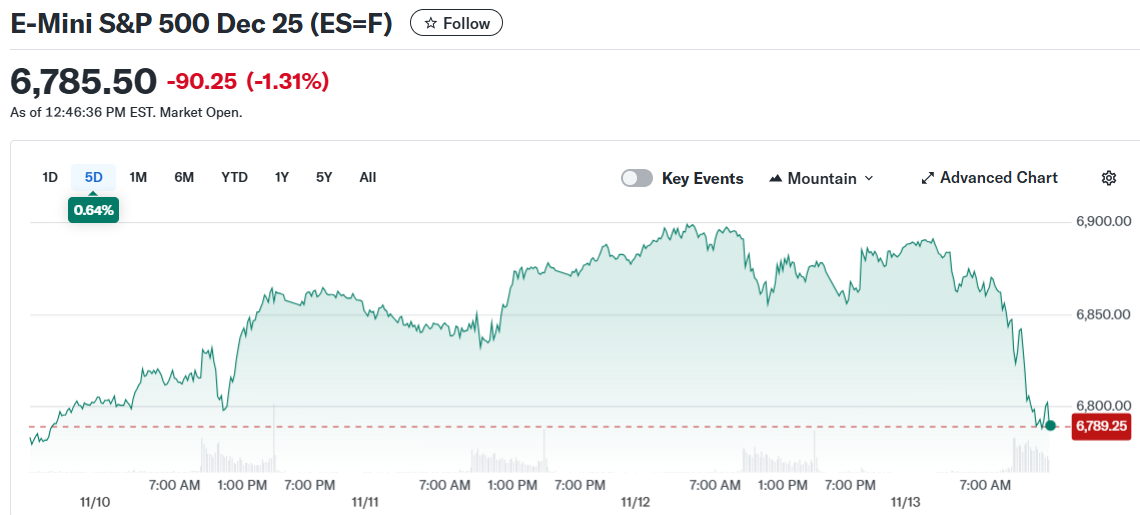
The S&P 500 fell 1.2% while the Nasdaq Composite declined 1.8%. Technology stocks drove most of the losses across the major indexes.
Tech Stocks Lead Market Decline
Big tech companies took the hardest hits during Thursday’s trading. Nvidia shares fell 4% as investors continued selling artificial intelligence stocks over valuation concerns. Tesla dropped more than 6% during the session.
Disney became one of the day’s worst performers. The entertainment company’s stock plunged 8% after reporting mixed results for its fiscal fourth quarter. Broadcom and Alphabet also weighed on the tech-heavy Nasdaq.
President Trump signed legislation Wednesday evening to reopen the federal government. The House of Representatives passed the funding bill in a 222-209 vote. The measure will fund government operations through the end of January.
The shutdown lasted 43 days, exceeding all previous government closures. It created problems for investors who couldn’t access key economic data during the six-week period. The October jobs report and inflation data were among the missing reports.

White House press secretary Karoline Leavitt told reporters Wednesday that delayed reports “will be permanently impaired.” She said many of these economic reports may never be released. A top Trump adviser later suggested the jobs data might come out without the unemployment rate for October.
The Congressional Budget Office analyzed the shutdown’s impact. The CBO found U.S. GDP could be roughly $11 billion lower by the end of 2026 than previously expected. White House officials estimated the shutdown could reduce fourth-quarter economic growth by up to 2 percentage points.
Rate Cut Odds Drop As Data Blackout Continues
The missing economic data complicates decisions for the Federal Reserve. Markets now price in only 49% odds of an interest rate cut at the December meeting. That represents a sharp drop from 62.9% probability the day before.
The shift came after several Fed officials made hawkish comments on Wednesday. Carol Schleif, chief market strategist at BMO Private Wealth, expects market volatility to continue. She said questions remain about what inflation and jobs data will show once reports resume.
Most economists expect minimal impact to U.S. GDP despite the shutdown. Ron Albahary, chief investment officer at Laird Norton Wealth Management, called Thursday’s pullback “healthy.” He described it as a natural consolidation after recent gains.
Some market sectors showed strength during the week. Health care and other value-oriented sectors outperformed while tech stocks struggled. The Dow closed above 48,000 for the first time on Wednesday, putting it on track for its best weekly performance since late June.
Cisco stock climbed over 4% after reporting earnings that beat expectations. The networking company raised its full-year forecasts for both profit and sales, showing progress in capturing AI-related spending.
Get 3 Free Stock Ebooks
Discover top-performing stocks in AI, Crypto, and Technology with expert analysis.
- Top 10 AI Stocks - Leading AI companies
- Top 10 Crypto Stocks - Blockchain leaders
- Top 10 Tech Stocks - Tech giants


