



TLDR
- The Dow Jones fell over 500 points on Tuesday, marking its worst three-day stretch since April, while the S&P 500 dropped 1% for its fourth straight losing session
- Bitcoin dropped below $90,000 for the first time in seven months, erasing all of its 2025 gains and contributing to a risk-off market environment
- Nvidia shares declined 3% ahead of Wednesday’s earnings report, while Amazon and Microsoft also fell around 3% as investors question AI-fueled rally sustainability
- Home Depot cut its full-year profit forecast after missing earnings estimates, with CEO citing consumer uncertainty and housing market pressure
- September jobs report due Thursday will be the first major economic data since the US government shutdown delayed official releases, with traders now pricing in only 50-50 odds of a Federal Reserve rate cut
US stock markets experienced widespread selling on Tuesday as investors grew cautious ahead of two critical events. The Dow Jones Industrial Average dropped more than 500 points, continuing a downward trend that began last week.
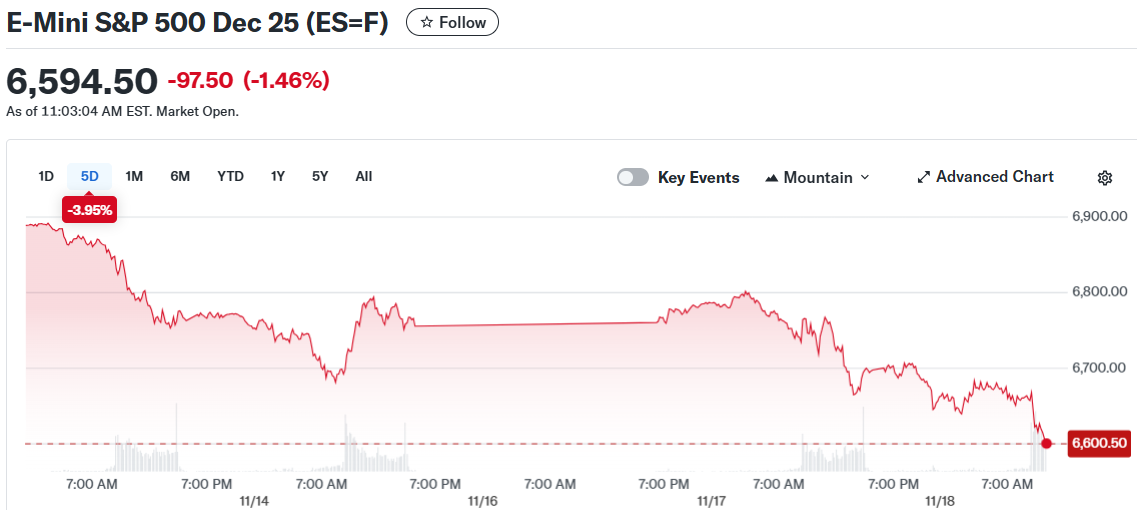
The tech-heavy Nasdaq Composite fell nearly 1.4%, while the S&P 500 declined roughly 1%. All three major indexes posted losses as traders moved away from riskier assets.
Bitcoin’s price movement added to market concerns on Tuesday. The cryptocurrency fell below $90,000 for the first time since April, wiping out all gains made during 2025.
The digital asset’s decline affected markets globally. Japanese stocks recorded their worst single-day loss since April as the crypto selloff spread across Asian trading sessions.
Tech Stocks Lead Market Decline
Chipmaker Nvidia saw its shares fall as much as 3% on Tuesday. The company is scheduled to release its third quarter earnings results on Wednesday.
Investors are closely watching Nvidia’s report for signs about the strength of AI-related spending. The stock has been a major driver of market gains throughout 2025.

Other major technology companies also posted losses. Amazon and Microsoft each declined approximately 3% during Tuesday’s trading session.
The tech sector’s weakness reflects growing questions about whether AI investments will continue supporting stock valuations. The selling pressure comes as the S&P 500 approaches a technical level at 6,630 that analysts are monitoring.
Economic Data Release Approaches
Thursday will bring the release of September’s jobs report. This marks the first major economic data since the government shutdown caused delays in official statistics.
The employment numbers will help shape expectations for Federal Reserve policy decisions. Traders have reduced their bets on interest rate cuts compared to one month ago.
Current market pricing shows approximately 50% odds that the Fed will lower rates at its next meeting. This represents a shift from the near certainty traders expressed in October.
ADP data released Tuesday showed private sector job losses slowing as November approaches. The report provides a preview ahead of the official government employment figures.
Treasury yields moved lower on Tuesday, with 10-year rates declining 0.044 percentage points. The drop reflects increased demand for safer assets as stocks fell.
Retail Sector Faces Headwinds
Home Depot reported quarterly earnings that missed analyst estimates before markets opened Tuesday. The home improvement retailer also reduced its full-year profit guidance.
CEO Ted Decker attributed the weak results to consumer uncertainty and ongoing pressure in the housing market. Home Depot shares dropped nearly 4% following the announcement.
Other major retailers are preparing to report earnings this week. Walmart and Target are both scheduled to release their quarterly results in coming days.
The retail earnings will offer insight into consumer spending strength heading into the holiday shopping season. Analysts are watching for signs of how economic uncertainty is affecting household purchases.
The S&P 500 closed in on the 6,630 level that technical analysts have identified as a key support zone. A break below that point would put a lower target of 6,360 into view, representing an 8.2% decline from the index’s recent record high.
Get 3 Free Stock Ebooks
Discover top-performing stocks in AI, Crypto, and Technology with expert analysis.
- Top 10 AI Stocks - Leading AI companies
- Top 10 Crypto Stocks - Blockchain leaders
- Top 10 Tech Stocks - Tech giants


