


TLDR
- Trump raised global tariff rate to 15% after Supreme Court struck down his broader tariffs
- Dow fell over 800 points; S&P 500 and Nasdaq each dropped over 1%
- Bitcoin dropped below $65,000 before partially recovering to around $66,000
- The EU rejected the tariff hike, warning trade deals with the US are at risk
- Gold rose nearly 3% as investors moved to safe-haven assets
The US stock market fell sharply on Monday after President Trump announced a new 15% global tariff rate, rattling investors across stocks and crypto.
The Dow Jones Industrial Average dropped 807 points, or 1.6%. The S&P 500 fell 1.2% and the Nasdaq declined 1.4%.
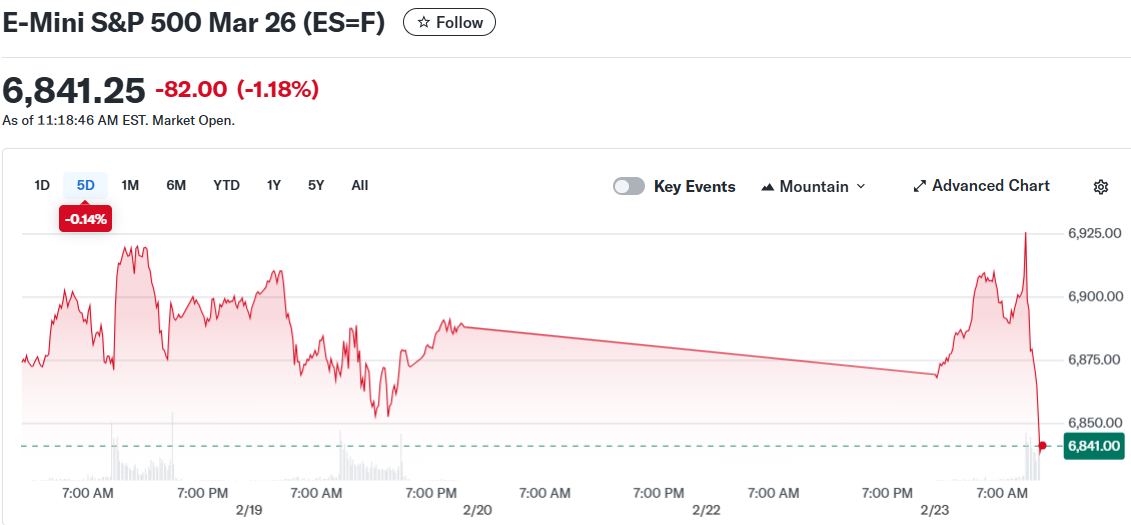
The sell-off came after the Supreme Court struck down Trump’s sweeping “reciprocal” tariffs on Friday. Stocks initially rallied on that news, but the gains faded fast.
On Saturday, Trump responded by raising the baseline global tariff rate from 10% to 15%, saying it would take effect immediately. He posted the announcement on Truth Social.
Markets React to Tariff Escalation
Trump also warned countries against what he called playing games with the court’s ruling. He said any country that tries to take advantage of the decision would face even higher tariffs.
The European Union pushed back hard. The European Commission said the situation was not suitable for fair trade and asked the US government for clarity on its next steps.

EU officials warned that existing trade deals with the US could now be in jeopardy. The US customs agency said it would stop collecting the tariffs that were struck down.
Bitcoin also fell sharply during the session. It dropped below $65,000 at one point before recovering to near $66,000, still down more than 2% on the day.
Gold Rises as Crypto and Stocks Slide
Gold moved in the opposite direction. Spot gold rose about 2% and gold futures climbed nearly 3% as investors looked for safer assets during the uncertainty.
Oil prices also gained on Monday, building on a rise of more than 5% from the previous week. US-Iran nuclear talks are set to resume Thursday, keeping geopolitical tensions in focus.
Federal Reserve Governor Chris Waller said his support for a March interest rate cut depends on the next jobs report. A strong reading could lead him to hold rates steady instead.
Nvidia’s earnings report on Wednesday is the key event investors are watching this week. The chipmaker’s results come as concerns about AI disruption continue to circulate.
Analysts say tariff uncertainty is likely to remain a theme for markets for the rest of the year. The tariffs were imposed under Section 122 of the Trade Act of 1974, which allows the president to apply duties for 150 days before needing Congressional approval.
Michael Landsberg of Landsberg Bennett Private Wealth Management said the push and pull over tariffs could bring markets back to the Supreme Court later in 2026. He added that volatility should be lower than the initial shock seen last April.
Trump’s 150-day window under Section 122 means the tariff situation could face another legal challenge before the year ends.
Get 3 Free Stock Ebooks
Discover top-performing stocks in AI, Crypto, and Technology with expert analysis.
- Top 10 AI Stocks - Leading AI companies
- Top 10 Crypto Stocks - Blockchain leaders
- Top 10 Tech Stocks - Tech giants


