


TLDRs;
- Xpeng unveiled new “Physical AI” products, including robotaxis, humanoid robots, and flying vehicles at its 2025 AI Day.
- The company launched its open-source VLA 2.0 model designed for real-world AI in vehicles and robotics.
- Volkswagen was announced as the first commercial partner for the VLA 2.0 platform.
- Xpeng’s 2026 camera-only robotaxis could reshape China’s self-driving future if regulators approve Level 4 autonomy.
Xpeng has unveiled a sweeping vision for the future of autonomous mobility, one that blends the virtual intelligence of machines with tangible, real-world action.
During its 2025 AI Day in Guangzhou Wednesday, the Chinese electric vehicle (EV) maker introduced a suite of technologies under the banner of “Physical AI”, encompassing advanced robotics, next-generation vehicles, and flying systems.
The highlight of the event was VLA 2.0, Xpeng’s new large AI model built for “visual-to-action” tasks — allowing machines to perceive and respond to their environment without relying on heavy sensor networks. This technology is designed to power cars, robots, and even flying vehicles, setting the stage for what Xpeng calls “AI that moves.”
According to the company, VLA 2.0 will roll out across its Ultra model line in the first quarter of 2026, marking a key milestone in the company’s broader push to integrate intelligence directly into its mobility platforms.
Open-Sourcing the Future
In a strategic move toward collaboration, Xpeng announced it will open-source VLA 2.0, making it accessible to third-party developers and enterprise partners. The company also revealed Volkswagen as the first official launch partner, a partnership that could significantly expand Xpeng’s software licensing footprint.

Alongside this, Xpeng is developing an open SDK in partnership with AutoNavi, one of China’s top mapping firms. The goal is to enable other developers to create self-driving tools, simulation environments, and testing frameworks powered by the VLA 2.0 model.
The system itself is built on an astonishing 720 billion parameters, running on Xpeng’s proprietary Turing AI chips that deliver between 2,250 and 3,000 TOPS (tera operations per second). That kind of processing power could help startups and automakers alike deploy real-time AI inference directly within vehicles, without relying heavily on cloud connectivity.
If successful, the open approach could generate between RMB 2–3 billion in annual B2B software revenue by 2027, according to early projections.
Robotaxis Without Lidar
One of the most ambitious announcements from the event was Xpeng’s plan to launch three robotaxi models in 2026, all running solely on vision-based AI. Unlike many of its Western rivals such as Waymo, which use lidar and high-definition maps, Xpeng’s approach leans entirely on cameras and neural networks trained on vast driving datasets.
This camera-only strategy mirrors Tesla’s controversial “vision-first” approach but aims to take it a step further by achieving Level 4 autonomy, or fully driverless operation, without human intervention.
China, which recently resumed issuing robotaxi permits after a temporary pause, could become a proving ground for Xpeng’s model. Still, experts note that approval for camera-only Level 4 fleets remains uncertain, as regulators typically require detailed HD mapping for safety validation.
Flying Cars Take Center Stage
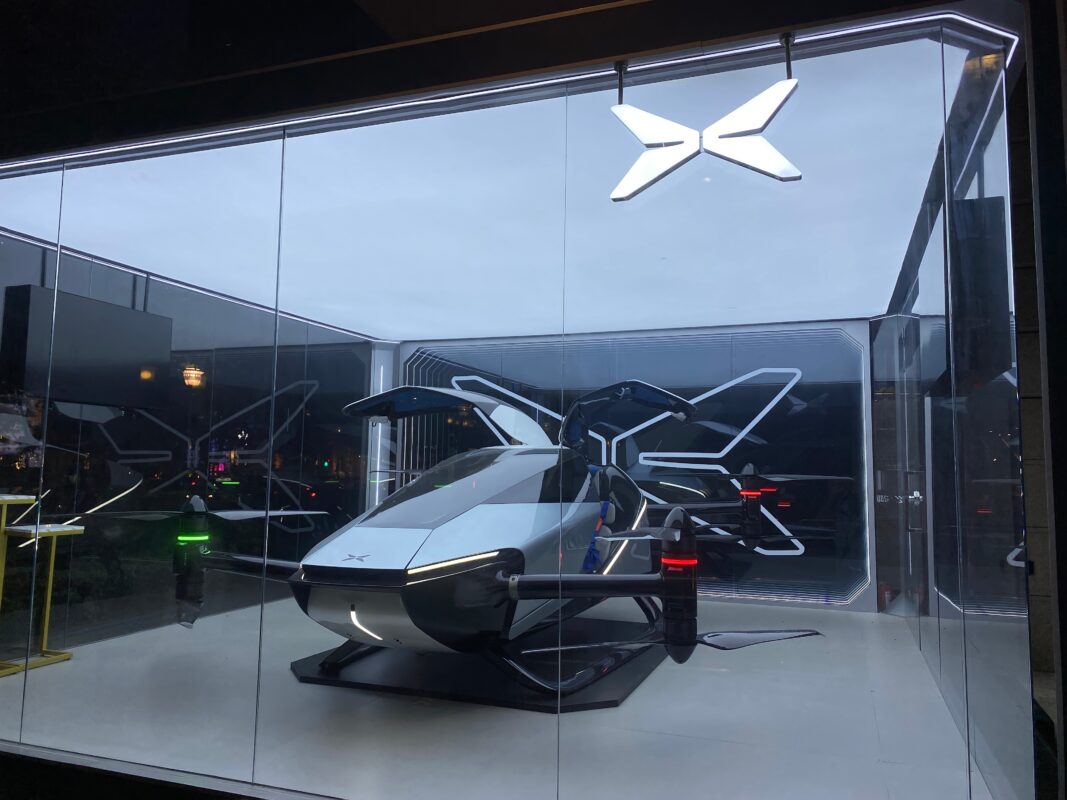
Beyond road-based mobility, Xpeng also spotlighted two aerial systems developed by its subsidiary ARIDGE, which focus on personal and commercial flying vehicles.
These systems are designed to complement its ground-based robotaxis, forming what the company describes as a “multi-dimensional mobility ecosystem.”
Xpeng said both flying car platforms are on track for mass production, with one model geared toward urban air travel and another optimized for long-range logistics. Combined with the company’s robotics division, Next-Gen IRON, Xpeng’s portfolio now spans land, air, and humanoid assistance, embodying the concept of Physical AI in every dimension.
Get 3 Free Stock Ebooks
Discover top-performing stocks in AI, Crypto, and Technology with expert analysis.
- Top 10 AI Stocks - Leading AI companies
- Top 10 Crypto Stocks - Blockchain leaders
- Top 10 Tech Stocks - Tech giants


