


The online gambling landscape is experiencing a fundamental split. On one side stands the familiar world of state-regulated platforms, traditional banking, promotional credits, and partnerships with major leagues. FanDuel exemplifies this established model. On the other side, a new breed of crypto-first platforms is rapidly gaining ground with massive game collections, blockchain-powered transactions, and engagement systems that break from conventional casino playbooks. ZunaBet embodies this emerging paradigm. Rather than crowning a champion, examining these platforms reveals an industry diverging into two fundamentally different philosophies.
FanDuel: Mastering the Traditional Path
FanDuel’s transformation from a 2009 daily fantasy sports venture to a dominant force in American online betting is a case study in market timing and execution. After Flutter Entertainment’s acquisition, strategic investment propelled the brand into the upper echelon of US sportsbooks. Today, it operates across numerous states with multi-state licensing and engages millions of active users.
The sportsbook experience delivers exceptional quality. Market depth spans all prominent American and international sporting events, competitive pricing remains consistent, and the mobile application establishes benchmarks for user experience across the industry. FanDuel also provides casino gaming—slots, classic table games, and live dealer experiences—in jurisdictions where regulations permit. While respectable for a sports-focused platform, the casino catalog appears modest when measured against operators prioritizing iGaming content.

Every financial transaction flows through conventional payment channels. Users fund accounts via bank connections, credit cards, PayPal, Venmo, and similar services. Cashout timeframes vary considerably—sometimes processing quickly, other times dragging on, perpetually subject to third-party financial institutions beyond FanDuel’s direct influence.
Promotion structures favor sports bettors with bonus wager allocations and risk-protected bet constructs. Casino promotions exist but typically deliver diminished value. The rewards framework accumulates points from betting activity that convert to bonus wagers and platform credits within Flutter’s loyalty ecosystem. Tiered membership exists, benefits scale incrementally, and the entire mechanism operates quietly without commanding attention or generating substantial enthusiasm.

FanDuel has secured its market position through superior execution, strategic timing, and substantial capital investment. Within regulated American sports wagering, criticism is difficult to justify. Beyond those boundaries, however, the product reveals constraints imposed by the very foundation that enabled its success.
ZunaBet: Engineering Without Legacy Constraints
ZunaBet emerged from a recognition that the gambling sector presented opportunities to construct something entirely new without inheriting traditional limitations. Launched in 2026 through Strathvale Group Ltd operating under Anjouan gaming authority, it represents the vision of industry professionals with over two decades of combined expertise. Rather than adapting existing frameworks, every component was purpose-built from the ground up.
The gaming collection demands verification. More than 11,000 titles across 63 distinct providers. Pragmatic Play, Evolution, Hacksaw Gaming, Yggdrasil, BGaming, plus an extensive roster of additional studios. Slots dominate the selection, though RNG table games and live dealer content provide substantial depth. Positioned against FanDuel’s casino offerings, the difference becomes unmistakable. ZunaBet didn’t aim for competitive game counts—it pursued comprehensive dominance.
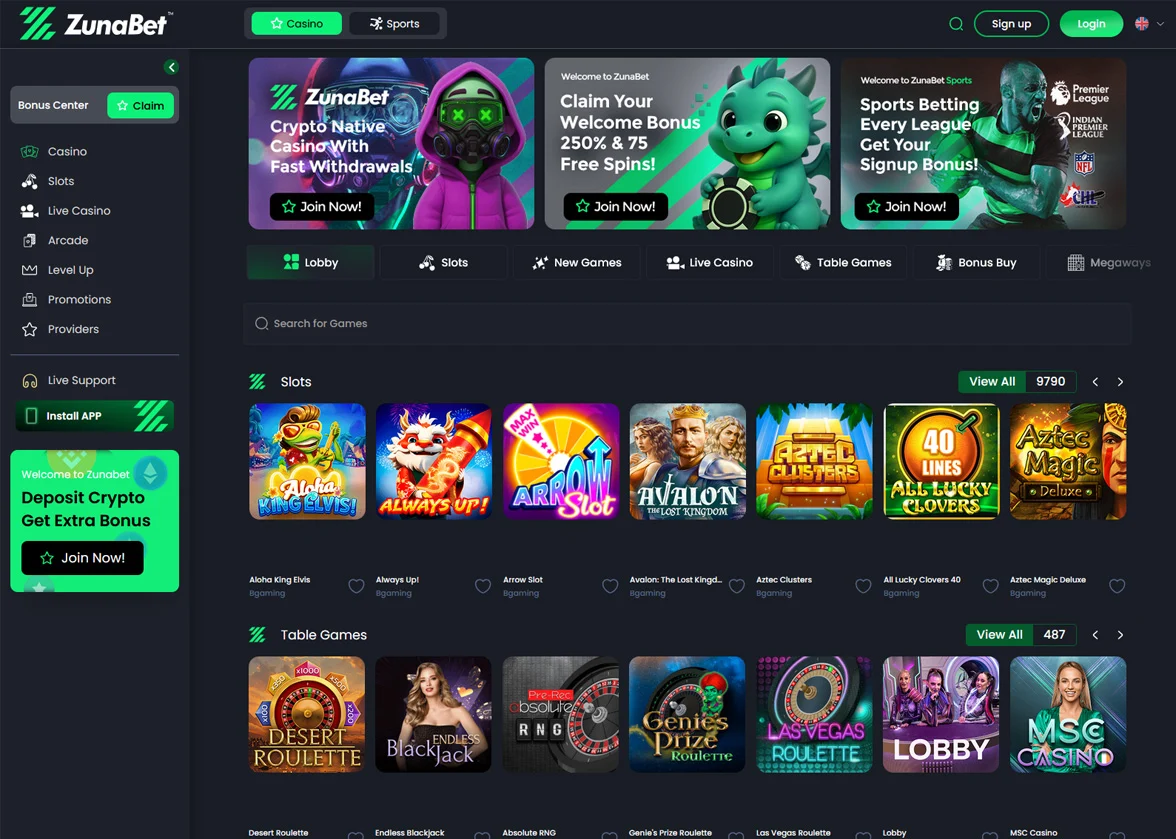
The sportsbook operates as a complete parallel ecosystem. Soccer, basketball, tennis, NHL, virtual competitions, and combat sports receive extensive market coverage. The esports division extends beyond typical traditional sportsbook attempts, featuring robust markets for CS2, Dota 2, League of Legends, and Valorant. FanDuel retains advantages in American league depth and domestic sponsorship relationships. ZunaBet counters with international sports breadth and an esports offering that positions the vertical as fundamental rather than supplementary.
Cryptocurrency isn’t merely available on ZunaBet—it functions as the platform’s foundational architecture. Support extends across more than 20 digital currencies: BTC, ETH, USDT across multiple blockchains, SOL, DOGE, ADA, XRP, and additional options. Transaction fees are nonexistent. Withdrawals complete without the delays inherent in bank-dependent processing. From initial deposit through final cashout, the experience remains direct, swift, and liberated from friction built into fiat-reliant platforms.
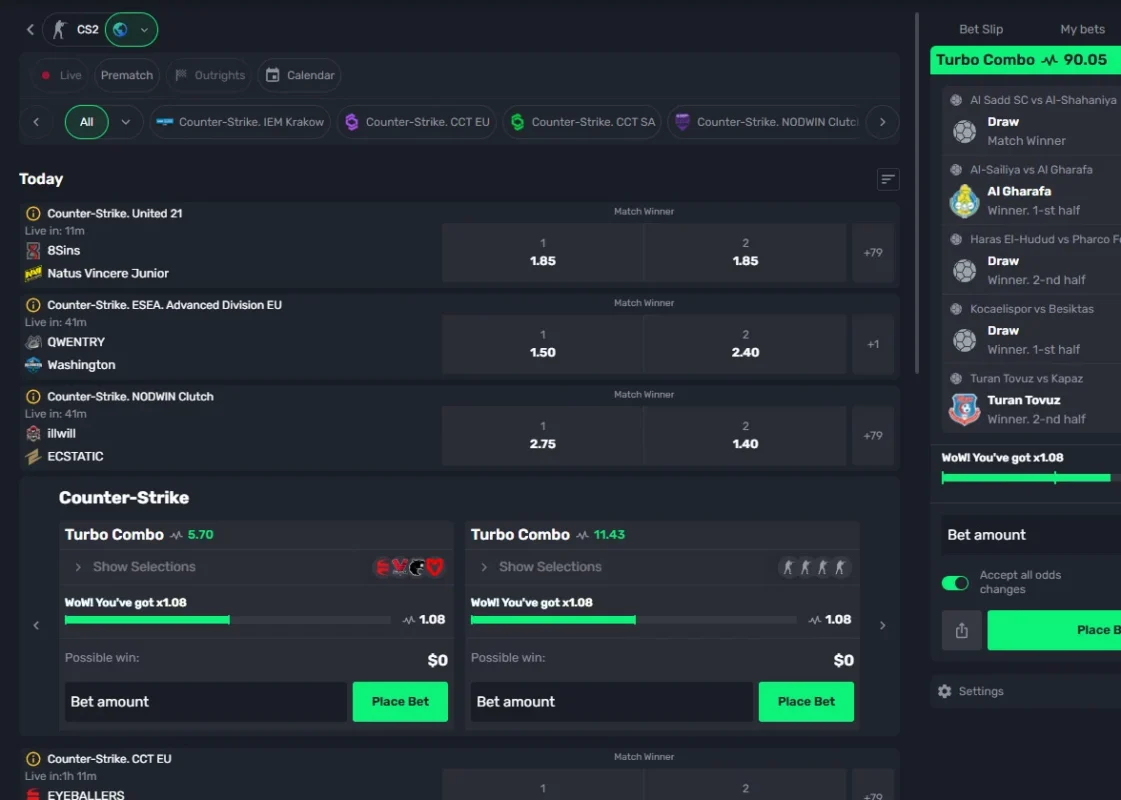
New user incentives begin at substantial levels. The introductory package reaches up to $5,000 in matched deposits accompanied by 75 free spins distributed across three separate deposits. The initial deposit earns a 100% match reaching $2,000 plus 25 spins. The second deposit provides a 50% match up to $1,500 with 25 spins. The third deposit completes the sequence with a 100% match to $1,500 and 25 spins. Compared with FanDuel’s casino welcome offerings, ZunaBet operates in an entirely different value tier.
Technical execution supports the content breadth. A dark-themed HTML5 interface loads efficiently and adapts seamlessly across device formats. Dedicated applications exist for iOS, Android, Windows, and MacOS platforms. Live chat assistance operates continuously throughout every time zone.
One Rewards System Fades Into Background. The Other Commands Attention.
FanDuel’s loyalty framework performs exactly what major sportsbook reward programs perform. Wagering generates points. Points convert to bonus bets and credits. Increased activity unlocks marginally enhanced privileges within Flutter’s broader network. It’s functional, predictable, and practically interchangeable with comparable programs at DraftKings, BetMGM, or Caesars. Most users interact with it unconsciously, if they notice it at all.
ZunaBet approached its loyalty program as a standalone product deserving dedicated development. The dragon evolution framework advances players through six distinct stages—Squire, Warden, Champion, Divine, Knight, and Ultimate—accompanied by a mascot character named Zuno. Rakeback starts at 1% for newcomers and climbs to 20% at maximum levels. Free spins scale upward to 1,000 at elite tiers. VIP club entry and doubled wheel spins add supplementary value throughout the progression journey.
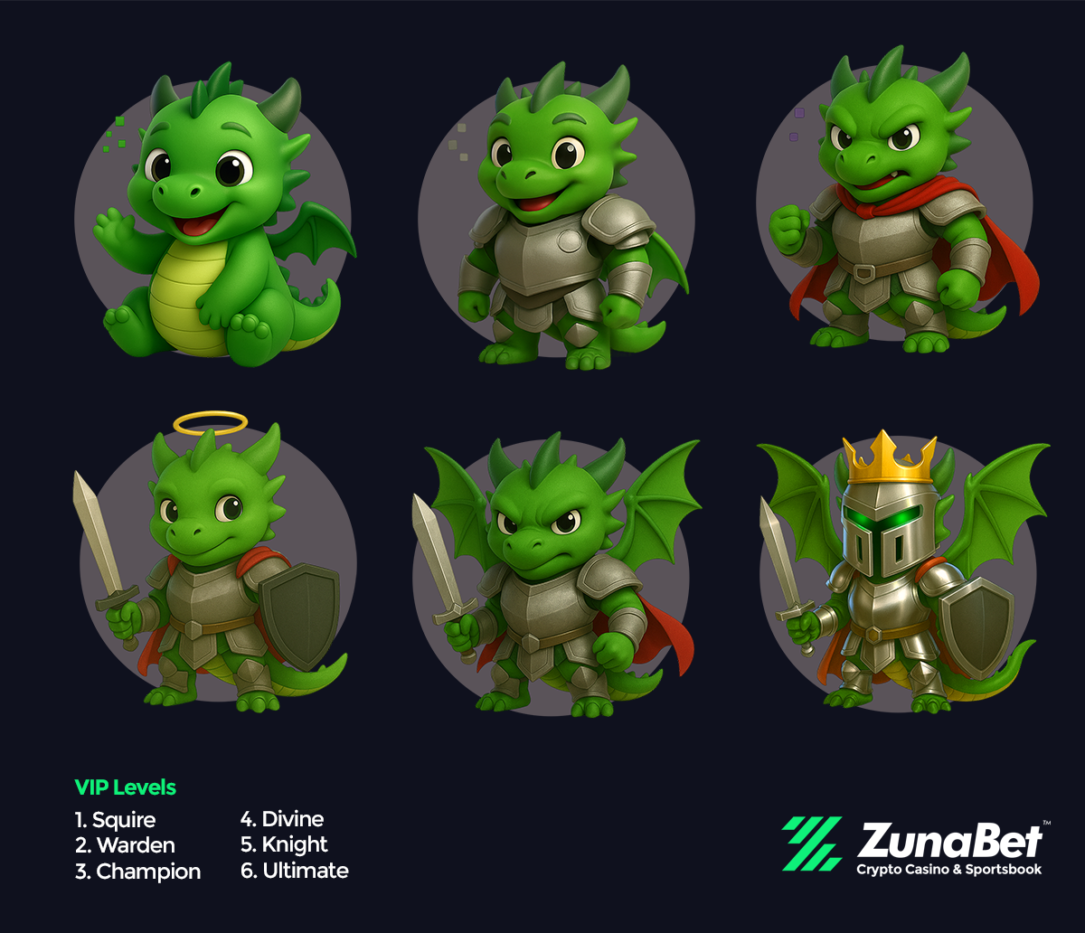
The system succeeds by empowering player autonomy. Every tier presents explicitly defined requirements matched with explicitly defined benefits. Advancement becomes visible and measurable. The subsequent milestone consistently appears achievable. This mirrors how progression mechanics in video games have sustained player engagement for decades, and ZunaBet represents a rare gambling platform that has successfully implemented these principles. Contrasted with FanDuel’s passive point accumulation, it establishes a fundamentally transformed relationship between platform and participant.
Understanding the Payment Infrastructure Divide
Remove the branding, game libraries, and promotional frameworks, and the most profound distinction between FanDuel and ZunaBet centers on how financial transactions function within each ecosystem.
FanDuel operates embedded within traditional banking infrastructure. Banks, card networks, and payment processors manage every transaction. Each intermediary operates according to independent schedules with proprietary policies. The outcome is a system where deposits generally function smoothly while withdrawals introduce inherent unpredictability. A player might wait one day. They might wait four days. The platform cannot fully govern timing because funds must transit through institutions maintaining their own priorities and processing schedules.
ZunaBet eliminated every intermediary from the transaction chain. Cryptocurrency transfers from the player’s wallet to the platform. Cryptocurrency transfers from the platform back to the player’s wallet. That constitutes the complete process. No banking review. No processor queue. No weekend suspension. No deducted fees along the pathway. The transaction executes and concludes immediately.
For players maintaining finances through traditional banking infrastructure, FanDuel’s system offers sufficient familiarity to remain acceptable. But familiarity doesn’t equate to quality. For anyone who has experienced cryptocurrency transaction speed and simplicity, reverting to bank-dependent withdrawals resembles regression. And the population experiencing that realization expands continuously.
Diverging Market Philosophies
FanDuel targets the regulated American sports bettor. That demographic is massive, profitable, and sustainable long-term. FanDuel’s positioning within this market remains robust, supported by Flutter’s resources and years of operational credibility. No individual platform, crypto-enabled or otherwise, will dislodge it from this position imminently.
ZunaBet’s target market is global, crypto-fluent, and characterized by distinct expectations. These participants demand game libraries numbered in tens of thousands. They want to deposit using SOL or ADA without preliminary dollar conversion. They want withdrawals arriving before closing their browser. They want loyalty programs that create a sense of advancement rather than mechanical transaction exchange. They want esports treated with equivalent legitimacy as traditional sports.
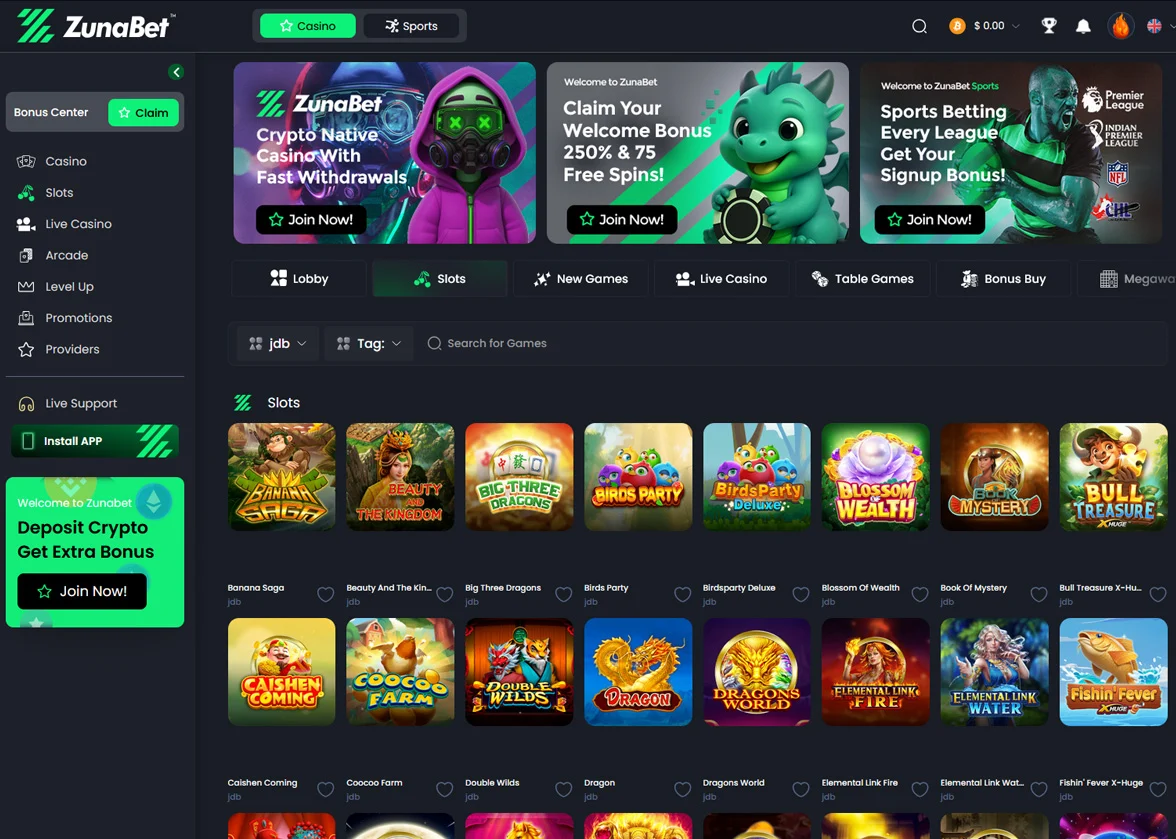
This market isn’t theoretical—it exists and expands as cryptocurrency achieves broader mainstream adoption and digitally native generations reach gambling age carrying expectations shaped by gaming culture rather than conventional casino culture.
Interpreting the Larger Pattern
FanDuel constructed a product representing the pinnacle of traditional online gambling infrastructure capabilities. ZunaBet constructed a product demonstrating possibilities when that infrastructure gets replaced entirely.
Both platforms excel within their respective domains. But only one projects a vision of industry trajectory rather than refinement of existing positions. ZunaBet launched in 2026 featuring 11,000 games, 63 providers, over 20 supported cryptocurrencies, a $5,000 welcome package, a sportsbook treating esports as core content, applications across all devices, and a loyalty program borrowing design philosophy from gaming rather than recycled casino templates.
FanDuel faces no immediate threats to its current position. However, the future ZunaBet represents—faster, broader, more engaging, and constructed entirely on cryptocurrency—will eventually demand response from traditional operators. The market hasn’t completed this transition yet. But examining these platforms side by side clarifies which direction momentum is carrying the industry.
Get 3 Free Stock Ebooks
Discover top-performing stocks in AI, Crypto, and Technology with expert analysis.
- Top 10 AI Stocks - Leading AI companies
- Top 10 Crypto Stocks - Blockchain leaders
- Top 10 Tech Stocks - Tech giants


