


The online gambling landscape has fractured into two distinct ecosystems. On one side stands the familiar world of state-licensed operators, conventional banking methods, promotional bet credits, and partnerships with professional sports franchises. FanDuel epitomizes this traditional approach. On the opposite end, cryptocurrency-powered platforms are rapidly emerging with massive gaming catalogs, instantaneous financial transactions, and incentive structures that diverge sharply from industry norms. ZunaBet exemplifies this emerging paradigm. Rather than crowning a victor, examining both reveals an industry diverging along two fundamentally different philosophical paths.
FanDuel: Mastering the Traditional Model
The evolution of FanDuel from its 2009 origins as a daily fantasy sports company to becoming a dominant force in American sports wagering is thoroughly chronicled. After Flutter Entertainment’s acquisition and substantial capital investment, the platform transformed into a household name that operates alongside the most recognized entities in US sports entertainment. Its regulatory footprint extends across numerous states, serving millions of active participants.
Their sports wagering product delivers exceptional quality. Market breadth encompasses all premier domestic and international athletic competitions, pricing remains consistently sharp, and their mobile application establishes benchmarks that competitors aspire to match. Their casino division provides slot machines, traditional table offerings, and live dealer experiences in jurisdictions where licensing permits. While respectable for a sports-betting-centric operator, the selection pales when measured against platforms prioritizing casino content.

Every monetary transaction flows through conventional financial channels. Users fund accounts via bank connections, credit instruments, PayPal, Venmo, and similar services. Cashout durations remain inconsistent — occasionally swift, frequently delayed, perpetually subject to external financial institutions operating beyond FanDuel’s direct influence.
Onboarding incentives predominantly favor sports bettors through promotional wager offers and protected stake frameworks. Casino-oriented bonuses exist but generally deliver diminished value. Their rewards infrastructure accumulates points based on wagering volume, converting them to bonus credits and platform currency through Flutter’s interconnected loyalty network. Hierarchical tiers provide incrementally scaling benefits, functioning quietly without demanding significant attention or generating substantial enthusiasm.

FanDuel’s market dominance stems from superior execution, strategic timing, and overwhelming financial resources. Within its designated arena — regulated American sports wagering — criticism is difficult to justify. Beyond those boundaries, the platform increasingly appears restricted by the very framework that enabled its success.
ZunaBet: Engineering From First Principles
ZunaBet emerged from identifying market inefficiencies and constructing solutions unburdened by legacy constraints. Launched in 2026 under Strathvale Group Ltd’s direction with Anjouan gaming authorization, the platform represents two decades of accumulated industry expertise. Rather than adapting existing models, every component was purpose-built.
The gaming collection commands attention immediately. Exceeding 11,000 individual titles sourced from 63 distinct providers. Pragmatic Play, Evolution, Hacksaw Gaming, Yggdrasil, BGaming, alongside an extensive roster of additional studios. Slot machines dominate numerically, though RNG table games and live dealer content maintain substantial depth. Positioned against FanDuel’s casino offerings, the disparity becomes unmistakable. ZunaBet didn’t pursue competitive parity on volume. They established categorical dominance.
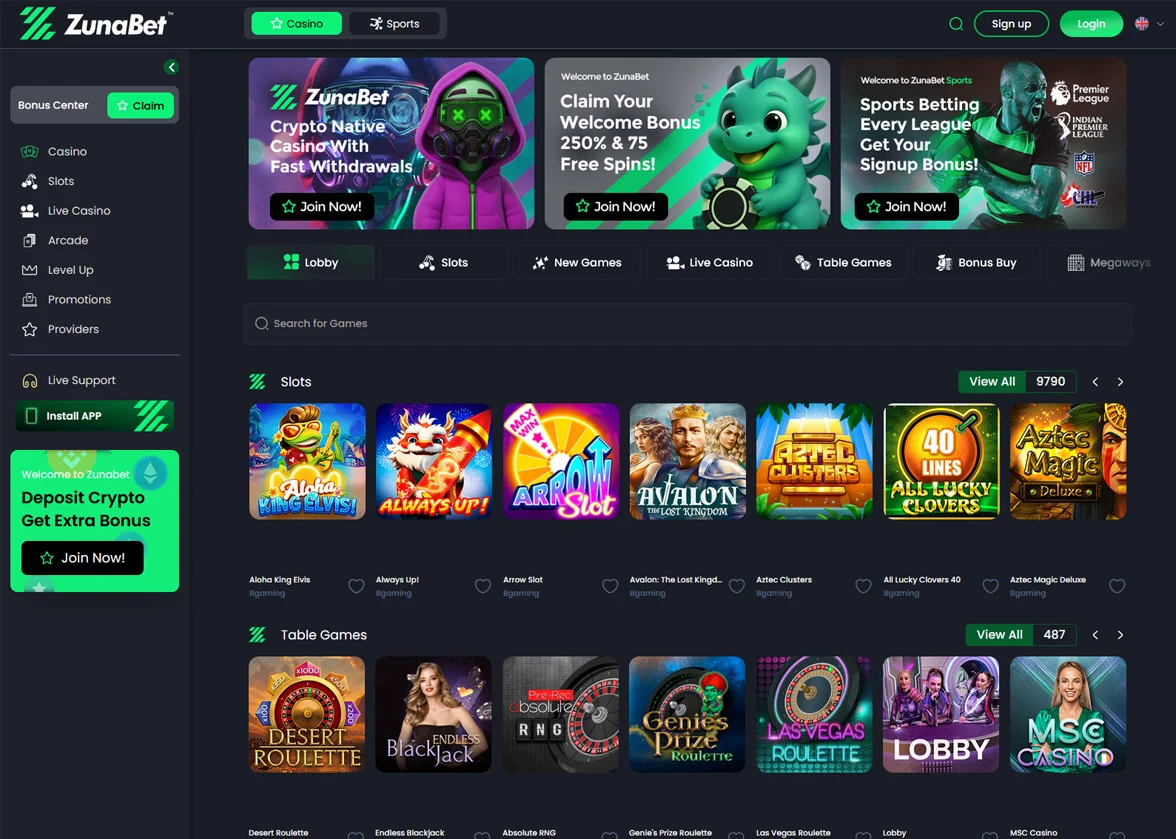
Their sportsbook functions as a comprehensive parallel offering. Soccer, basketball, tennis, NHL, virtual competitions, and combat sports receive extensive market development. The esports division surpasses most traditional operator attempts, delivering substantive markets across CS2, Dota 2, League of Legends, and Valorant. FanDuel retains advantages in American league granularity and domestic brand collaborations. ZunaBet counters with worldwide sports coverage and esports treatment as foundational rather than supplementary.
Cryptocurrency transcends optional status on ZunaBet. It constitutes the fundamental architecture. Over 20 digital currencies receive support — BTC, ETH, USDT across multiple blockchains, SOL, DOGE, ADA, XRP, among others. Transaction fees are nonexistent. Withdrawals process without the institutional delays inherent to banking intermediaries. From initial deposit through final cashout, the experience remains direct, rapid, and devoid of friction characterizing fiat-dependent platforms.
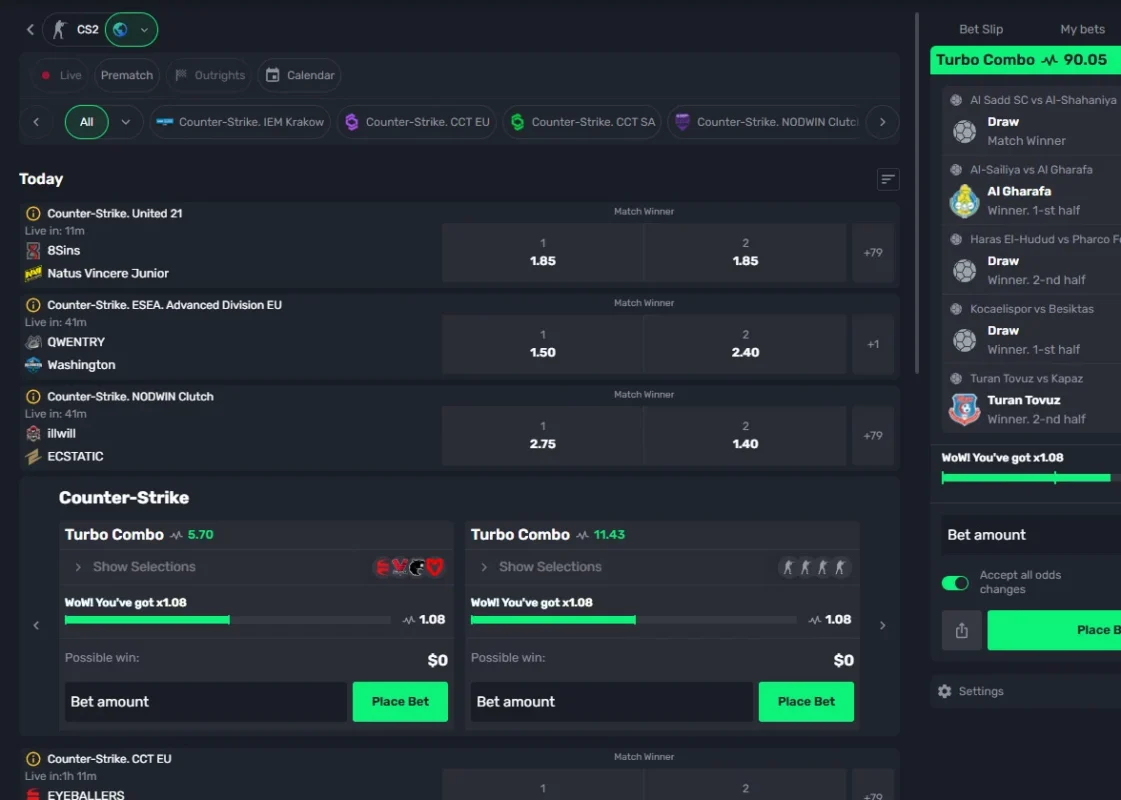
New participant incentives begin aggressively. The introductory promotion delivers up to $5,000 in matched funding plus 75 complimentary spins distributed across three deposits. Initial funding receives 100% matching up to $2,000 with 25 spins. Second deposit provides 50% matching up to $1,500 with 25 spins. Third deposit completes the sequence with 100% matching up to $1,500 with 25 spins. Compared to FanDuel’s casino welcome incentives, ZunaBet operates in a distinctly superior category.
Technical execution reinforces content quality. A dark-aesthetic HTML5 interface renders efficiently and adapts seamlessly across device formats. Dedicated applications exist for iOS, Android, Windows, and MacOS platforms. Live communication support maintains continuous availability.
Loyalty Systems: Background Noise vs Engagement Engine
FanDuel’s rewards infrastructure performs exactly as major sportsbook loyalty programs function. Wagering generates points. Points convert to promotional bets and credits. Increased activity unlocks marginally enhanced benefits within Flutter’s ecosystem. It’s functional, predictable, and essentially indistinguishable from comparable programs at DraftKings, BetMGM, or Caesars. Most participants interact passively or ignore it entirely.
ZunaBet architected their loyalty program as a standalone product. The dragon evolution framework advances players through six progressive stages — Squire, Warden, Champion, Divine, Knight, and Ultimate — guided by mascot character Zuno. Rakeback initiates at 1% for newcomers and escalates to 20% at maximum progression. Free spins scale upward to 1,000 at elite levels. VIP club privileges and doubled wheel opportunities add supplementary value throughout the advancement pathway.
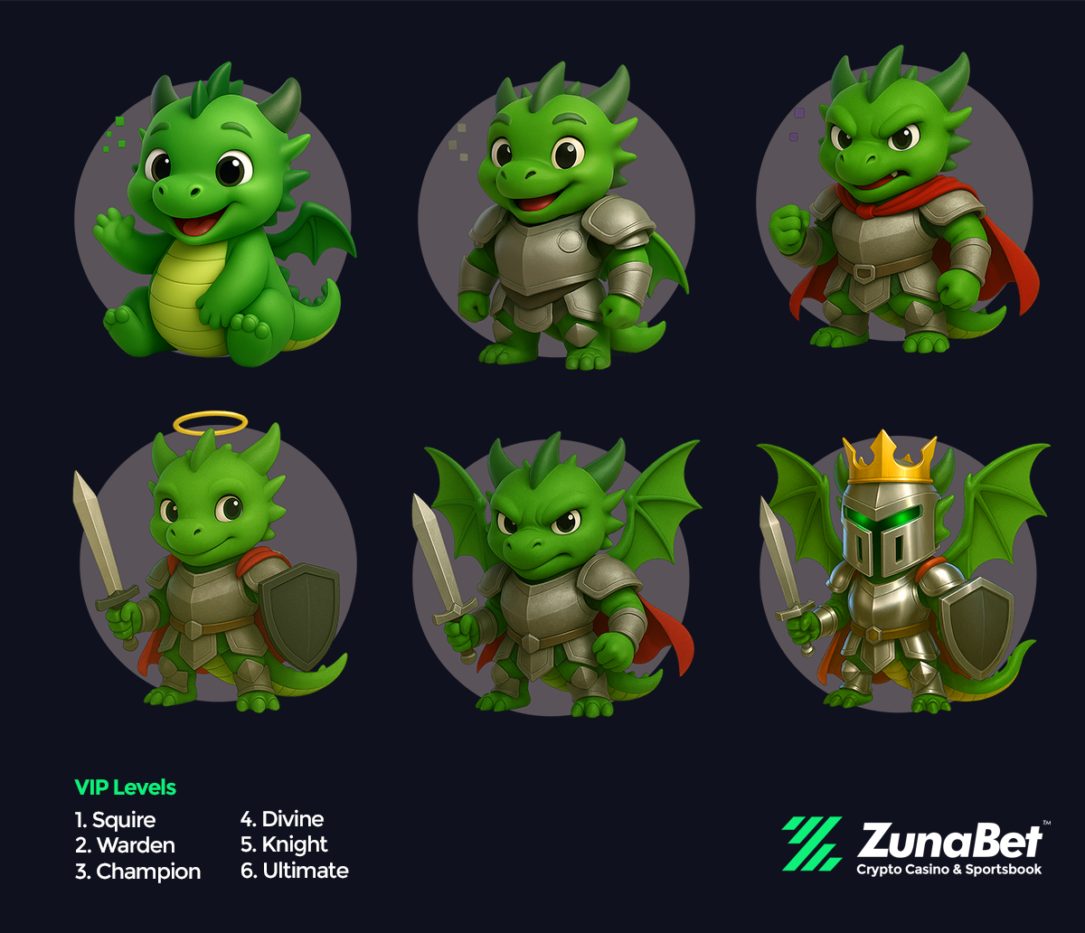
This framework succeeds by empowering participants. Each tier presents explicitly defined prerequisites and explicitly defined benefits. Advancement remains visible and measurable. Subsequent milestones consistently appear attainable. These represent identical progression mechanics sustaining video game engagement for decades, and ZunaBet stands among rare gambling platforms successfully implementing these principles. Contrasted with FanDuel’s passive accumulation model, it represents fundamentally different platform-player relationships.
Payment Infrastructure: The Critical Distinction
Remove branding, gaming libraries, and promotional campaigns, and the most consequential difference between FanDuel and ZunaBet centers on financial mechanics.
FanDuel operates within established financial infrastructure. Banking institutions, card networks, and payment processors manage every transaction. Each intermediary maintains independent schedules and policies. The outcome is a system where deposits generally function smoothly but withdrawals carry inherent unpredictability. Players might wait one day. They might wait four. Platform control remains limited because funds must traverse institutions with autonomous priorities and processing rhythms.
ZunaBet eliminated every intermediary completely. Cryptocurrency transfers directly from player wallets to platform. Cryptocurrency returns directly from platform to player wallets. That encompasses the entire process. No banking review. No processor queue. No weekend suspension. No extracted fees. Transactions execute and conclude immediately.
For players managing finances through traditional banking, FanDuel’s system provides sufficient familiarity. However, familiarity and excellence differ fundamentally. For anyone experiencing cryptocurrency transaction speed and simplicity, reverting to bank-dependent withdrawals feels regressive. And that demographic expands continuously.
Diverging Market Philosophies
FanDuel targets the regulated American sports bettor. This market is massive, profitable, and enduring. FanDuel’s position within it remains formidable, supported by Flutter’s resources and operational credibility built over years. No individual platform, cryptocurrency-based or otherwise, will dislodge it from this position imminently.
ZunaBet addresses a global, crypto-native audience defined by alternative priorities. These participants demand gaming libraries numbering tens of thousands. They want deposits in SOL or ADA without dollar conversion. They expect withdrawals arriving before browser sessions close. They seek loyalty programs creating progression narratives rather than mechanical reward dispensation. They demand esports receive equivalent respect as traditional athletics.
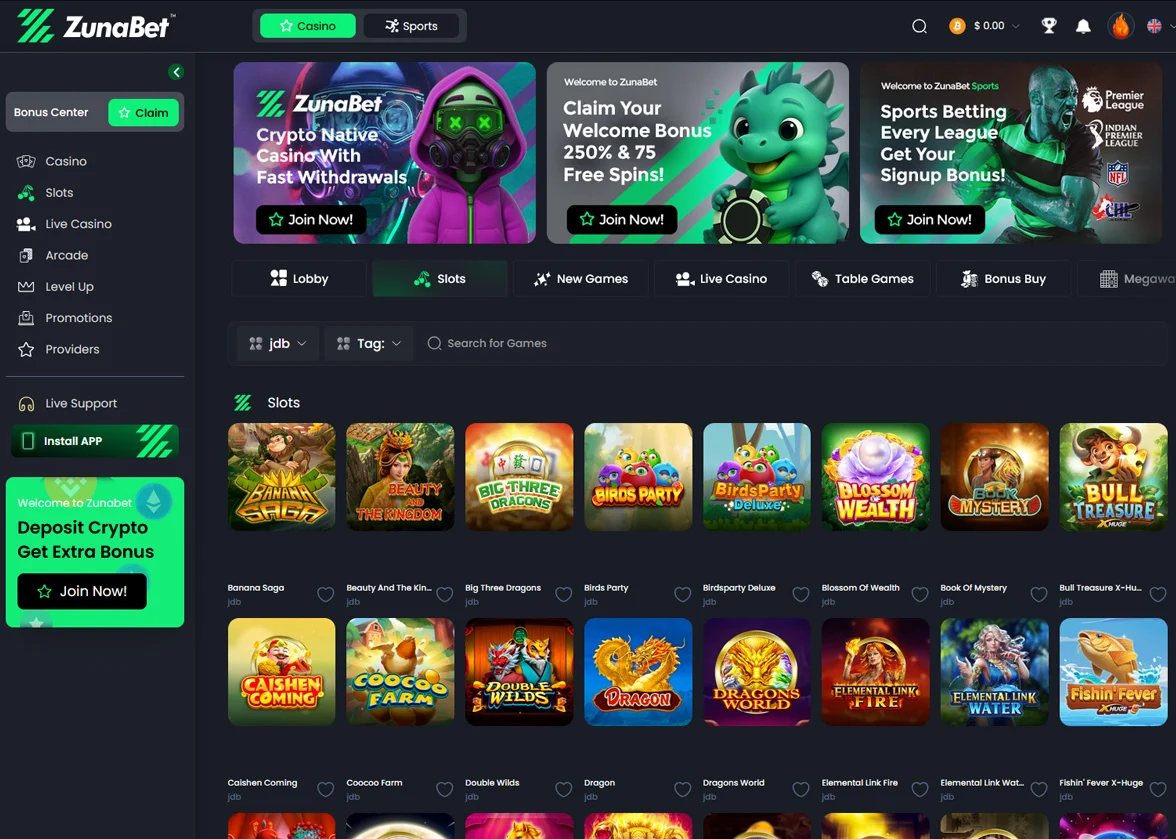
This market isn’t theoretical. It exists and expands as cryptocurrency achieves mainstream penetration and digitally native generations reach gambling age with expectations shaped by gaming culture rather than traditional casino culture.
Interpreting the Trajectory
FanDuel constructed a product representing traditional online gambling infrastructure’s pinnacle achievement. ZunaBet constructed a product demonstrating what becomes possible when that infrastructure undergoes complete replacement.
Both platforms excel within their respective domains. Yet only one projects a vision of industry evolution rather than refinement of established positions. ZunaBet entered the market in 2026 with 11,000 games, 63 providers, over 20 supported cryptocurrencies, a $5,000 welcome package, a sportsbook treating esports seriously, cross-device applications, and a loyalty program adopting design philosophy from gaming rather than casino industry’s recycled templates.
FanDuel’s present remains secure. However, the future ZunaBet illuminates — faster, broader, more engaging, and entirely cryptocurrency-based — represents an inevitability traditional operators must eventually confront. The market hasn’t fully transitioned yet. But examining these platforms side by side clarifies which direction momentum flows.
Get 3 Free Stock Ebooks
Discover top-performing stocks in AI, Crypto, and Technology with expert analysis.
- Top 10 AI Stocks - Leading AI companies
- Top 10 Crypto Stocks - Blockchain leaders
- Top 10 Tech Stocks - Tech giants


