


TLDRs
- Arm projected stronger-than-expected Q1 revenue as AI infrastructure spending accelerated globally.
- Meta and OpenAI demand boosted confidence in Arm’s new AI-focused server chip strategy.
- Arm’s AGI CPU marks a major shift from licensing designs to selling chips directly.
- Investors remain focused on supply limitations despite strong long-term AI growth expectations.
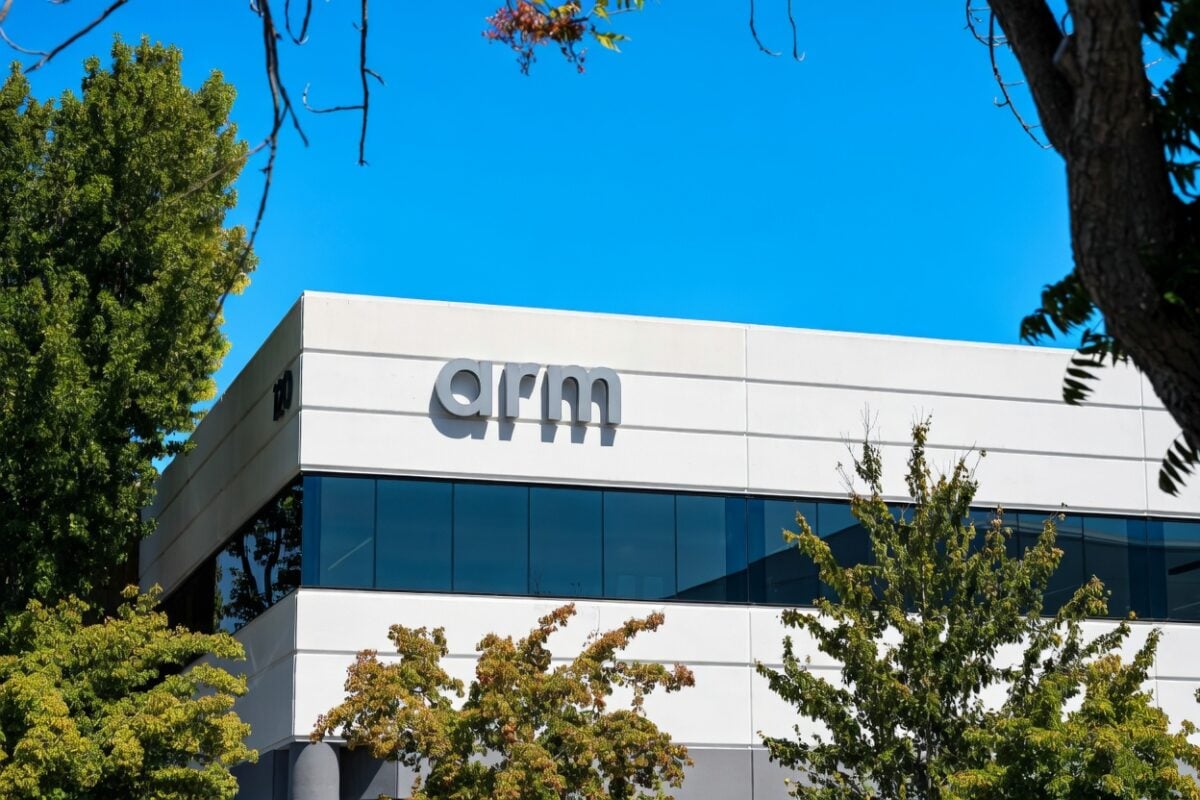
Arm Holdings gained investor attention after the semiconductor company issued a stronger-than-expected financial outlook fueled by growing demand for artificial intelligence infrastructure.
The UK-based chip designer is increasingly positioning itself at the center of the AI data center boom, with major technology firms such as Meta and OpenAI emerging as early adopters of its newest server-focused products.
The company forecast first-quarter revenue of approximately $1.26 billion alongside adjusted earnings of 40 cents per share, both ahead of Wall Street expectations. The guidance reinforced market optimism that Arm is benefiting from the rapid expansion of AI computing systems and next-generation data centers.
Shares initially surged following the announcement as investors responded positively to the company’s expanding role in AI hardware. Although the stock later trimmed some gains during extended trading, the broader market reaction highlighted confidence in Arm’s long-term AI growth trajectory.
Arm Holdings plc American Depositary Shares, ARM
AI Spending Drives Momentum
Arm’s latest results showed that demand for AI-related computing infrastructure continues reshaping the semiconductor industry. Fourth-quarter revenue reached $1.49 billion, supported by strong licensing activity as cloud providers and enterprise customers accelerated investments in advanced computing systems.

Licensing revenue climbed to $819 million, surpassing analyst expectations and reflecting increased adoption of Arm-based chip technologies across AI-focused applications. However, royalty revenue came in slightly below estimates at $671 million, signaling that the transition toward newer products and architectures is still unfolding.
The company’s expanding exposure to AI data centers is becoming one of the key themes driving investor enthusiasm. As hyperscalers race to build larger and more efficient AI systems, demand for energy-efficient processors has intensified across the semiconductor market.
Arm believes its architecture can offer meaningful advantages in power efficiency, an increasingly important factor as electricity consumption becomes a major operational challenge for large-scale AI deployments.
Shift Beyond Licensing Model
One of the most significant developments surrounding Arm is its move beyond its traditional licensing-only business structure. For decades, the company primarily generated revenue by licensing chip designs to partners such as Qualcomm, Apple, Nvidia, and other semiconductor manufacturers.
Now, Arm is entering a new phase by introducing its own silicon products, including its recently announced AGI CPU. The move represents a strategic transformation that could place the company in more direct competition with established server chip providers like Intel and AMD.
The AGI CPU is designed specifically for AI data center workloads and aims to improve computing efficiency while reducing operational costs. According to Arm, the chip can deliver nearly double the performance per watt compared to traditional x86 server rack systems commonly used in large data centers.
That efficiency advantage could become increasingly valuable as AI companies deploy larger models that require massive amounts of computing power and electricity.
Meta Expands AI Infrastructure
Meta has emerged as one of the most important partners supporting Arm’s server ambitions. The social media giant plans to spend as much as $135 billion on capital expenditures this year as it accelerates AI infrastructure development across its platforms.
The company’s push toward more autonomous and advanced AI systems has increased demand for efficient processors capable of handling complex workloads at scale.
OpenAI has also reportedly become one of Arm’s early customers, highlighting how major AI developers are searching for alternatives to traditional server architectures. Enterprise software giant SAP is also among the companies exploring Arm-powered infrastructure solutions.
The growing list of customers suggests that Arm’s technology is gaining traction beyond smartphones and consumer devices, where the company has historically dominated.
Supply Constraints Raise Questions
Despite the positive outlook, investors also reacted cautiously after company executives acknowledged supply limitations surrounding the AGI CPU rollout.
Management stated that the company currently has enough supply capacity to support roughly $1 billion in demand for the new chip platform, but not an additional $1 billion beyond that level. The comments triggered some profit-taking after the stock’s initial rally.
The supply concerns underscore the broader challenge facing the semiconductor industry as AI demand accelerates faster than manufacturing capacity expansion.
Still, many investors appear focused on the larger opportunity ahead. Arm has reportedly set a long-term target of generating $15 billion in annual silicon revenue by 2031, far above current Wall Street expectations for the company’s near-term business performance.
As AI adoption expands globally, Arm’s transition from chip designer to direct silicon supplier may become one of the most closely watched shifts in the semiconductor industry over the coming years.
Get 3 Free Stock Ebooks
Discover top-performing stocks in AI, Crypto, and Technology with expert analysis.
- Top 10 AI Stocks - Leading AI companies
- Top 10 Crypto Stocks - Blockchain leaders
- Top 10 Tech Stocks - Tech giants


