


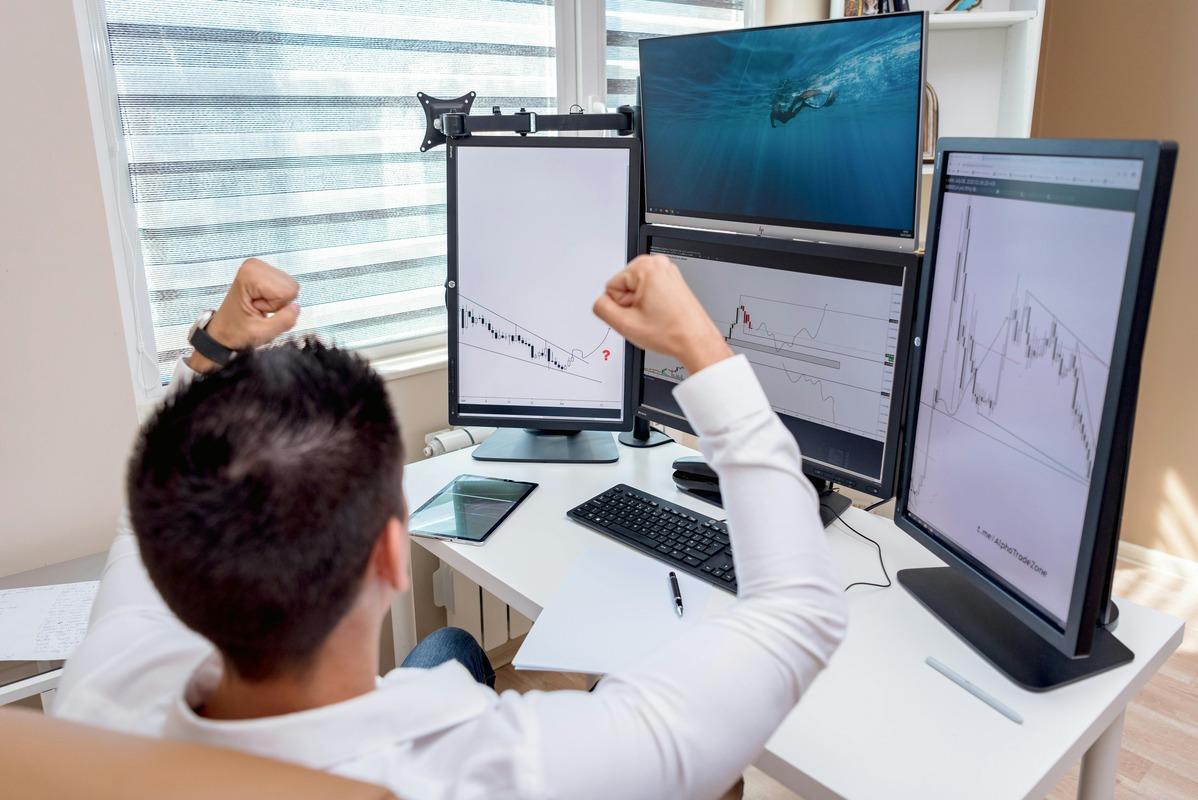
There’s a moment every funded trader knows well. You’re mid-trade, the market moves against you, and suddenly your dashboard flashes a warning. You haven’t blown the account. But the system noticed. And that’s exactly the point.
The rapid growth of proprietary trading over the past few years hasn’t happened by accident. Yes, access to capital matters. But what’s really changed the game is technology.
Today, every serious prop firm relies on sophisticated digital systems to track, evaluate, and manage trader performance in real time.
These systems ensure traders follow rules, manage risk responsibly, and maintain the kind of consistency that actually justifies scaling capital.
Understanding how these systems work gives you a genuine edge, whether you’re currently in an evaluation phase or just trying to figure out which firm deserves your time.
From Manual Oversight to Automated Everything
Not long ago, prop firm oversight was largely manual. Compliance teams would review trade logs, check daily P&L, and flag rule violations after the fact. It was slow, inconsistent, and honestly, pretty easy to game if you knew the gaps.

That world is gone. Modern firms have shifted entirely to automated systems that monitor multiple trading accounts simultaneously, in real time, without any human lag. And the integration runs deep.
Most monitoring infrastructure connects directly with platforms like MT4, MT5, and cTrader through API connections, which means every order, every position size, every drawdown figure is captured the moment it happens. No delays. No gaps.
Analytics Dashboards: Where Performance Becomes Visible
The analytics dashboard is the nerve center of any funded trading environment. And the good ones go well beyond showing your current balance.
Real-time profit and loss tracking is the obvious feature. But what’s interesting is how dashboards surface the metrics that actually reveal trading quality: win rate, risk-reward ratio, trade history patterns, and consistency scores.
These get presented visually through charts and performance reports that make it genuinely easy to spot where a trader is strong and where they’re quietly bleeding edge.
Here’s the thing about this. Traders often think firms are just watching for rule violations. But dashboards serve a dual purpose. Yes, firms use them to evaluate consistency and flag problems.
But good traders use them too, to identify behavioral patterns they’d never notice trade by trade. Take a hypothetical example: a trader with a 60% win rate but a risk-reward ratio consistently below 1:1 looks profitable on the surface.
The dashboard shows that the maths won’t hold long-term. That’s genuinely valuable feedback.
Risk Tracking Systems and Capital Protection
This is where technology gets serious. Risk tracking systems are designed with one primary goal: protecting firm capital before a problem becomes a crisis.
Daily loss limits, maximum drawdown thresholds, real-time equity monitoring, and exposure limits per trade. These aren’t manual checkboxes. They’re automated parameters baked into the system.
When an account approaches a risk threshold, the system flags it automatically. Sometimes that means a warning. Sometimes it means a hard stop.
The tricky part, from a trader’s perspective, is that these systems don’t negotiate. They don’t care that you were “almost there” or that the trade looked good on paper. The rule is the rule, and the technology enforces it instantly.
Automated Rule Enforcement: Fair, Fast, and Impartial
Let’s be real about something most traders don’t fully appreciate until they’ve experienced it. Automated rule enforcement removes human bias from the equation entirely.
When a trader violates a parameter, whether it’s holding positions over the weekend, exceeding the daily loss limit, or trading a restricted instrument, the system responds automatically. Account restrictions kick in. Trade execution gets blocked. Compliance monitoring catches it in real time.
This matters more than it might seem. In a manual system, rule enforcement is inconsistent by nature. Some violations get caught, others don’t.
With automated systems, every trader operates under identical conditions. That’s actually fairer, even when it feels brutal in the moment.
The Metrics That Actually Matter to Prop Firms
Most traders obsess over profit. Prop trading firms obsess over consistency. And that distinction is important.
The key performance indicators firms actually care about include profit factor, risk-to-reward ratio, win rate, maximum drawdown, and consistency score. Each one tells a different part of the story.
Profit factor shows whether your winners genuinely outweigh your losers over time. Maximum drawdown reveals how much capital erosion you’re willing to tolerate before course correcting.
But the consistency score is the one that often catches traders off guard. A trader who makes 8% one month and loses 6% the next isn’t demonstrating the kind of stable edge that justifies larger capital allocation.
Firms want to see reliable, repeatable performance, not occasional brilliance.
Platform Integration and Real-Time Data Flow
The seamless connection between monitoring systems and trading platforms is what makes all of this possible.
MT4, MT5, and cTrader integrations enable real-time data from trading activity to flow directly into monitoring dashboards. Order execution gets tracked, position sizes get logged, and account metrics update continuously.
This isn’t just a technical detail. It means there’s no window where behavior goes unobserved, which changes how traders approach discipline in ways that manual systems never could.
Comparing Technology Across Firms
Not all prop firms invest equally in their monitoring infrastructure. Dashboard quality varies significantly.
Some firms offer detailed visual analytics while others provide bare-minimum account metrics. The speed of risk monitoring and the accuracy of data reporting also differ.
Traders often compare different platforms, including various FTMO alternatives, to evaluate which firms offer better technology and more transparent performance tracking tools. It’s worth doing that comparison deliberately rather than just chasing the biggest account size.
Technology’s Role in Scaling Funded Traders
Many of the best-funded trader programs rely on advanced technology not just for monitoring but for scaling decisions too.
Evaluation phase progress gets tracked automatically. Consistency metrics trigger account upgrade eligibility. The entire scaling process becomes data-driven rather than subjective.
That’s a genuinely good development for traders who perform well. It removes favoritism and makes advancement merit-based.
Where This Is All Heading?
Technology has become the backbone of modern proprietary trading. From analytics dashboards to automated risk enforcement, these systems create structured, transparent environments where consistent traders thrive and undisciplined ones get filtered out quickly.
As the industry evolves, these monitoring tools will only get more sophisticated. For traders who understand how they work, that’s not a threat. It’s an advantage.
Get 3 Free Stock Ebooks
Discover top-performing stocks in AI, Crypto, and Technology with expert analysis.
- Top 10 AI Stocks - Leading AI companies
- Top 10 Crypto Stocks - Blockchain leaders
- Top 10 Tech Stocks - Tech giants


