



Key Takeaways
- Bitcoin remained stuck around $77,800, unable to surpass the $78,700 resistance level as its month-long rally lost momentum
- Japanese core inflation accelerated to 1.8% in March, fueling speculation of a potential Bank of Japan interest rate increase by June
- Iran’s expanded naval mining operations in the Strait of Hormuz threaten 20% of global seaborne oil traffic
- American equity futures climbed modestly following Trump’s announcement extending the Israel-Lebanon ceasefire by three weeks
- Intel surged 15% in extended trading on robust quarterly results, while Tesla, IBM, and ServiceNow declined post-earnings
Cryptocurrency markets are facing significant resistance as mounting geopolitical concerns and emerging Japanese economic indicators create headwinds across global financial assets.
Bitcoin exchanged hands near $77,800 during Friday’s early Asian trading session. The digital asset couldn’t overcome Thursday’s peak of $78,700. The upward momentum that began in late March from approximately $65,000 has visibly weakened since mid-week.
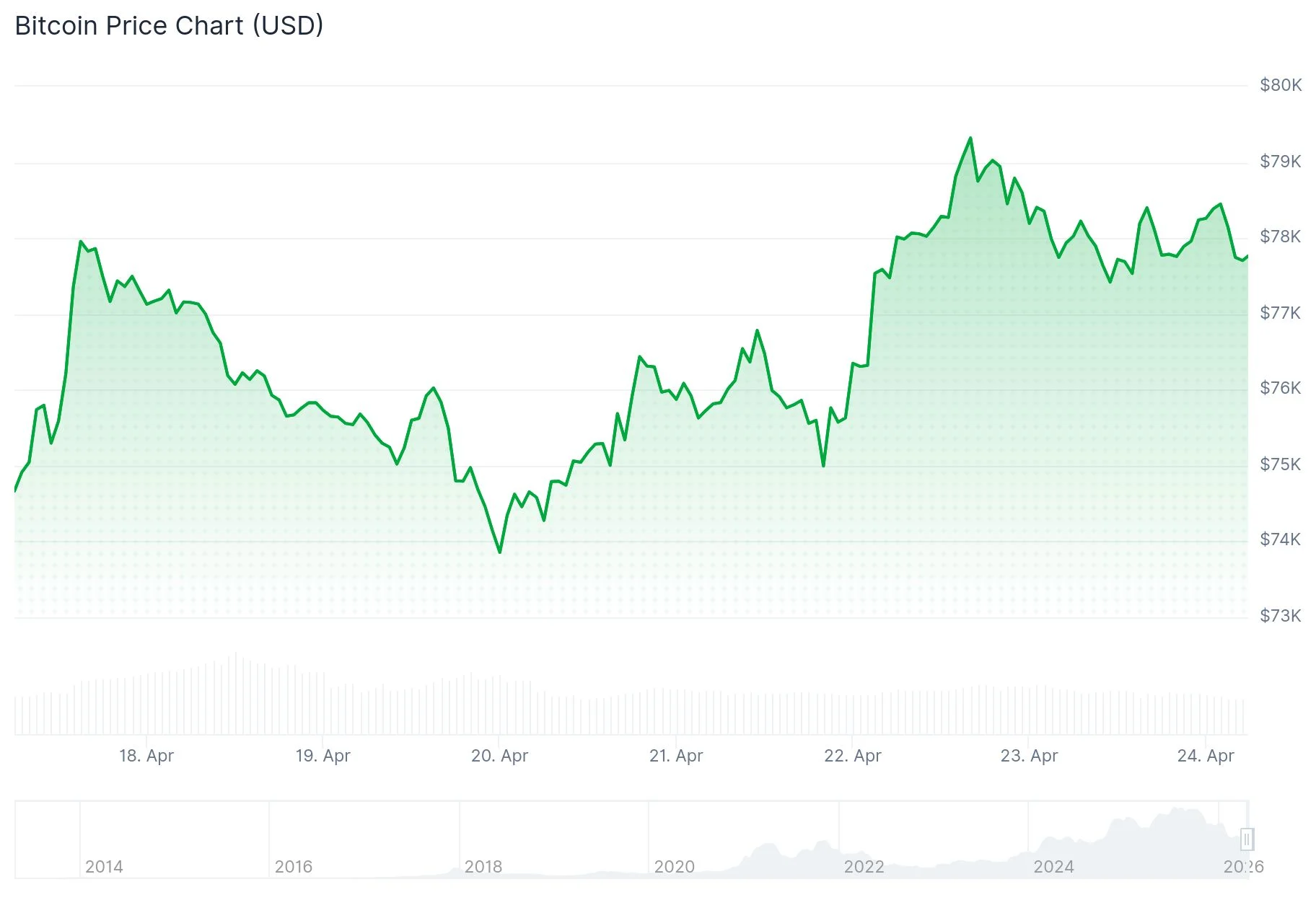
Ethereum declined 0.8% to approximately $2,300, showing greater weakness compared to Bitcoin’s more modest 0.6% retreat during the identical timeframe.
The digital asset selloff corresponds with newly published Japanese inflation statistics. Japan’s Corporate Service Price Index expanded 3.1% year-over-year in March, exceeding analyst projections of 3.0%.
Japanese core inflation registered 1.8% in March, advancing from February’s 1.6% reading. This marks the first monthly acceleration observed in five months. Overall inflation increased to 1.5% from the previous 1.3%.

Central Bank Policy Implications
Market observers anticipate the Bank of Japan will maintain current interest rates at its upcoming policy meeting while signaling future tightening measures. June has emerged as a probable timing for monetary policy adjustments.
Should the Bank of Japan adopt a more hawkish stance, the Japanese yen could experience substantial appreciation. Prevailing market sentiment on the yen remains bearish, creating conditions for an abrupt directional shift.
Yen strengthening could negatively impact risk-oriented assets worldwide. Historically, the Japanese currency has served as a funding source for leveraged investments in equities and cryptocurrencies. A yen appreciation event might catalyze widespread liquidation across multiple asset classes.
According to Axios reporting, Iran has intensified naval mine deployment in the Strait of Hormuz throughout this week. This strategic waterway facilitates approximately 20% of worldwide seaborne crude oil transportation. Maritime traffic through the region has contracted dramatically since hostilities commenced in late February.
WTI crude futures have climbed more than 40% to $96 since Iran-related conflict escalation began. Japan, heavily dependent on crude imports, faces particularly acute exposure to these price dynamics.
Pentagon officials informed congressional lawmakers that mine clearance operations would require a minimum six-month timeframe, commencing only after conflict resolution. Officials additionally cautioned that American inflation could remain persistent, complicating Federal Reserve rate reduction efforts.
Equity Market Movements
US equity index futures registered modest overnight gains. Nasdaq 100 futures advanced 0.6%, while S&P 500 futures increased 0.1%. Dow futures retreated 0.2%.
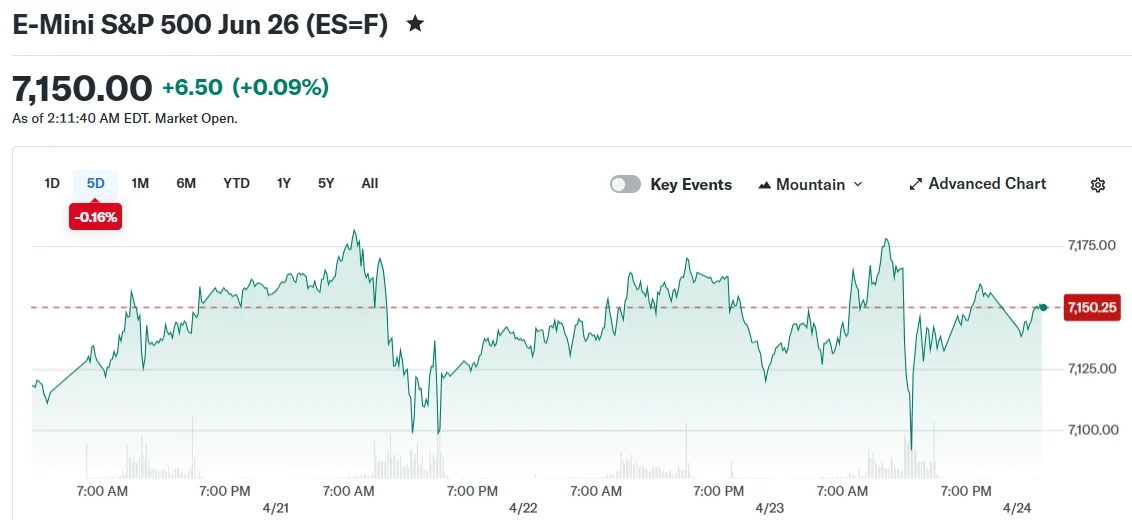
President Trump disclosed a three-week prolongation of the Israel-Lebanon ceasefire agreement, though markets demonstrated minimal reaction. The S&P 500, Nasdaq, and Dow Jones all registered losses in the previous trading session.
Intel shares soared approximately 15% during after-hours trading following publication of first-quarter financial results exceeding analyst expectations. Tesla, IBM, and ServiceNow experienced post-earnings declines after releasing their respective quarterly reports.
Meta and Microsoft have both unveiled workforce reduction initiatives aimed at controlling escalating expenses associated with artificial intelligence infrastructure investments.
Friday’s corporate earnings schedule features reports from Procter & Gamble, HCA Healthcare, and Norfolk Southern.
Get 3 Free Stock Ebooks
Discover top-performing stocks in AI, Crypto, and Technology with expert analysis.
- Top 10 AI Stocks - Leading AI companies
- Top 10 Crypto Stocks - Blockchain leaders
- Top 10 Tech Stocks - Tech giants


