


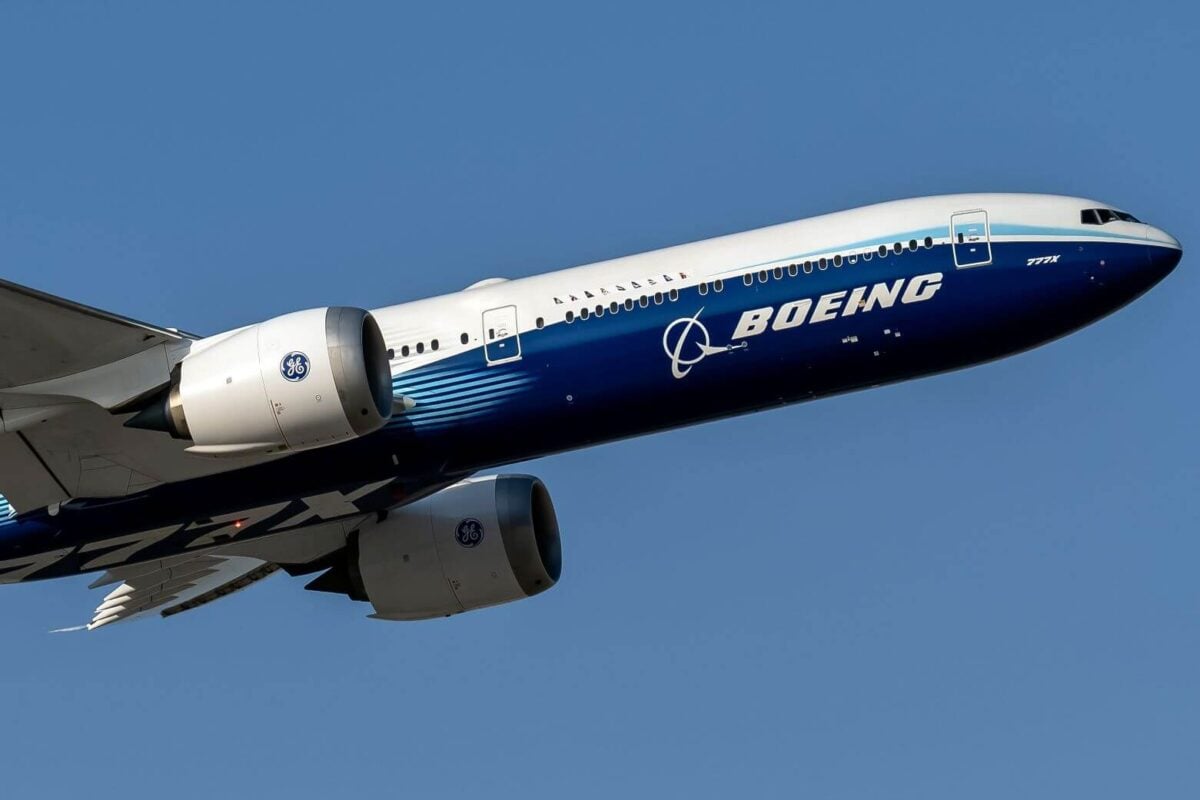
Key Highlights
- Boeing’s Q1 adjusted loss came in at $0.20 per share, significantly better than the anticipated $0.66 loss
- Quarterly revenue increased 14% compared to last year, reaching $22.2 billion versus the $21.99 billion projection
- The aerospace giant handed over 143 commercial aircraft during the quarter, compared to 130 in the prior-year period
- Company backlog reached an all-time high of $695 billion, with more than 6,100 commercial planes on order
- Defense segment revenue surged 21% to $7.6 billion; free cash outflow of -$1.45 billion beat the -$2.61 billion forecast
The aerospace manufacturer entered earnings season under pressure. Shares had declined approximately 10% following the previous quarterly announcement, with an additional 2% drop triggered by Middle Eastern conflict concerns. Tuesday’s financial results needed to restore investor confidence.
Mission accomplished.
The company unveiled first-quarter results showing an adjusted loss of $0.20 per share alongside $22.2 billion in total revenue. Analysts had projected a steeper loss of $0.66 per share with sales of $21.3 billion. The positive surprise sent shares soaring approximately 4.6% in premarket activity to $229.25.
Top-line growth of 14% year-over-year marked a substantial improvement from the comparable quarter, when Boeing reported a $0.49 per share deficit on $19.5 billion in revenue. The upswing stemmed primarily from accelerated aircraft production and deliveries.

Commercial aircraft deliveries totaled 143 units during the three-month period, representing growth from 130 planes delivered in the first quarter of 2025. Production rates show the 737 program operating at 42 units monthly, while the 787 maintains a steady pace of eight aircraft per month.
Unprecedented Order Book Despite Continued Losses
Boeing’s order backlog hit an unprecedented $695 billion, encompassing over 6,100 commercial jetliners awaiting production. Chief Executive Kelly Ortberg characterized the performance as “a strong start to the year,” highlighting expanding customer demand throughout various business segments.
Despite progress, the Commercial Airplanes division continues operating at a loss. That segment generated $9.2 billion in revenue, reflecting 13% growth, yet recorded a $563 million operating deficit.
Defense and services operations provided stronger financial performance. The Defense, Space & Security unit delivered $7.6 billion in revenue, marking 21% growth, with operating margins expanding to 3.1% from the previous year’s 2.5%. Global Services contributed $5.4 billion, up 6%, while achieving a robust 18.1% operating margin.
Free cash consumption reached $1.45 billion, substantially outperforming analyst expectations of $2.61 billion in cash burn. Operating cash flow registered negative $179 million, a marked improvement from the year-earlier negative $1.6 billion.
Cash and marketable securities totaled $20.9 billion at period-end, declining from $29.4 billion at the conclusion of the fourth quarter, primarily due to debt reduction and ongoing operational cash requirements.
MAX Variant Approvals Remain Critical Milestone
The manufacturer anticipates regulatory certification for both 737-7 and 737-10 MAX models during 2026, with initial customer deliveries scheduled for 2027. RBC analyst Ken Herbert identified the 737-10 as “critical for margins inflecting positive in 2027,” emphasizing its favorable pricing characteristics.
The broader aerospace sector faced headwinds Tuesday, with GE Aerospace sliding 5.6% and Northrop Grumman tumbling nearly 7%, despite both companies exceeding earnings projections. Analyst Rob Stallard characterized the sector movement as a “bloodbath,” attributing weakness to investor worries about Middle Eastern flight restrictions potentially reducing worldwide air traffic expansion by roughly 3%.
The company projects delivering approximately 660 commercial aircraft throughout 2026, up from 600 deliveries in 2025.
Get 3 Free Stock Ebooks
Discover top-performing stocks in AI, Crypto, and Technology with expert analysis.
- Top 10 AI Stocks - Leading AI companies
- Top 10 Crypto Stocks - Blockchain leaders
- Top 10 Tech Stocks - Tech giants


