



Key Takeaways
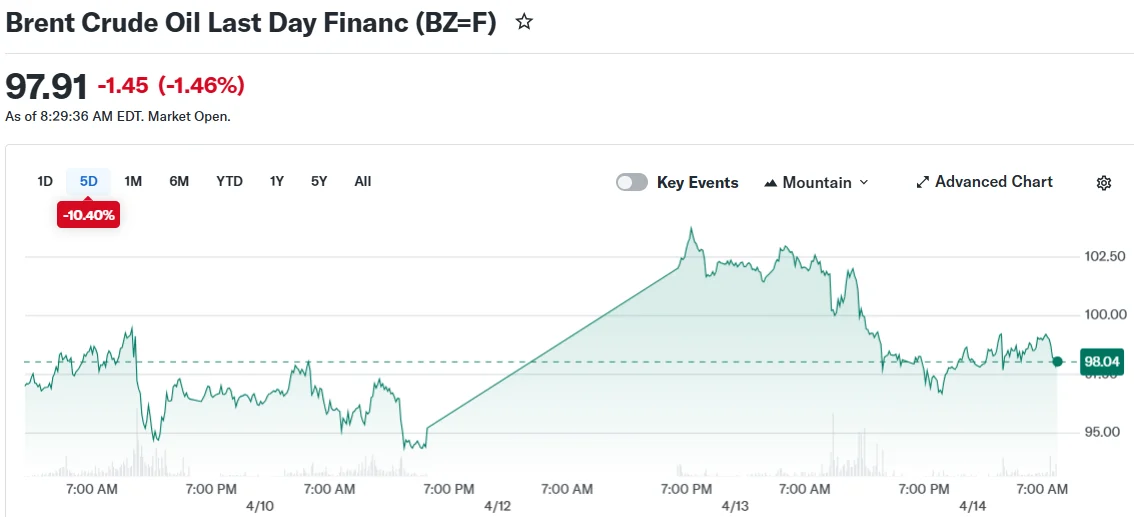
- WTI crude declined 1.6% to $97.47 while Brent fell 0.3% to $99.04 per barrel on Tuesday
- Beijing condemned Washington’s naval blockade as “dangerous and irresponsible” action
- Riyadh expressed concerns that the blockade strategy may provoke Iranian escalation
- Pakistan has proposed hosting additional U.S.-Iran negotiations before the current ceasefire expires
- Global oil production has declined by 10.1 million barrels daily since conflict erupted, according to IEA data
Crude oil markets experienced downward pressure Tuesday as worldwide condemnation of Washington’s naval blockade against Iranian facilities intensified, with traders closely monitoring diplomatic developments for potential breakthrough agreements.
Brent crude contracts decreased 0.3% to settle at $99.04 per barrel. West Texas Intermediate saw a sharper decline of 1.6%, reaching $97.47 per barrel.
Washington initiated the naval blockade Monday morning. President Trump characterized the operation as a strategic measure to compel Tehran toward comprehensive peace negotiations. The blockade encompasses Iranian maritime facilities along with strategic waterways including the Persian Gulf, Gulf of Oman, and designated Arabian Sea zones.
Beijing issued sharp criticism of the operation Tuesday. A foreign ministry representative characterized the naval blockade as “dangerous and irresponsible,” the South China Morning Post reported.
Riyadh has similarly voiced apprehensions. Senior Arab diplomatic sources informed the Wall Street Journal that Saudi Arabia is actively lobbying Washington to withdraw the blockade, concerned it may trigger Iranian military response.

Chinese President Xi Jinping unveiled a comprehensive four-point peace framework following discussions with Abu Dhabi’s Crown Prince, contributing to mounting international pressure for conflict resolution.
Despite diplomatic criticism, President Trump stated Monday that Tehran’s “right people” remain committed to negotiating a settlement. He verified that Iranian representatives have initiated contact with the White House expressing willingness to continue dialogue.
Washington’s primary negotiating terms encompass complete restoration of Strait of Hormuz navigation and Tehran’s commitment to suspend uranium enrichment activities for two decades.
Vice President JD Vance, who headed the American delegation during Islamabad’s weekend negotiations, rejected characterizations of the talks as unsuccessful. He informed Fox News that “good conversations” occurred and emphasized that the “ball is in Iran’s court.”
Islamabad has extended an invitation to facilitate additional negotiating sessions before the existing fourteen-day ceasefire concludes. Both Pakistani and Iranian diplomatic sources confirmed this development to Reuters.
Market Analysis
WTI futures settled beneath Brent crude pricing Tuesday, marking the second straight session. This represents the first occurrence of consecutive days with this pricing pattern since nearly four years prior to April 2. Market analysts interpret this development as evidence that traders are incorporating optimism regarding potential diplomatic resolution.
The International Energy Agency cautioned that current pricing may inadequately account for the complete magnitude of supply disruption.
Supply Dynamics
The IEA documented that worldwide oil production contracted by 10.1 million barrels daily throughout March, declining to 97 million barrels per day. The organization characterized this disruption as unprecedented in scale.
Global petroleum demand projections indicate an anticipated contraction of 80,000 barrels daily throughout the current year.
Washington has positioned 16 naval vessels throughout Middle Eastern waters, though none have entered Persian Gulf territory.
Israel and Lebanon commenced direct peace negotiations in Washington Tuesday, with Secretary of State Marco Rubio participating in the diplomatic sessions.
Get 3 Free Stock Ebooks
Discover top-performing stocks in AI, Crypto, and Technology with expert analysis.
- Top 10 AI Stocks - Leading AI companies
- Top 10 Crypto Stocks - Blockchain leaders
- Top 10 Tech Stocks - Tech giants


