


TLDR
- Crude oil benchmarks retreated with Brent falling 2% toward $97 per barrel following Iranian statements about potential blockade discussions
- President Trump maintained the naval blockade while extending the ceasefire with Iran without a specific end date
- Approximately 20% of worldwide petroleum supply continues to be impacted by the closed Strait of Hormuz
- American petroleum stockpiles decreased by 4.4 million barrels in the latest week, significantly exceeding forecasts
- Diplomatic efforts collapsed as neither Washington nor Tehran sent representatives to scheduled Pakistan meetings
Crude oil markets experienced a pullback on Wednesday following statements from Iranian officials suggesting they had observed indications that Washington might be willing to lift its naval blockade of the Strait of Hormuz. The remarks emerged as traders attempted to interpret conflicting messages emanating from both capitals.
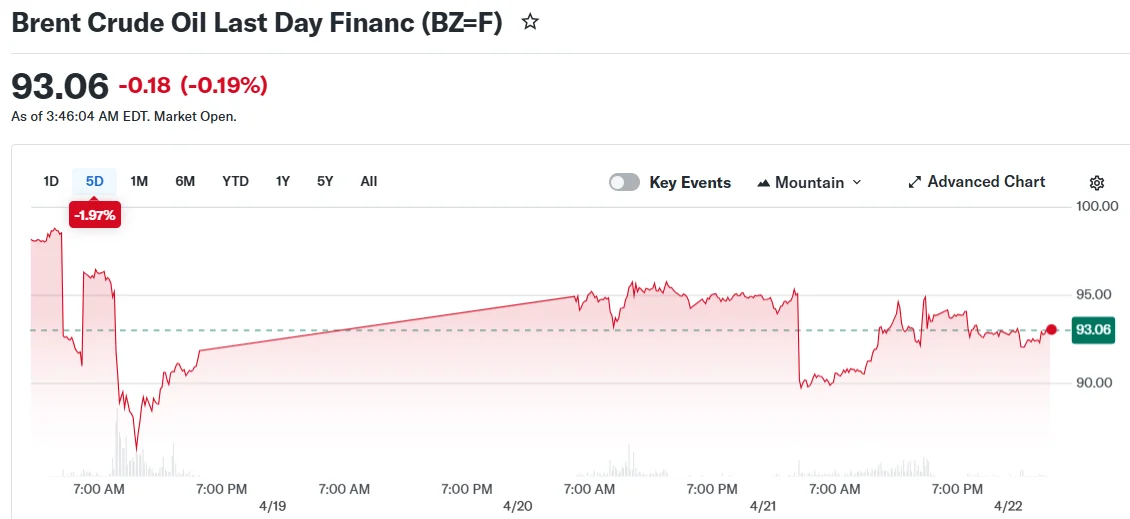
Brent crude petroleum fell as much as 2% to approximately $97 per barrel. West Texas Intermediate declined roughly 1.2% to $84.95. The two major benchmarks had climbed nearly 9% during the preceding two trading sessions.
Iran’s United Nations representative, Amir-Saeid Iravani, informed media members that should Washington remove the blockade, subsequent diplomatic discussions could occur in Islamabad. He indicated Tehran’s preparedness to participate in negotiations aimed at achieving a political resolution.
President Trump prolonged the ceasefire arrangement with Iran on Tuesday, characterizing it as having no fixed termination point. However, he maintained the naval blockade unchanged, stating that American forces would refrain from additional military action while discussions proceed “in one form or another.”
The President subsequently stated on Truth Social that removing the blockade absent an agreement would signify there “can never be a Deal with Iran,” implying military action could become the sole remaining alternative.
The Strategic Importance of the Hormuz Strait
The Strait of Hormuz typically transports approximately twenty percent of global petroleum output. Following Iran’s effective closure of the waterway in late February, crude prices have experienced substantial increases. American fuel prices at the pump have risen approximately 40% since hostilities commenced.

Oil market turbulence has reached levels unseen since 2020, during the Covid pandemic’s impact on consumption. Market participants have responded to every development, yet actual supply availability remains limited.
“News is arriving at breakneck speed, but the actual barrels remain immobilized,” commented Rebecca Babin, a senior energy trader at CIBC Private Wealth Group.
Tehran has maintained it will not permit strait passage while American naval forces continue intercepting vessels. Washington reported boarding a sanctioned petroleum tanker on Tuesday and has redirected a combined total of 28 ships since implementing the blockade.
At least two Iranian tankers carrying full loads successfully navigated past American warships during the current week, transporting approximately 9 million barrels of petroleum to destinations.
Diplomatic Efforts Collapse
Scheduled negotiations in Pakistan disintegrated this week following both nations’ decisions not to dispatch delegations. US Vice President JD Vance withdrew from a scheduled Islamabad visit, while Iranian media sources indicated Tehran informed Washington of its nonattendance.
Treasury Secretary Scott Bessent announced the continuation of “maximum pressure” tactics against Iran, including measures targeting petroleum exports through Kharg Island, the nation’s primary crude shipping facility.
Iran channels the majority of its petroleum exports to independent Chinese refineries, which face reduced exposure to international sanctions. Beijing has expressed opposition to American sanctions measures.
American crude petroleum reserves contracted by 4.4 million barrels during the week concluding April 17, based on American Petroleum Institute figures, substantially surpassing the anticipated reduction of 1 million barrels.
Get 3 Free Stock Ebooks
Discover top-performing stocks in AI, Crypto, and Technology with expert analysis.
- Top 10 AI Stocks - Leading AI companies
- Top 10 Crypto Stocks - Blockchain leaders
- Top 10 Tech Stocks - Tech giants


