


TLDR
- The Federal Reserve cut interest rates by 0.25% to a range of 3.75%-4%, marking the second consecutive rate cut
- Two officials dissented in opposite directions: Stephen Miran wanted a 0.50% cut while Jeff Schmid preferred no cut at all
- The Fed will stop shrinking its balance sheet on December 1, ending the quantitative tightening program
- Fed Chair Jerome Powell said a December rate cut is “not a foregone conclusion” despite market expectations
- The ongoing government shutdown has prevented the Fed from accessing key economic data like jobs reports and retail sales figures
The Federal Reserve cut interest rates by a quarter percentage point on Wednesday. The central bank lowered its benchmark rate to a range of 3.75% to 4%. This marks the second consecutive meeting where the Fed reduced rates.
The decision came through a split vote of 10-2. Two officials voted against the move but for different reasons. Stephen Miran, President Trump’s newest appointed governor, wanted a larger cut of half a percentage point.
Kansas City Fed President Jeff Schmid voted against any cut. He preferred to keep rates unchanged. This type of split decision, with dissents on both sides, has not happened since September 2019.
The ongoing government shutdown has created problems for Fed officials. The shutdown began on October 1 and has stopped most economic data collection. The September jobs report remains unpublished.
The September inflation data came out more than two weeks late. The October jobs report will likely be delayed. The White House said October’s inflation report probably will not be published at all.
Fed Chair Jerome Powell addressed the uncertainty after the meeting. He said a rate cut at the December meeting is “not a foregone conclusion.” Powell noted that committee members had strongly different views about December.
Balance Sheet Changes
The Fed announced it will stop shrinking its balance sheet on December 1. This process, called quantitative tightening, involves letting bonds mature without replacing them. The Fed has reduced its portfolio by about $2.3 trillion.

The balance sheet currently stands at $6.6 trillion. During the COVID crisis, it had grown to nearly $9 trillion. Powell said earlier this month that signs of tightening in money markets suggested it was time to stop the runoff.
The Fed wants to avoid the strains in lending markets that happened in September 2019. The plan is to stop when bank reserves at the Fed reach a level above what officials consider “ample.”
Economic Conditions and Inflation
The Fed’s statement acknowledged the data problems caused by the shutdown. Officials said their assessment relied on “available indicators.” They noted job gains have slowed this year and unemployment has edged up but remained low through August.
The statement said more recent indicators matched these developments. It also repeated that “downside risks to employment rose in recent months.” Without official data, Fed officials have used private sector reports and surveys.
These alternative sources show continued weakness in job growth. Inflation remains above the Fed’s 2% target. The latest Consumer Price Index showed core prices rose 3% in September.
This was one-tenth of a percent lower than August. However, the rate is still stuck at the 3% level. The overall inflation rate also came in at 3%, pushed higher by energy costs.
Some price increases have links to President Trump’s tariffs. Miran said before the meeting he was concerned about trade tensions with China. He wanted to cut rates more quickly to avoid damaging the labor market.
Miran does not believe tariffs will lead to higher inflation. Schmid has said inflation remains too high. He warned that cutting rates too fast could give firms more pricing power.
This could cause tariffs to pass through to consumers more easily. The rate cut follows months of pressure from President Trump. Trump and White House allies have accused Powell of being “too late” to lower rates.
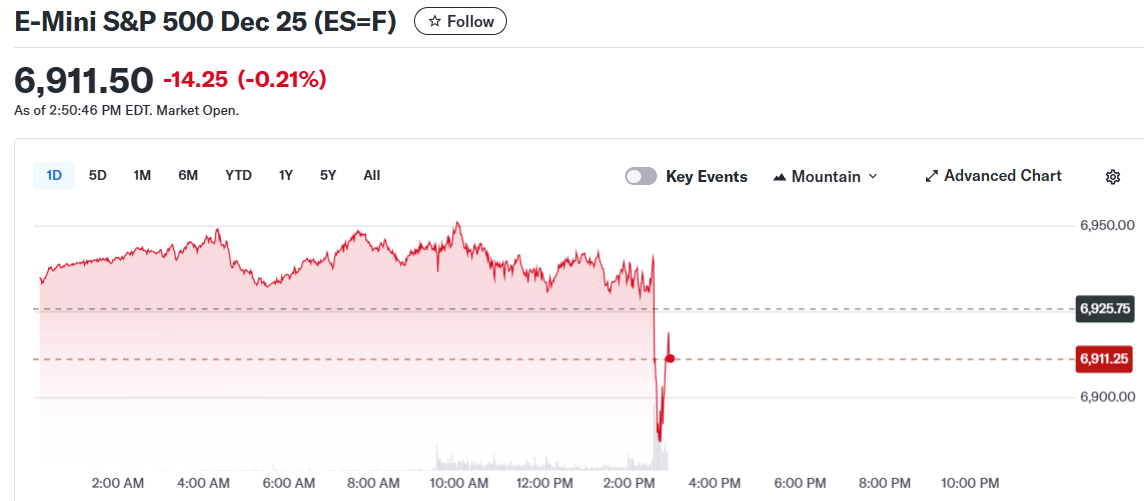
Markets initially rose after the rate decision. Stocks then turned lower after Powell’s comments about December. Traders had priced in an 85% chance of another cut at the next meeting.
Get 3 Free Stock Ebooks
Discover top-performing stocks in AI, Crypto, and Technology with expert analysis.
- Top 10 AI Stocks - Leading AI companies
- Top 10 Crypto Stocks - Blockchain leaders
- Top 10 Tech Stocks - Tech giants


