



TLDR
- Gold futures declined 0.4% to $4,092 per ounce on Wednesday after Tuesday’s 5.7% crash—the steepest drop in more than 12 years
- Mining giant Newmont saw shares fall 2.9% following a 9% loss the previous day as profit-taking accelerated across the sector
- Gold remains up 55% year-to-date and is tracking toward its strongest annual performance since 1979 despite recent volatility
- Technical indicators showed overbought conditions since September, prompting Citigroup to downgrade its gold outlook and predict consolidation near $4,000
- Retail investors who drove recent gains are now exiting positions as the government shutdown prevents release of key CFTC positioning data
Gold prices extended their decline on Wednesday following the biggest single-day crash in more than 12 years. Futures contracts dropped 0.4% to $4,092 per ounce during early trading hours.
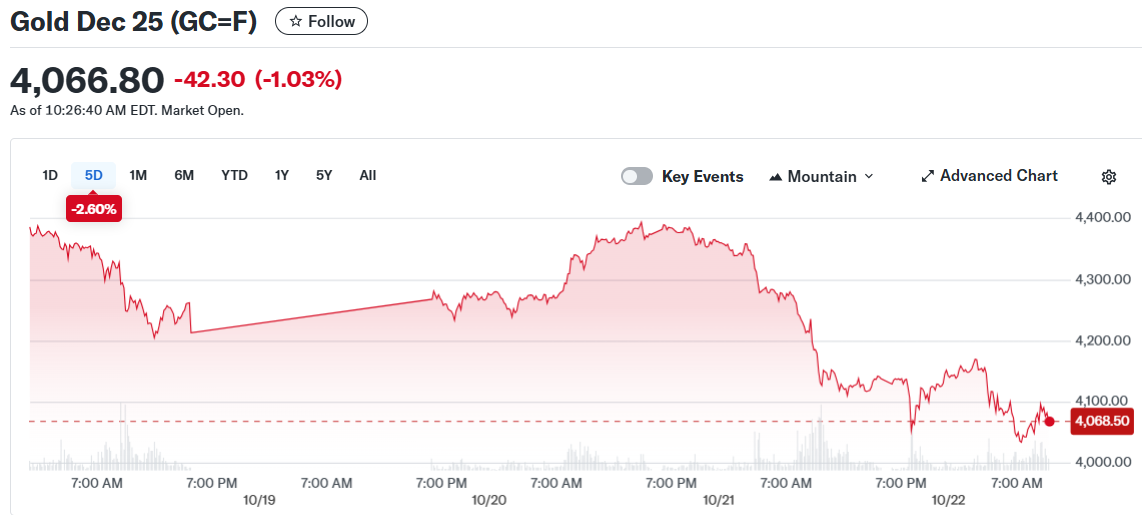
The precious metal had plunged 5.7% on Tuesday, with spot prices falling as much as 6.3% intraday. The selloff marked the largest one-day decline since 2013 and caught many market participants off guard.
Newmont shares dropped 2.9% in premarket trading after losing 9% during Tuesday’s session. The mining stock’s decline reflects broader weakness across the gold sector as producers face pressure from falling metal prices.
Deutsche Bank’s Henry Allen noted the selloff was unusual given declining bond yields. Lower yields typically support gold because the metal doesn’t generate interest income like bonds do.
Allen characterized the move as a standard pullback following weeks of uninterrupted gains. Despite the sharp reversal, gold is still positioned for its best annual performance since 1979 when the Iranian Revolution triggered an oil crisis.
Overbought Conditions Trigger Technical Selling
Standard Chartered analysts identified technical selling as the main driver behind the price collapse. Gold has traded in overbought territory since early September according to the bank’s indicators.

Suki Cooper, Standard Chartered’s head of commodities research, said the firm expects prices to rebuild momentum in 2026. Technical charts had been flashing warning signs that the rally was overextended after gold set multiple record highs throughout 2025.
The metal is still up approximately 55% for the year. The surge began in mid-August fueled by expectations of Federal Reserve interest rate cuts and concerns about government debt levels.
Retail Demand Shifts as Positioning Data Goes Dark
Retail investors entered the gold market in force during recent months after watching from the sidelines earlier in the year. Viral social media videos showed crowds lined up outside bullion dealers seeking to buy physical gold.
Trading volume in gold ETF options and futures contracts soared as individual investors used leverage to amplify their positions. These derivative instruments allow traders to control large amounts of gold without purchasing physical metal.
Citigroup downgraded its gold outlook following Tuesday’s losses citing excessive investor positioning. The bank’s strategists forecast further price consolidation around the $4,000 level in upcoming weeks.
Strategists noted that prices had moved ahead of fundamental drivers including the so-called debasement trade. Central banks continue purchasing gold to reduce dollar exposure, providing underlying support for prices.
The ongoing U.S. government shutdown has prevented release of the Commodity Futures Trading Commission’s weekly positioning report. This data typically reveals how hedge funds and money managers are positioned in precious metals futures.
Without access to CFTC data, traders lack visibility into market positioning. This information vacuum may lead speculators to build larger positions than normal without realizing how crowded trades have become.
Silver rose 0.5% to $47.92 per ounce on Wednesday after dropping 7.1% the previous day. Platinum gained 1.1% to $1,536 while palladium declined.
President Trump said Tuesday that talks with Chinese President Xi Jinping could produce a favorable trade agreement. He acknowledged the meeting might not occur as planned.
Get 3 Free Stock Ebooks
Discover top-performing stocks in AI, Crypto, and Technology with expert analysis.
- Top 10 AI Stocks - Leading AI companies
- Top 10 Crypto Stocks - Blockchain leaders
- Top 10 Tech Stocks - Tech giants


