


TLDR
- Bullion declined approximately 1% Tuesday, sliding beneath the $4,800 per ounce threshold
- An appreciating greenback pressured precious metal valuations
- The temporary truce between Washington and Tehran concludes Wednesday amid unclear diplomatic prospects
- Hormuz Strait closure continues to disrupt global oil transport and fuel inflationary concerns
- Trump’s Federal Reserve nominee Kevin Warsh testifies before Senate committee as markets seek monetary policy clues
Precious metal valuations retreated Tuesday as market participants assessed the likelihood of diplomatic breakthrough between Washington and Tehran ahead of an imminent ceasefire expiration.
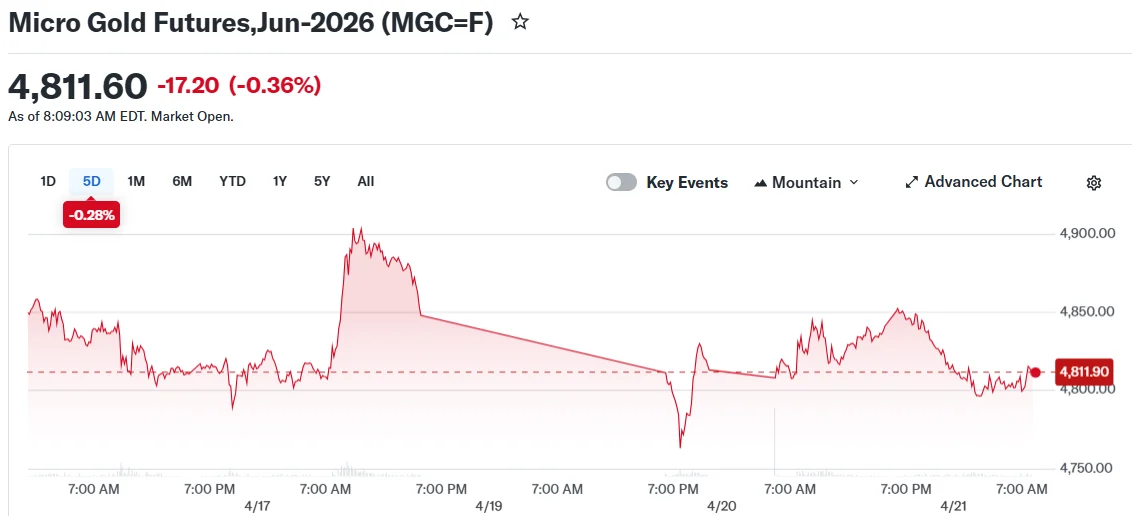
Spot bullion declined roughly 0.8% to settle at $4,782 per ounce during mid-morning European trading. Futures contracts similarly weakened, shedding approximately 0.6% to hover around $4,802 per ounce.
A strengthening greenback contributed significantly to the downturn. Dollar appreciation typically makes gold more costly for international purchasers, dampening overall demand.
The temporary cessation of hostilities between Washington and Tehran, declared by President Donald Trump on April 7th, reaches its conclusion Wednesday evening in the U.S. capital. Trump indicated the arrangement would likely not receive an extension.
Both nations have issued contradictory statements regarding potential renewed diplomatic engagement. While Trump mentioned Vice President JD Vance stands ready to travel to Islamabad for discussions, Iranian officials have not verified any delegation plans from Tehran.

Pakistan has served as an intermediary between the two powers. The confrontation erupted in late February following coordinated American and Israeli military operations targeting Iran.
Hormuz Shipping Lane Blockage Maintains Market Anxiety
The Strait of Hormuz, a critical waterway handling approximately twenty percent of global petroleum transport, has remained predominantly inaccessible since hostilities commenced. Though briefly reopened to merchant vessels Friday, authorities closed it again before the weekend concluded.
Elevated oil prices continue stoking worldwide inflation anxieties. This development carries significance for precious metals because accelerating price pressures may compel monetary authorities to maintain or increase borrowing costs. Rising rates generally disadvantage non-interest-bearing investments like bullion.
Gold has surrendered roughly 10% of its valuation since the confrontation began in late February. Silver likewise weakened Tuesday, falling 1.2% to $78.80 per ounce. Platinum and palladium also registered declines.
Commodity analyst Manav Modi noted markets remain “on edge” regarding potential diplomatic engagement before the truce expires, with “conflicting signals from both sides adding to volatility.”
Trump’s Fed Nominee Warsh Undergoes Senate Scrutiny
Market observers simultaneously monitored Senate Banking Committee proceedings for Kevin Warsh, the President’s Federal Reserve leadership selection. Warsh delivered testimony beginning at 10 a.m. Eastern time.
Trump has consistently advocated for reduced borrowing costs. While Warsh has expressed alignment with that philosophy, he has simultaneously criticized the central bank’s securities purchasing programs and advocated for balance sheet reduction.
In advance testimony, Warsh pledged to safeguard the Fed’s autonomy from political interference.
Precious metals experienced sharp selloffs following the late January announcement of Warsh’s nomination.
Warsh’s confirmation timeline remains uncertain. Current Chair Jerome Powell’s appointment concludes in May, though multiple legislators have advocated for his continuation during an ongoing governmental inquiry into Powell and Federal Reserve operations. Detractors characterize the investigation as an effort to influence central bank policymaking.
Get 3 Free Stock Ebooks
Discover top-performing stocks in AI, Crypto, and Technology with expert analysis.
- Top 10 AI Stocks - Leading AI companies
- Top 10 Crypto Stocks - Blockchain leaders
- Top 10 Tech Stocks - Tech giants


