


TLDRs
- Lucid stock dropped 9.6% despite Uber’s large ownership stake announcement.
- Investors remain concerned about liquidity despite $1.05B funding boost.
- Weak deliveries and recalls continue to pressure operational confidence.
- Robotaxi ambitions face heavy competition and execution challenges ahead.
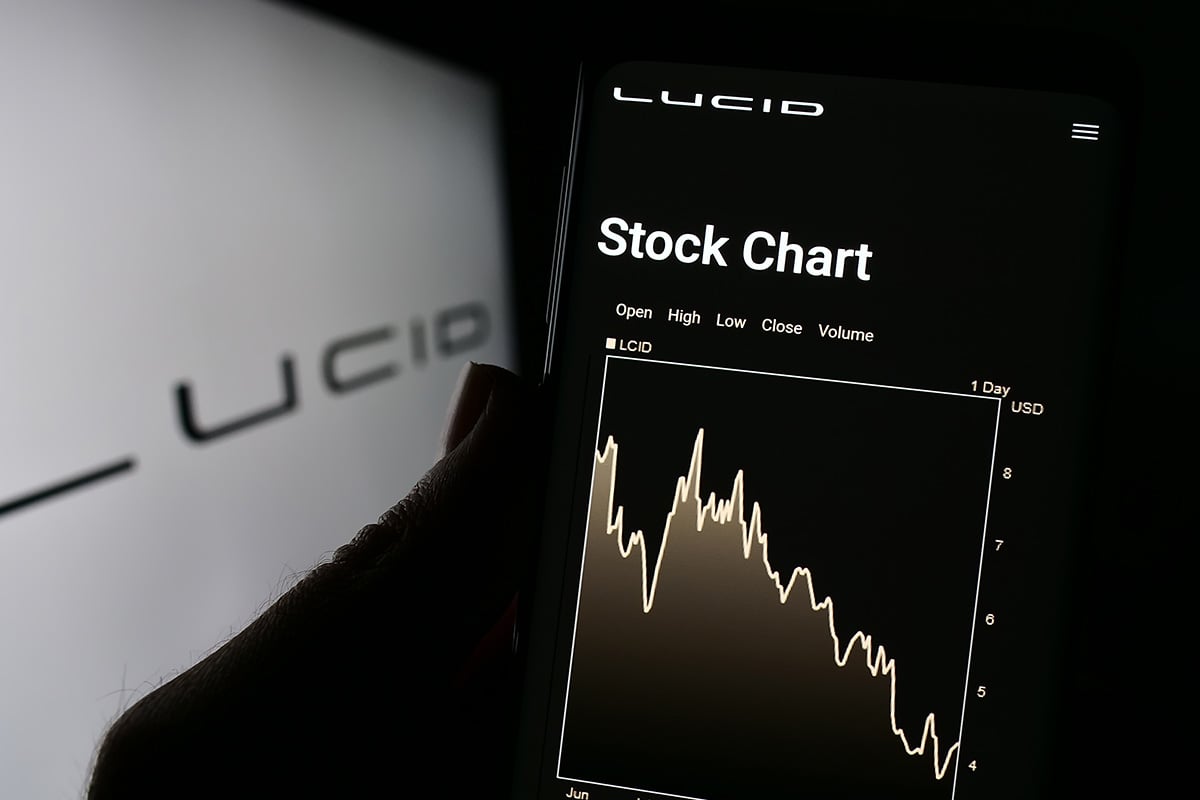
Lucid Group (NASDAQ: LCID) shares fell sharply on Thursday, sliding about 9.6% to close near $6.25 after briefly touching an intraday low of $6.22.
The decline came despite fresh optimism earlier in the week surrounding new funding agreements and a strategic partnership with Uber Technologies.
The drop signals that investors remain unconvinced about Lucid’s near-term financial stability, even after a significant capital injection and increased involvement from major backers. Market sentiment continues to lean cautious as the electric vehicle maker navigates a costly transition toward broader autonomy and robotaxi ambitions.
Uber Stake Fails to Convince
A key development that failed to lift investor confidence was Uber’s disclosure of an 11.52% stake in Lucid, amounting to over 37.7 million shares through a subsidiary. While the investment underscores growing strategic alignment between the two companies, it did little to counteract broader concerns about liquidity and execution risk.
Uber has also committed additional capital, increasing its total investment exposure to around $500 million, alongside a broader robotaxi partnership aimed at launching autonomous services in the San Francisco Bay Area. However, traders appeared more focused on Lucid’s cash burn trajectory than the partnership narrative.

$1.05B Funding Under Scrutiny
Lucid recently secured roughly $1.05 billion in fresh funding through a mix of share offerings and convertible preferred stock purchases. Saudi Arabia’s Public Investment Fund affiliate, Ayar Third Investment Co., contributed a major portion through a $550 million convertible investment, while Uber added another $200 million commitment.
Despite the scale of the raise, analysts argue that the capital may only provide short-term breathing room. Concerns persist that Lucid could require additional financing in the future, potentially through further dilutive equity issuance that could pressure existing shareholders.
Market observers noted that while the funding strengthens liquidity on paper, it does not fully resolve questions about long-term profitability or sustainable production scaling.
Weak Deliveries and Misses
Operational performance continues to weigh on sentiment. Lucid’s latest quarterly results showed production of approximately 5,500 vehicles, but only 3,093 deliveries to customers, falling short of market expectations.
Supply chain disruptions further complicated execution, including a 29-day delay affecting Gravity SUV output. Additionally, the company faced a recall of 4,476 Gravity units due to seatbelt anchor weld defects, adding to operational headwinds at a critical stage in its product rollout.
These setbacks have intensified doubts about Lucid’s ability to scale efficiently as it expands beyond its luxury EV segment.
Robotaxi Ambitions Face Competition
Lucid’s long-term strategy increasingly centers on autonomous driving and robotaxi deployment, positioning itself in a rapidly competitive space dominated by players like Tesla and emerging partnerships involving Rivian and Uber.
Uber itself is expanding aggressively in the autonomous sector, reportedly committing over $10 billion across various robotaxi and self-driving investments, with rollout plans targeting dozens of global cities by 2028.
However, Lucid’s near-term challenge remains more immediate: convincing investors during its upcoming May 5 earnings call that its recent capital raise can stabilize operations, improve margins, and support production goals without further shareholder dilution.
Get 3 Free Stock Ebooks
Discover top-performing stocks in AI, Crypto, and Technology with expert analysis.
- Top 10 AI Stocks - Leading AI companies
- Top 10 Crypto Stocks - Blockchain leaders
- Top 10 Tech Stocks - Tech giants


