


TLDRs;
- AMD’s strong AI-driven earnings boosted sentiment across semiconductor stocks.
- TSMC faces rising capacity pressure amid surging AI chip demand.
- Long-term server growth forecasts signal structural AI-driven expansion.
- Supply chain bottlenecks threaten pace of AI hardware shipments.
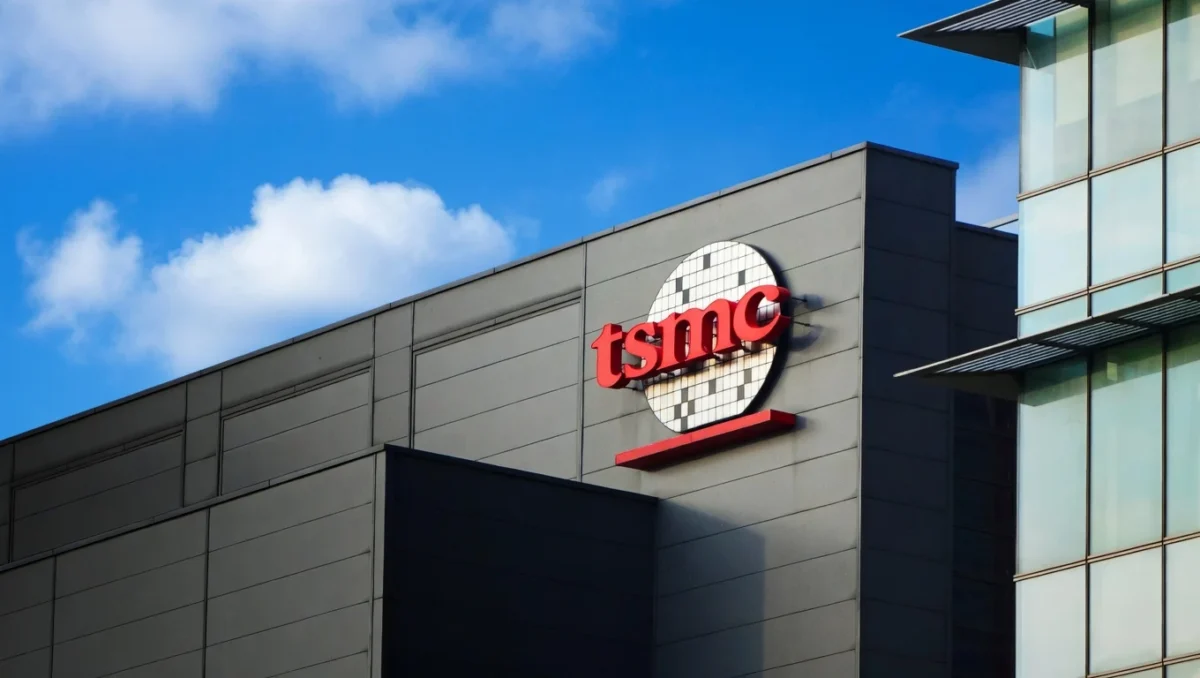
Taiwan Semiconductor Manufacturing Company (TSMC) saw its stock rally sharply after renewed optimism around artificial intelligence infrastructure demand, triggered by strong results from Advanced Micro Devices (AMD).
The market reaction underscores how tightly AI growth is now linked to semiconductor supply limitations, particularly at the world’s most advanced chip foundry.
TSMC, the dominant contract chip manufacturer for global tech giants, continues to sit at the center of the AI revolution. With demand for high-performance chips accelerating across data centers, cloud computing, and AI model deployment, investors are increasingly focused not just on growth, but on whether supply can keep up.
Taiwan Semiconductor Manufacturing Company Limited, TSM
AI Demand Drives Semiconductor Rally
AMD’s latest earnings report acted as a catalyst for the broader semiconductor sector. The company posted $10.3 billion in revenue, marking a 38% year-over-year increase, while its data-center division surged 57% to $5.8 billion. The results reinforced the idea that AI infrastructure spending is far from slowing.
Management also issued strong forward guidance, projecting $11.2 billion in revenue for the next quarter. CEO Lisa Su highlighted accelerating demand for AI systems, especially in server and inference workloads. This outlook fueled investor enthusiasm across chipmakers, with TSMC benefiting as the critical manufacturing backbone behind AMD’s processors.

Capacity Strain Intensifies at TSMC
TSMC’s position as a pure-play foundry means it does not design chips but manufactures them for clients like AMD and Nvidia. This makes it indispensable, but also exposes it directly to surging demand pressures.
The company has already warned that AI demand remains “extremely robust,” with advanced production nodes operating near full utilization. Its capital expenditure plan for 2026 is expected to land at the upper end of $52 billion to $56 billion, reflecting ongoing expansion efforts.
However, even aggressive investment may not fully ease constraints. Leading-edge fabrication capacity is complex, expensive, and time-intensive to scale, meaning supply bottlenecks could persist well into the next AI cycle.
AI Megatrend Reshapes Supply Chain
Beyond short-term earnings momentum, AMD’s updated long-term outlook added another layer of pressure on the semiconductor ecosystem. The company now expects server CPU demand to grow more than 35% annually through 2030, nearly doubling prior estimates.
This revision signals a structural shift in computing demand, moving beyond AI training models toward widespread deployment of AI inference systems across industries. As workloads diversify, chip requirements become more specialized, and more demanding on fabrication capacity.
For TSMC, this represents both opportunity and strain. While long-term demand visibility improves, the ability to physically produce enough advanced chips becomes the key constraint shaping future revenue.
Competition and Supply Risks Mount
The semiconductor industry is also becoming increasingly competitive. Samsung Electronics recently crossed the $1 trillion valuation mark, highlighting investor confidence across the broader chip ecosystem. Meanwhile, Intel and Samsung are reportedly exploring expanded manufacturing discussions with major customers such as Apple, though no formal production shifts have been confirmed.
At the same time, supply chain fragility remains a concern. High-bandwidth memory shortages and rising component costs are already affecting production planning across AI hardware makers. These constraints risk slowing down the pace at which strong demand translates into actual shipments.
For TSMC, the challenge is balancing overwhelming customer demand with limited leading-edge capacity. As AI investment accelerates globally, the company remains the bottleneck, and the most critical enabler, of the entire semiconductor supply chain.
Get 3 Free Stock Ebooks
Discover top-performing stocks in AI, Crypto, and Technology with expert analysis.
- Top 10 AI Stocks - Leading AI companies
- Top 10 Crypto Stocks - Blockchain leaders
- Top 10 Tech Stocks - Tech giants


