



Key Takeaways
- Bernstein confirms Bitcoin’s recent $60,000 level as the definitive cycle low, with prices now nearing $80,000
- More than 60% of all Bitcoin hasn’t been transferred in over a year, indicating robust holder conviction
- ETF capital inflows and Strategy’s ongoing accumulation strategy are fueling sustained demand
- Global stablecoin market capitalization surpassed $300 billion for the first time ever
- Real-world tokenized assets expanded 110% annually, reaching $345 billion in value
Bitcoin is pushing toward the $80,000 mark following a major call from Bernstein analysts who have identified the recent slide to $60,000 as the definitive low point of this market cycle. According to the firm’s latest analysis, the cryptocurrency market is entering a bull phase that could surpass all previous rallies in both duration and magnitude.
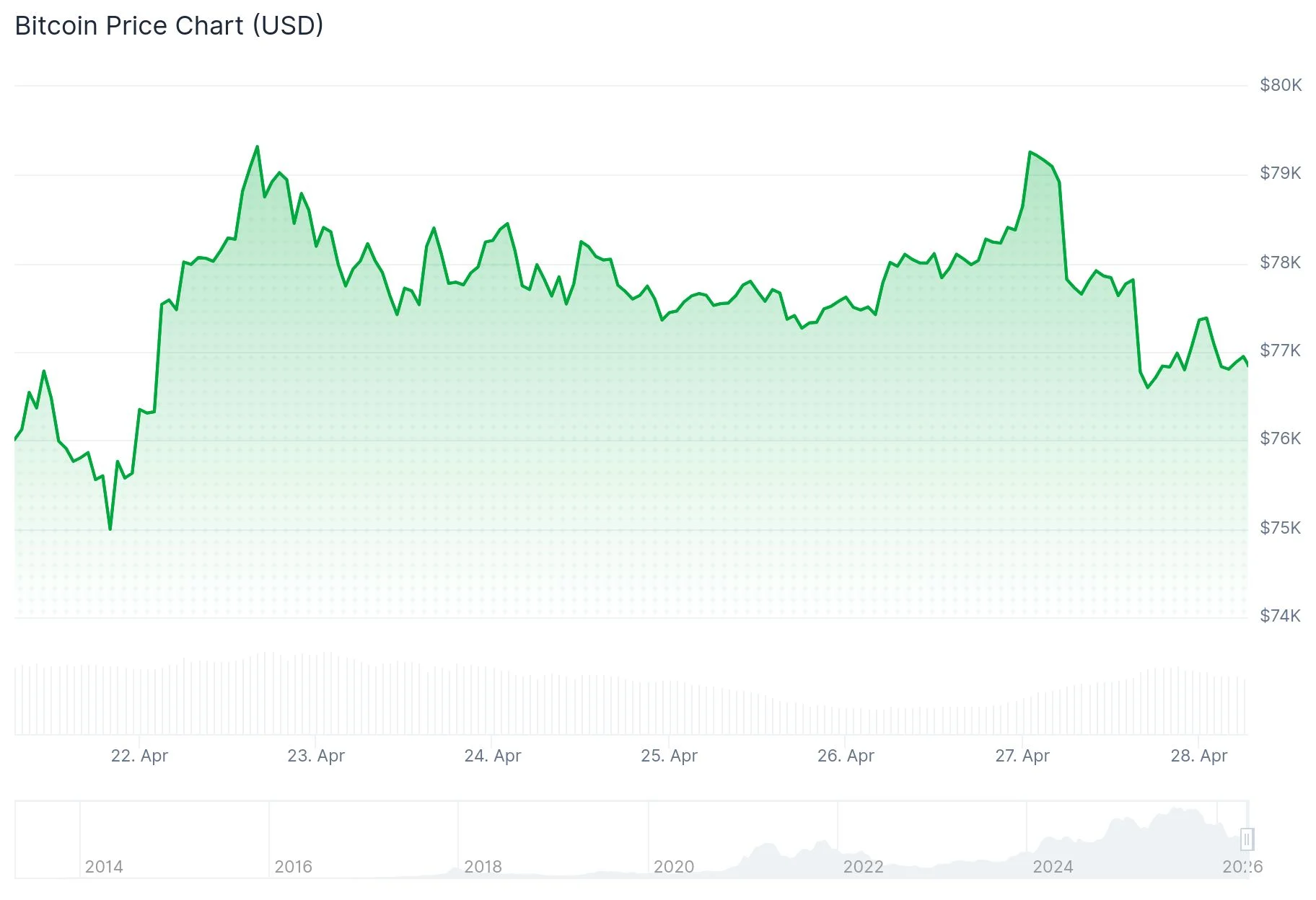
On April 27, Bernstein’s research team, headed by analyst Gautam Chhugani, released their findings. The analysts emphasized that the current market structure represents a fundamental shift from earlier Bitcoin recovery patterns.
“The best days of crypto are ahead which will reflect in a higher and structurally longer crypto bull cycle,” Chhugani wrote in a note to clients.
Bernstein’s analysis highlights three critical catalysts powering what they describe as significant upside potential for digital assets. These drivers include institutional exchange-traded fund capital flows, corporate treasury accumulation led by Strategy, and expanding convergence between blockchain technology and conventional financial systems.
Data shows over 60% of Bitcoin’s existing supply has remained dormant for more than twelve months. This metric demonstrates a substantial cohort of committed holders, effectively constraining available selling pressure and creating conditions that have historically preceded price appreciation.
Corporate and Institutional Players Reshape Market Dynamics
Michael Saylor’s Strategy has amassed a position of 818,334 BTC. The company’s STRC offering attracts yield-seeking investors through its distinctive high-return Bitcoin exposure strategy.

Major financial institutions including Morgan Stanley and Charles Schwab have broadened Bitcoin accessibility. Morgan Stanley facilitated access via its Bitcoin ETF product, while Schwab introduced a spot trading infrastructure, bringing cryptocurrency markets to mainstream retail and institutional participants.
According to Bernstein’s assessment, these capital flows establish a persistent demand foundation that didn’t exist during prior market cycles.
Stablecoin Market and Asset Tokenization Reach Record Levels
The worldwide stablecoin supply has exceeded $300 billion for the first time in history. Bernstein emphasizes this milestone demonstrates genuine adoption for digital dollar transactions and international payment settlements, extending beyond mere speculative activity.
Tokenization of traditional assets—encompassing private debt instruments and United States Treasury securities—surged 110% on an annual basis to reach $345 billion. This growth trajectory indicates institutional infrastructure adoption of blockchain technology is penetrating conventional asset categories.
Platforms such as Hyperliquid are experiencing heightened engagement with tokenized representations of equities and commodities including crude oil.
Regarding potential vulnerabilities, Bernstein identified quantum computing as an eventual security consideration for blockchain networks. Nevertheless, the firm maintains that the industry possesses adequate time to implement quantum-resistant cryptographic protocols before any genuine threat materializes.
Bitcoin continues its advance toward $80,000 as these market forces converge.
Get 3 Free Stock Ebooks
Discover top-performing stocks in AI, Crypto, and Technology with expert analysis.
- Top 10 AI Stocks - Leading AI companies
- Top 10 Crypto Stocks - Blockchain leaders
- Top 10 Tech Stocks - Tech giants


