



Key Takeaways
- The 2024 halving event and Bitcoin’s 21 million coin cap continue restricting new supply entering the market
- Experts project a baseline target of $180,000 for BTC by 2029, with optimistic forecasts approaching $350,000
- Introduction of spot Bitcoin ETFs has created accessible pathways for traditional institutional capital
- Even conservative forecasts suggest BTC could reach approximately $90,000 by 2029, driven by brand recognition and institutional backing
- Weighted analysis across multiple scenarios suggests a realistic target near $200,000 by decade’s end
The narrative surrounding Bitcoin has fundamentally transformed. What began as a fringe digital experiment now stands among the world’s most significant financial assets. Today’s conversation centers not on whether Bitcoin will endure, but rather how massive it might become.
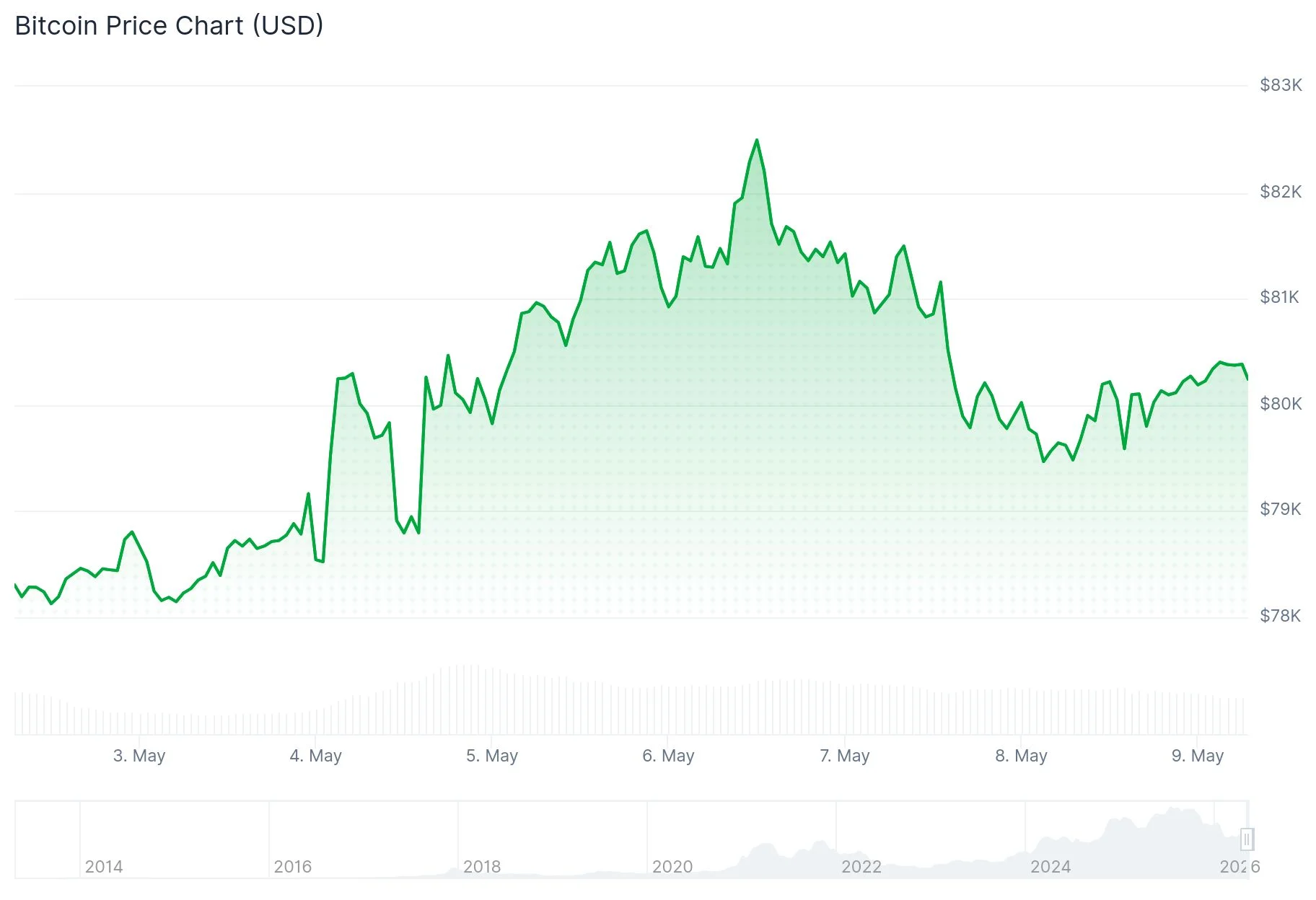
Financial experts are now developing concrete projections for BTC’s potential valuation by 2029, revealing a remarkably broad spectrum of possibilities.
Bitcoin’s scarcity mechanism continues driving much of the analytical discussion. With a hard cap of 21 million coins, approximately 20 million have already been mined. The 2024 halving event reduced block rewards from 6.25 to 3.125 BTC, with the subsequent 2028 halving set to decrease issuance further.
Throughout Bitcoin’s history, the combination of decelerating supply expansion and increasing demand has consistently catalyzed price appreciation.
Examining Three Distinct Forecast Models
The baseline projection positions Bitcoin near $180,000 by 2029. This valuation would place the network’s total worth between $3.5 and $4 trillion. To provide perspective, gold’s aggregate market capitalization exceeds $20 trillion. Bitcoin need not displace gold entirely to validate higher valuations — capturing even a modest fraction of that market supports the baseline outlook.

This moderate scenario anticipates consistent ETF capital flows, broadening institutional participation, and Bitcoin maintaining its 45% to 55% share of total cryptocurrency market capitalization.
The optimistic projection targets $300,000 to $350,000. Achieving this requires substantially deeper mainstream integration — including meaningful allocation from pension systems, sovereign wealth vehicles, and corporate balance sheets. Supporting these price levels would require a market capitalization exceeding $7 trillion.
The conservative projection places Bitcoin around $90,000 by 2029. This scenario envisions stricter regulatory frameworks, diminished ETF enthusiasm, or competing blockchain networks capturing more market share than anticipated. Nevertheless, Bitcoin’s established reputation, robust security infrastructure, and institutional foothold would likely preserve its cryptocurrency market leadership.
The Transformative Impact of Spot ETF Products
The approval of spot Bitcoin ETFs represented a fundamental market evolution. Previously, institutional participants faced the complexity of private key management or navigating cryptocurrency-native infrastructure. ETF products eliminated these friction points by delivering BTC exposure through conventional financial instruments.
This development dismantled a critical adoption barrier. Capital from traditional financial institutions has grown consistently since regulatory approval, with analysts identifying this as among the most significant long-term demand catalysts.
When applying probability weighting across all three scenarios, Bitcoin’s expected value approaches $200,000 by 2029.
Current market data confirms institutional ownership continues expanding, with ETF inflows maintaining momentum throughout 2025.
Get 3 Free Stock Ebooks
Discover top-performing stocks in AI, Crypto, and Technology with expert analysis.
- Top 10 AI Stocks - Leading AI companies
- Top 10 Crypto Stocks - Blockchain leaders
- Top 10 Tech Stocks - Tech giants


