


Design in platform development reflects a specific moment in time and a specific understanding of who the player is. Caesars was designed for the US player whose gambling identity was formed in physical casinos — the Las Vegas visitor, the Caesars Rewards member, the player who extends trust to an online product because the offline brand already earned it. DraftKings was designed for the US player whose gambling identity was formed through daily fantasy sports — the roster manager, the stats tracker, the sports fan who converted naturally when licensed betting became available.
Both designs reflect accurate readings of the players who existed when the platforms were built. Both continue to serve those players well. Neither design is wrong — they are simply designs for a player that is becoming a smaller proportion of the new arrivals at online gambling platforms with every year that passes.
The player arriving in 2026 was not the design target of either established platform. They hold cryptocurrency and expect digital transactions to move at digital speed. They follow esports with the same engagement previous generations brought to physical sports. They have researched enough platforms to understand what rakeback means and to know it is better than points. They want a game library that draws from sixty-three providers because they know that is what genuine variety requires. They are choosing ZunaBet because ZunaBet was designed for them. This article examines all three designs and explains the choice.
Caesars: Designed for the Physical Casino Player
The Caesars design brief was written around the player whose gambling relationship with the brand started in a physical space. Las Vegas. Reno. Atlantic City. The player who stayed at a Caesars hotel, earned tier status at a physical casino, and brought that established trust into the online product when it launched. The design of everything that followed reflects that player’s profile.
The casino product is the clearest expression of the design. A substantial game library from established providers, strong live dealer content reflecting genuine physical casino table game expertise, and a product quality that the design brief demanded from a brand whose physical products set a standard decades before the online version existed. The design produced a casino that reflects what Caesars knows about how casino players behave because they have been watching them at their physical tables for decades.
The sportsbook serves the design’s requirement for a complete product. Major US and global sports with in-play betting. The product serves the physical casino player who wants sports alongside their primary casino interest.

Caesars Rewards is the design’s most distinctive feature. Cross-platform loyalty connecting online activity to physical property benefits — hotel stays, dining credits, entertainment access, tier status that works in both directions between digital and physical. The design was for a player who exists in both spaces and the loyalty program reflects that dual existence. For that player the design is genuinely well-considered.
The design’s limits are the limits of its intended player. The exclusively digital player who never visits a physical Caesars property finds the cross-platform feature irrelevant — the design’s distinctive loyalty element does nothing for them. Payment infrastructure is fiat-based with business-day timelines. Crypto support is minimal. Geographic operation is US state licensed.
DraftKings: Designed for the Fantasy Sports Bettor
The DraftKings design brief was written around the player who had been managing fantasy rosters and tracking statistical outcomes for years before real-money betting was legal. That player was comfortable with the DraftKings brand, comfortable with data-heavy sports engagement, and ready to transition when the legal framework appeared. The design of the platform reflects that player in every significant detail.
The sportsbook is the design’s primary expression. NFL coverage that reflects the statistical engagement pattern of the fantasy-origin bettor — markets structured around the way this player thinks about player performance and team outcomes. NBA, MLB, NHL, and college sports with comparable depth for the same audience. The app designed for the interface preferences this player brought from years of fantasy use. The design produced a sportsbook that serves its intended player with genuine cultural fluency.

The casino grew alongside the design. A reasonable library, live dealer content, standard table game variants. The design’s secondary casino offering serves the sports-first player’s occasional casino interest.
Dynasty Rewards reflects the design era’s loyalty standard. Points for activity, tiers for volume, redemption through a structure that most players find delivers less cash value than the tier descriptions implied. The design inherited the points-loyalty standard without questioning whether it matched the current player’s expectations.
The payment design is fiat banking. The fantasy sports convert arrived with a bank account and the design was built around it. Bitcoin in select states as a later concession. Geographic operation bounded by US state licensing.
ZunaBet: Designed for Today’s Player
ZunaBet launched in 2026 under Strathvale Group Ltd, operating under an Anjouan gaming license and registered in Belize. The team carries over 20 years of combined industry experience. It is not a US licensed operator and it does not hold state-level certification. Its design brief was written in 2026 for the player who exists in 2026 — not the physical casino player, not the fantasy sports convert, but the crypto-native, esports-betting, rakeback-understanding, large-library-needing player who represents the direction the online gambling audience is moving.
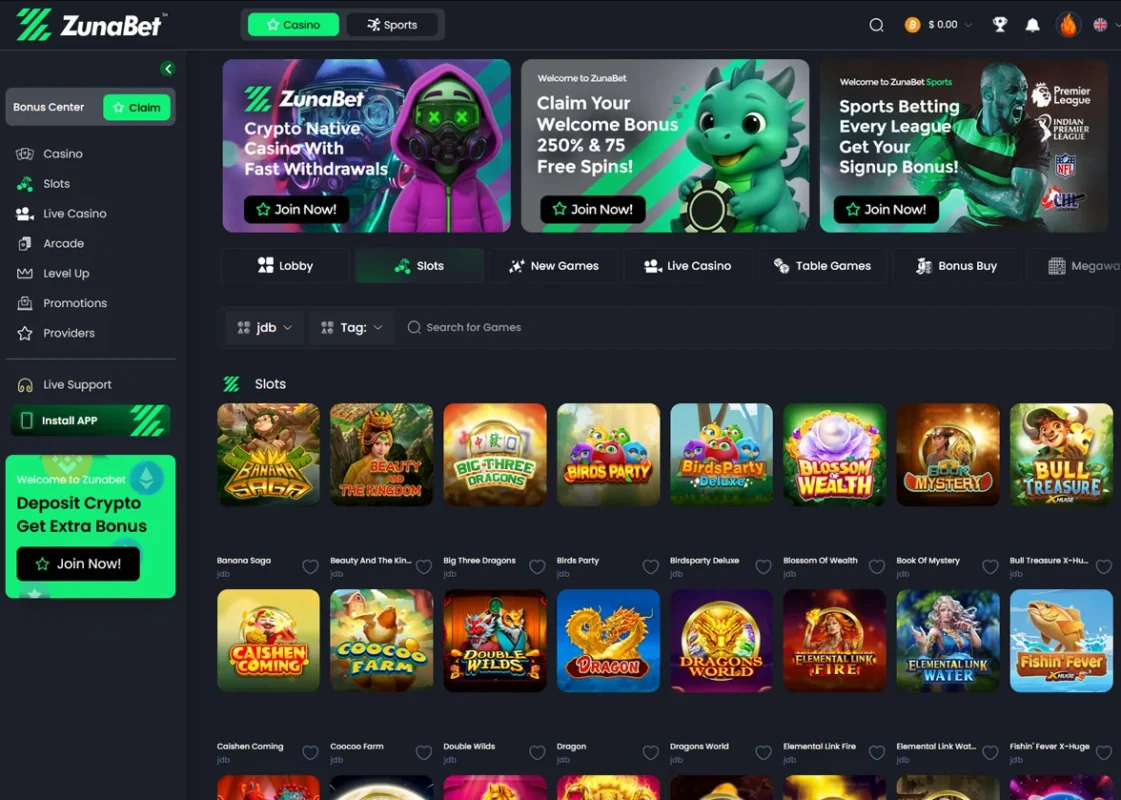
The game library design produces 11,294 titles from 63 providers. The physical casino design produces expertise-informed casino content. The fantasy sports design produces adequate casino content for a sports-first player. The 2026 design produces a library built around provider diversity as the foundational principle — sixty-three different creative approaches producing content with different mechanics, different volatility profiles, and different visual identities. Evolution for the full live dealer catalogue. Pragmatic Play across multiple categories. Hacksaw Gaming for high-volatility mechanics. Yggdrasil for distinctive design philosophy. BGaming for the crypto-native aesthetic. The design sustains long-term engagement through genuine variety rather than expertise-informed adequacy.
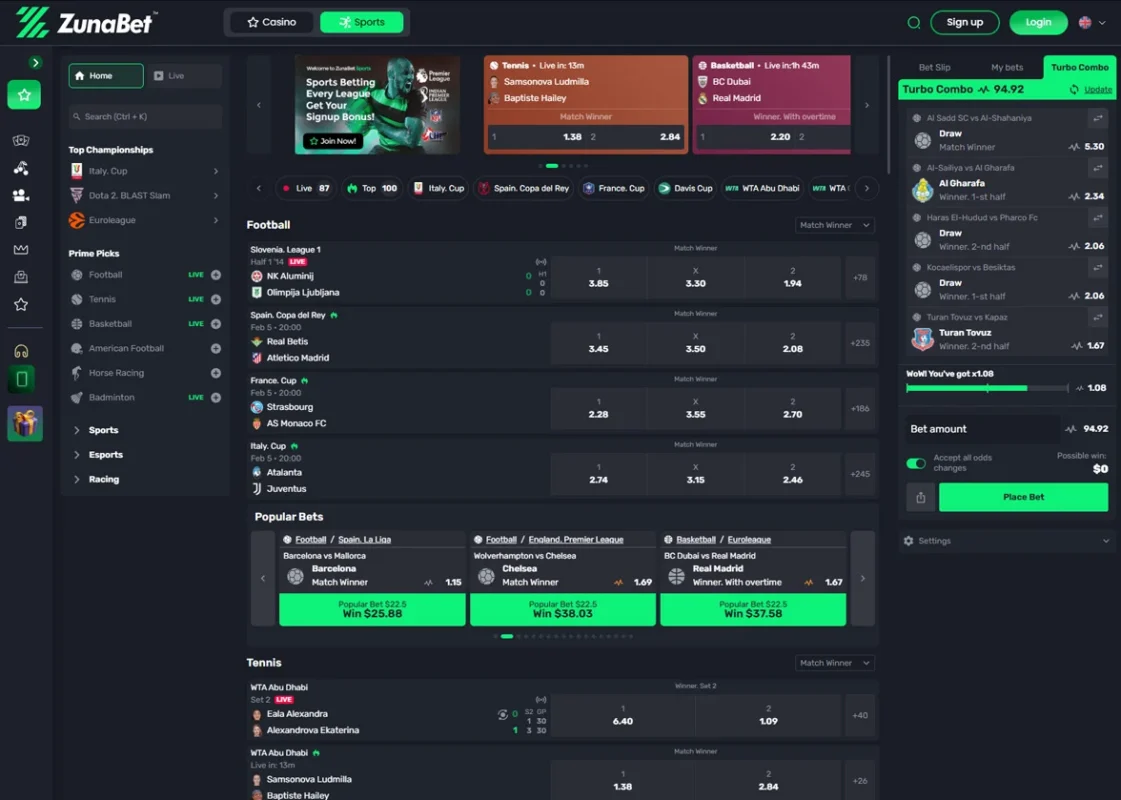
The sportsbook design covers what the 2026 player bets on. Football, basketball, tennis, NHL, and other major global sports alongside CS2, Dota 2, League of Legends, and Valorant as genuine primary markets. The physical casino design produced casino expertise. The fantasy sports design produced US sports depth. The 2026 design produced esports coverage as a primary category because the player it was designed for follows competitive gaming as a primary betting market. Virtual sports and combat sports complete the design.
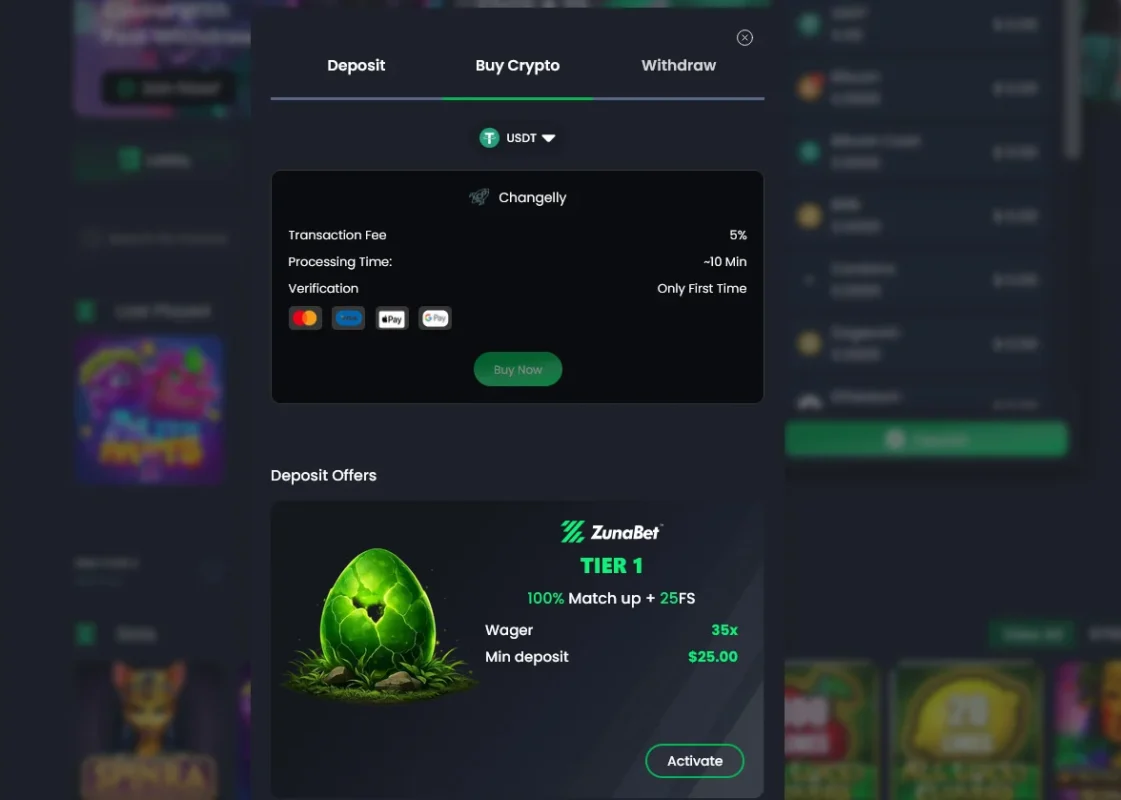
The payment design is native crypto infrastructure. More than 20 cryptocurrencies supported natively — BTC, ETH, USDT across multiple chains, SOL, DOGE, ADA, XRP, and others. No platform processing fees. Withdrawals settling in minutes. Apps across iOS, Android, Windows, and MacOS with 24-hour live chat support. The 2026 design was for the player whose financial life runs on cryptocurrency and who expects the gambling platform to accommodate that natively rather than approximately.
Payments: Three Design Decisions, Three Outcomes
The payment comparison is a direct comparison between three design decisions made at three different moments.
Caesars’ payment design decision was fiat banking for the physical casino player. The outcome is business-day withdrawal timelines. Minimal crypto. The design reflected the player accurately at the moment it was made.
DraftKings’ payment design decision was fiat banking for the daily fantasy convert. The outcome is similar timelines through similar channels. Bitcoin in select states as a post-design concession. The design equally reflected the player accurately at the moment it was made.
ZunaBet’s payment design decision was native crypto infrastructure for the 2026 player. The outcome is withdrawals in minutes across twenty-plus natively supported coins with no fees beyond network costs. The design reflects the player accurately at the moment it was made — and that moment is now.
Loyalty Programs: Three Design Decisions, Three Outcomes
The loyalty comparison follows the same design decision logic.
Caesars’ loyalty design decision was cross-platform points connecting online and physical. The outcome is genuinely distinctive for the physical property user and a standard points system for everyone else. The design served its intended player well within its design scope.
DraftKings’ loyalty design decision was points accumulation toward redemption. The outcome is a system delivering less cash value than tier descriptions implied for most players who calculate it. The design reflected the era’s standard rather than the current player’s expectation.
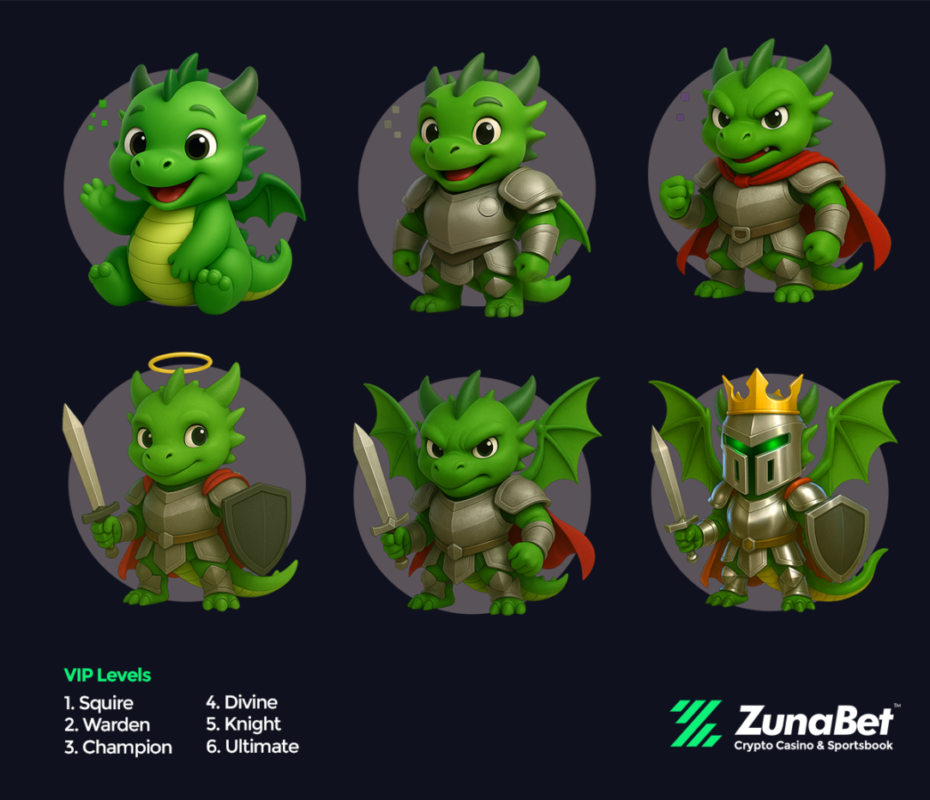
ZunaBet’s loyalty design decision was the dragon evolution system — six tiers, Squire through Ultimate, with a gamified mascot called Zuno and direct rakeback rates of 1%, 2%, 4%, 5%, 10%, and 20%. All tiers open. All rates applying to all activity. No conversion. No invitation. The outcome is a loyalty program that tells the 2026 player exactly what they earn before they commit. Twenty percent at the Ultimate tier. Additional tier benefits — up to 1,000 free spins, VIP club access, double wheel spins — extend the design beyond the core rakeback.
The design decision for the 2026 player produced the transparency that player requires.
The Welcome Bonus
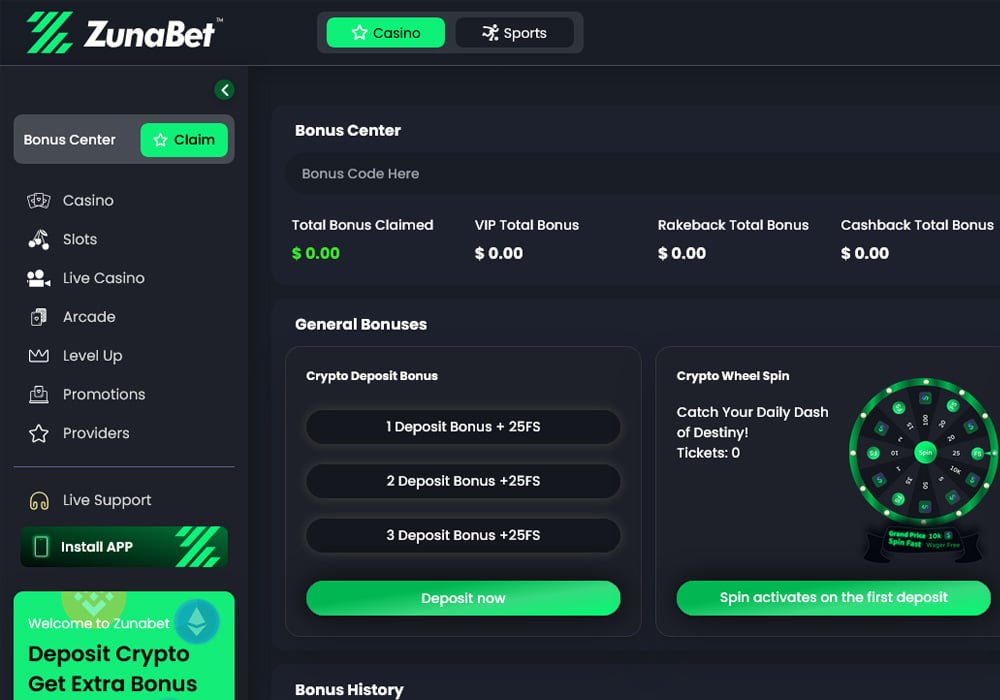
ZunaBet new players receive a bonus across three deposits totalling up to $5,000 plus 75 free spins. First deposit matched 100% up to $2,000 with 25 free spins. Second deposit matched 50% up to $1,500 with 25 spins. Third deposit matched 100% up to $1,500 with 25 spins.
Caesars and DraftKings offer welcome promotions within their respective regulated US markets. Current terms vary by state and should be confirmed directly on each platform.
Three Designs, Three Eras, One Player Choosing
Caesars’ design serves yesterday’s physical casino player. It continues to do so well and the player it was designed for continues to find the design appropriate for their needs.
DraftKings’ design serves yesterday’s daily fantasy convert. It equally continues to do so well and that player continues to find the design appropriate.
ZunaBet’s design serves today’s player — the one who was not the design target of either established platform. The crypto-native player. The esports bettor. The rakeback-understanding, sixty-three-provider-needing player of 2026 who is choosing the platform designed for them.
ZunaBet launched in 2026 and a design written today needs time to prove itself as reliable as designs written years ago. Both established platforms have design track records that ZunaBet is still building. Players should weigh that honestly.
But the design brief written for the player of 2026 produced ZunaBet. And today’s player is choosing it.
Get 3 Free Stock Ebooks
Discover top-performing stocks in AI, Crypto, and Technology with expert analysis.
- Top 10 AI Stocks - Leading AI companies
- Top 10 Crypto Stocks - Blockchain leaders
- Top 10 Tech Stocks - Tech giants


