


Key Takeaways
- Mike Novogratz, CEO of Galaxy Digital, anticipates the CLARITY Act will pass in May, potentially signed by President Trump in June
- May 25 (Memorial Day) represents a critical cutoff date for legislative progress on the bill
- Expected markup hearing by Senate Banking Committee was not scheduled, causing industry concern
- Galaxy Digital’s research chief estimates only 50% probability of 2026 passage
- More than 100 cryptocurrency companies submitted an open letter calling on the Senate Banking Committee to schedule a markup session
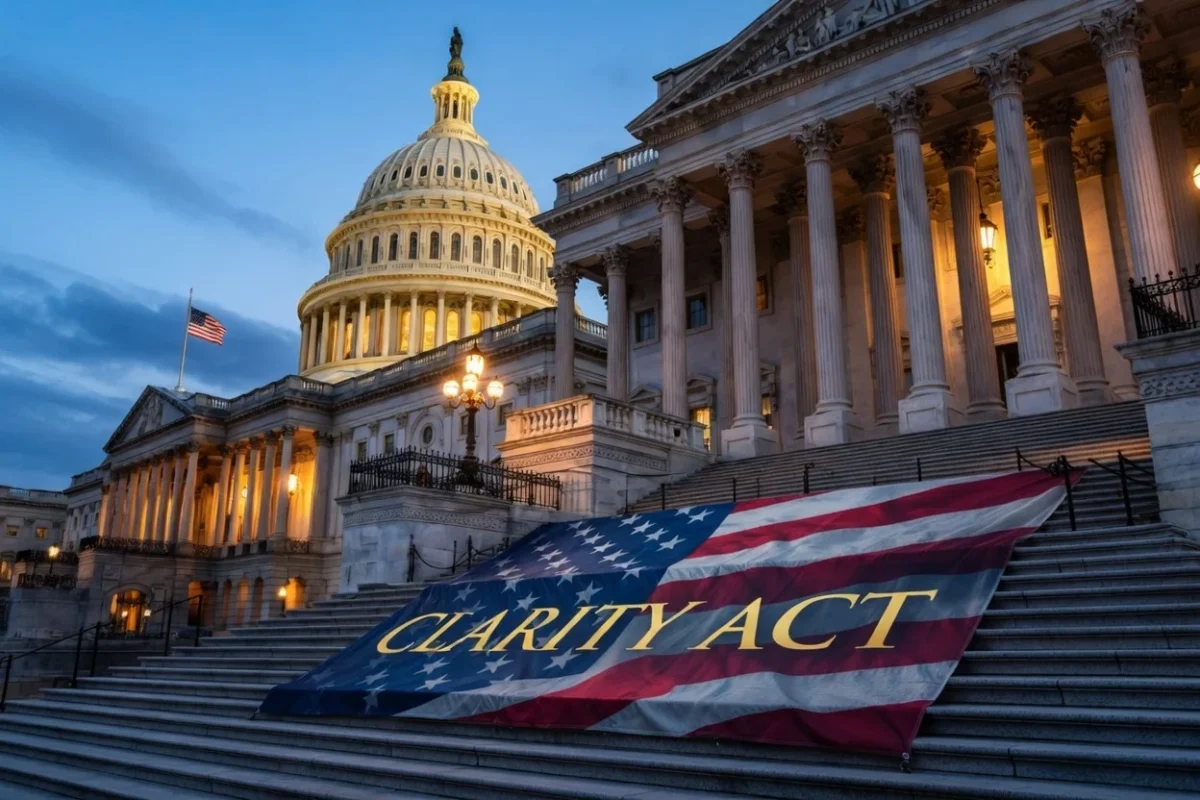
The cryptocurrency sector in the United States is keeping a close eye on the legislative calendar as the CLARITY Act confronts an increasingly narrow path to enactment. Despite receiving bipartisan approval in the House during July 2025, the legislation designed to establish enduring regulatory standards for digital assets has encountered obstacles in the Senate.
During a podcast conversation with SkyBridge Capital’s founder Anthony Scaramucci, Galaxy Digital’s CEO Mike Novogratz shared his forecast that the legislation would advance to committee review during May’s opening week. His projection includes President Trump affixing his signature to the measure by June.
“This is going to happen. We’re probably looking at May,” Novogratz stated.
Novogratz characterized the legislation’s significance as extending beyond American borders. He emphasized that passage could grant approximately 5.5 billion individuals globally—currently excluded from U.S. financial markets—access to American financial instruments.
“A smartphone equipped with a digital wallet will become the gateway for young people in Bhutan, Botswana, Bolivia, or Paraguay to engage with the U.S. economy,” he explained.
Last week witnessed over 100 blockchain and cryptocurrency enterprises co-signing a public appeal urging the Senate Banking Committee to convene a markup hearing. Such a session would represent the initial formal procedural step toward bringing the bill to a complete Senate floor vote.
However, Friday arrived without the committee announcing such a hearing, contrary to widespread industry expectations.
Time Running Short
Since at least December, May 25—Memorial Day—has been recognized as the final viable milestone for legislative advancement. Following that date, congressional members are anticipated to depart Washington for campaign activities before elections, severely limiting opportunities for legislative business.

The Senate faces competing legislative demands. Confirmation proceedings for Kevin Warsh as the prospective Federal Reserve chair require attention. Simultaneously, the House is prioritizing a Department of Homeland Security appropriations measure.
Senator Cynthia Lummis issued a stark warning on April 10 regarding the urgency of the situation.
“The Clarity Act faces its final opportunity for passage until 2030 at minimum. America’s financial leadership position is at stake,” she wrote on X.
Contentious Issues Persist
A central point of contention involves whether stablecoin yield products would undermine traditional banks’ competitive position. This concern, combined with unresolved questions surrounding stablecoin distribution practices and decentralized finance governance, has impeded Senate advancement.
Representative French Hill, serving as chair of the House Financial Services Committee, indicated that numerous disputed provisions had already been addressed in the House-approved version.
Novogratz’s positive outlook isn’t universally shared. Alex Thorn, serving as Galaxy Digital’s research director, assessed current passage probability for 2026 at merely 50%.
“Should the markup hearing be postponed beyond mid-May, passage likelihood will decline substantially,” Thorn observed.
Absent congressional action, regulatory frameworks established by the Securities and Exchange Commission retain their provisional status and remain vulnerable to reversal under subsequent administrations.
The Senate Banking Committee has yet to publicly announce any scheduled markup hearing date.
Get 3 Free Stock Ebooks
Discover top-performing stocks in AI, Crypto, and Technology with expert analysis.
- Top 10 AI Stocks - Leading AI companies
- Top 10 Crypto Stocks - Blockchain leaders
- Top 10 Tech Stocks - Tech giants


