


Key Takeaways
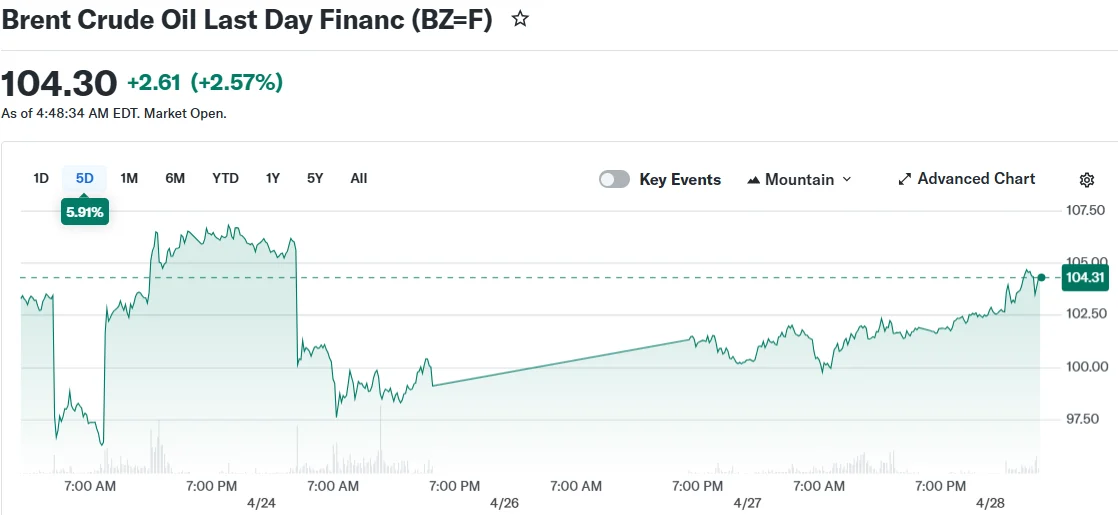
- Brent crude surpassed $111 per barrel, marking a weekly gain approaching 6%
- Washington declined Iran’s offer to resume operations at the Strait of Hormuz
- President Trump’s non-negotiable demands center on halting Iran’s nuclear enrichment activities
- Weekend diplomatic efforts mediated by Pakistan collapsed without progress
- Iranian crude storage facilities are reaching maximum capacity, potentially forcing production cuts
Global crude markets rallied to their highest level in three weeks following the breakdown of diplomatic discussions between Washington and Tehran regarding the reopening of the strategically vital Strait of Hormuz.
Brent crude futures traded above $111 per barrel on London exchanges, while West Texas Intermediate crossed the $98 threshold. The energy benchmarks had already registered gains of 2% to 3% during earlier trading sessions.
Tehran presented a comprehensive framework aimed at resolving the ongoing dispute and restoring commercial shipping through the strategic waterway. The Iranian proposal called for Washington to withdraw its naval blockade, establish a new legal structure governing maritime transit rights, and provide assurances against future military operations targeting Iranian territory.
President Donald Trump assembled his national security council to evaluate the Iranian framework. However, multiple reports from the Wall Street Journal and Reuters indicated that the administration and senior security advisers found the terms unacceptable.
The primary obstacle centered on Tehran’s insistence to postpone discussions regarding its atomic program. Dismantling Iran’s uranium enrichment capabilities and blocking pathways to nuclear weapons development remain Washington’s fundamental objectives in the standoff.

Secretary of State Marco Rubio stated that Tehran continues to seek dominance over the Strait of Hormuz, characterizing such aspirations as intolerable. His remarks came during a Monday broadcast interview on Fox News.
Strategic Waterway Shutdown Disrupts Global Energy Flows
The Strait of Hormuz has remained essentially closed to commercial traffic since early April. Prior to the confrontation, approximately 20% of worldwide petroleum and liquefied natural gas shipments traversed this critical chokepoint each day.
Commercial vessel traffic through the strait has plummeted to virtually nothing. The blockade has constrained international crude and gas distribution networks, elevated energy costs worldwide, and intensified inflation fears.
Two Iranian-flagged tankers intercepted by American naval forces near Sri Lanka last week have reversed course in the Indian Ocean. Washington’s maritime enforcement operation against Iranian shipping commenced April 13 and has diverted dozens of commercial vessels.
Florence Schmit, an energy strategist with Rabobank, observed that Iran’s diplomatic overture seems destined to fail. She highlighted that financial markets were transitioning from defensive positioning toward a “more pessimistic risk-on perspective.”
Tehran’s Petroleum Sector Faces Critical Constraints
Iran is experiencing acute crude oil storage limitations, according to intelligence from data analytics provider Kpler. With export channels blocked by American naval forces, available storage infrastructure is rapidly approaching full capacity.
Treasury Secretary Scott Bessent stated that Iran’s petroleum industry was “beginning to curtail production.” In remarks posted to social media, he predicted output would “imminently crash” and forecast that Iran would likely experience fuel shortages domestically.
Islamabad has facilitated diplomatic communications between Washington and Tehran. However, arrangements for continued negotiations broke down over the weekend, leaving the schedule for future diplomatic engagement uncertain.
The confrontation between the US-Israel alliance and Iran is nearing its sixtieth day. Linh Tran, a market analyst with XS.com, suggested that any substantive diplomatic breakthrough could precipitate a significant downward correction in energy prices.
Upcoming central bank policy decisions in Japan and the United States are drawing market attention this week, as elevated oil prices are anticipated to heighten concerns regarding energy-fueled inflationary pressures.
Get 3 Free Stock Ebooks
Discover top-performing stocks in AI, Crypto, and Technology with expert analysis.
- Top 10 AI Stocks - Leading AI companies
- Top 10 Crypto Stocks - Blockchain leaders
- Top 10 Tech Stocks - Tech giants


