


Key Highlights
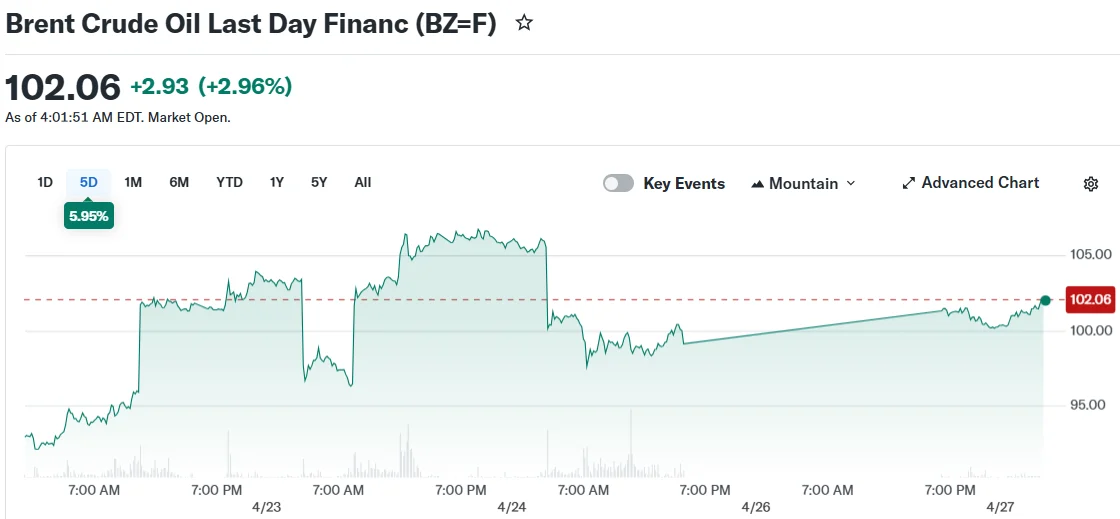
- Brent crude futures surged up to 2.5%, reaching $107.97 per barrel; WTI approached $97
- The strategic Strait of Hormuz continues to be virtually closed, eliminating approximately 20% of worldwide oil supply
- Diplomatic negotiations between Washington and Tehran fell apart this weekend following Trump’s cancellation of envoy mission to Pakistan
- Tehran presented a fresh proposal for reopening the Hormuz passage, deferring nuclear discussions to future negotiations
- International Energy Agency has declared this crisis the most severe energy supply disruption ever recorded
Crude oil markets experienced significant gains Monday following the breakdown of diplomatic efforts between the United States and Iran over the weekend, with the critical Strait of Hormuz entering its ninth consecutive week of effective closure.
Brent crude futures climbed as high as 2.5% to reach $107.97 per barrel. West Texas Intermediate pushed closer to the $97 mark. The rally moderated somewhat following an Axios report indicating Tehran had transmitted a fresh proposal to Washington regarding the strait’s reopening.
The Strait of Hormuz, a critical chokepoint responsible for transporting approximately one-fifth of global petroleum supplies, has remained under a mutual blockade imposed by both Washington and Tehran since the final days of February. Maritime traffic through this strategic passage has plummeted to virtually nothing.
The confrontation originated when Iran implemented measures to obstruct the waterway following US-Israeli military actions. While a ceasefire agreement took effect in early April, the blockade persists with no breakthrough on the horizon.
President Donald Trump withdrew plans for envoys Jared Kushner and Steve Witkoff to travel to Pakistan, which had assumed a mediating role between the parties. Trump subsequently informed journalists that Iran’s offers were “substantial, but insufficient.”

Iranian President Masoud Pezeshkian declared that Iran would refuse “forced negotiations conducted under coercion or siege.” The opposing parties have avoided direct military confrontation since the ceasefire implementation but continue to maintain significant differences on critical matters.
Iran’s latest proposal, as disclosed by Axios, would lift the strait blockade and terminate the conflict, while deferring nuclear program discussions to subsequent negotiations. Washington has consistently insisted Tehran surrender its uranium stockpiles and cease all atomic activities — requirements that Iran has predominantly rejected.
Historic Energy Crisis Impacts Global Economy
The International Energy Agency has characterized the situation as generating the most significant energy supply disruption in recorded history. Analysts project a loss exceeding 1 billion barrels as virtually inevitable, surpassing twice the emergency reserves released by governments worldwide.
India has experienced severe shortages of liquefied petroleum gas. Airlines have reduced flight schedules. Distribution networks for fertilizer and fuel have faced substantial interruptions.
“The Strait remains firmly blockaded, with vessel movement completely stopped,” stated Mona Yacoubian of the Center for Strategic and International Studies. “We’re trapped in this standoff, completely deadlocked.”
Robert Yawger, director of energy futures at Mizuho Securities, indicated that price consolidation above $100 represents the likely trajectory, noting that prospects for a diplomatic settlement diminish with each passing day.
US Central Command announced American naval forces intercepted a sanctioned tanker in the Arabian Sea on Saturday. A cumulative total of 38 vessels have been redirected since the blockade’s implementation.
Additional Sanctions Compound Crisis
The US Treasury Department confirmed its decision not to extend a waiver that previously permitted purchases of Russian and Iranian crude already in transit, eliminating a temporary mechanism that had partially mitigated supply shortfalls.
On Friday, Washington imposed sanctions on Chinese refinery Hengli Petrochemical due to alleged connections with Iran, a measure implemented weeks before an anticipated meeting between Trump and Chinese President Xi Jinping. Hengli has categorically denied conducting any commercial activities with Iran.
Iran channels the majority of its crude exports to China, where independent Chinese refineries purchase the discounted barrels.
Haris Khurshid, chief investment officer at Karobaar Capital, projected that Brent crude will likely fluctuate within a $100 to $115 per barrel range barring any wider regional military escalation.
Trump has scheduled a national security briefing for Monday to evaluate the stalled diplomatic process.
Get 3 Free Stock Ebooks
Discover top-performing stocks in AI, Crypto, and Technology with expert analysis.
- Top 10 AI Stocks - Leading AI companies
- Top 10 Crypto Stocks - Blockchain leaders
- Top 10 Tech Stocks - Tech giants


