


TLDR
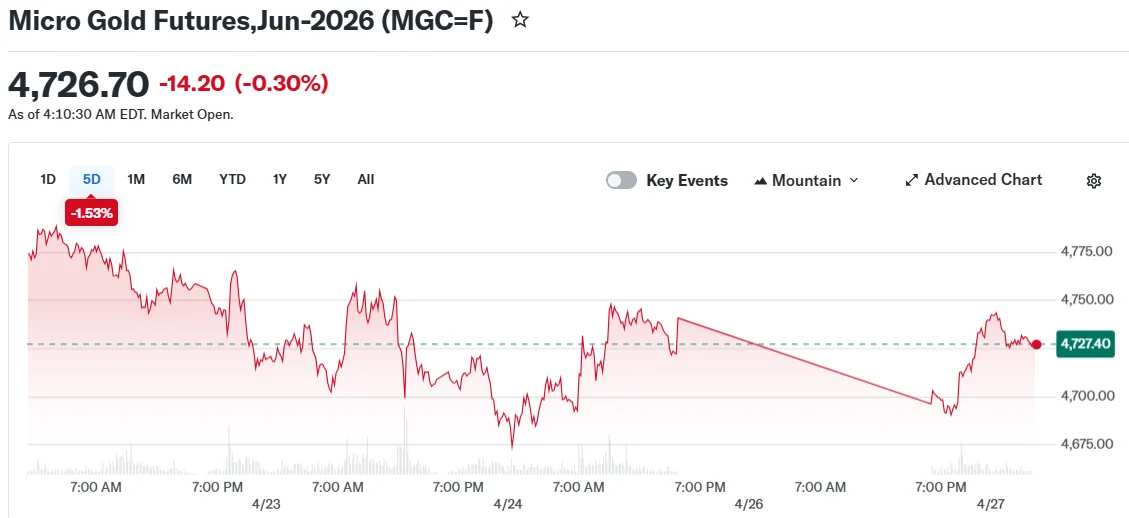
- Precious metal prices remained confined to a narrow $4,700–$4,730/oz corridor following the collapse of weekend diplomatic efforts between Washington and Tehran
- Tehran presented a fresh compromise plan to lift the Hormuz blockade while postponing discussions on its atomic program
- The yellow metal has declined approximately 11% since hostilities erupted in late February
- The central bank is anticipated to maintain current interest rate levels at its upcoming policy session
- Trump’s Fed Chair designate Kevin Warsh informed lawmakers he has pledged no rate reduction promises
The precious metal market remained stuck in a tight trading band throughout Monday’s session as diplomatic channels between Washington and Tehran broke down once more, keeping energy traders on edge and market participants hesitant before a critical central bank gathering.
The yellow metal changed hands at $4,714.83 per ounce during Asian trading hours, showing minimal movement as market participants evaluated Tehran’s latest diplomatic overture against the backdrop of persistent regional instability.
Tehran presented fresh terms to Washington during weekend negotiations, based on reporting from Axios. The Iranian framework proposes lifting restrictions on the Strait of Hormuz shipping channel while deferring conversations regarding Tehran’s atomic ambitions to future sessions.
The proposal provided temporary market optimism. However, the underlying geopolitical landscape remained fragile. President Donald Trump abruptly called off a scheduled diplomatic mission by envoys Jared Kushner and Steve Witkoff to Pakistan, the nation serving as intermediary in peace negotiations.
President Masoud Pezeshkian of Iran declared his country would refuse “forced negotiations conducted under coercion or embargo.” Representatives from both Washington and Tehran departed Pakistan without conducting face-to-face discussions.
The critical Hormuz waterway has remained essentially impassable for eight weeks, choking off approximately twenty percent of global petroleum shipments. The maritime standoff persists from both nations, with neither side demonstrating willingness to fully retreat.

Oil prices climbed during Monday trading before moderating after the Axios story emerged. The ongoing energy supply constraint has amplified inflationary pressures worldwide.
Escalating inflation increases the probability that monetary authorities will maintain borrowing costs at elevated levels for extended periods. This scenario creates challenges for the non-yielding precious metal, which loses relative appeal when interest rates remain elevated.
Precious Metal’s Challenging Outlook
Gold has surrendered roughly 11% of its value since tensions ignited at February’s conclusion. Market experts indicate the commodity lacks clear directional momentum.
According to Nicky Shiels, who leads research and metals strategy at MKS PAMP, the yellow metal finds itself in “technical no-man’s-land.” She noted that investor confidence remains minimal with substantial capital allocations staying on the sidelines.
Dilin Wu, research strategist at Pepperstone Group, observed that Tehran’s diplomatic initiative has marginally reduced market anxiety. Nevertheless, she cautioned that any price appreciation would likely prove temporary absent a definitive roadmap toward conflict resolution.
Central Bank Policy Decision Takes Center Stage
Financial markets are simultaneously monitoring the Federal Reserve with heightened attention. The monetary authority is universally projected to maintain existing rate levels at its policy session this week.
This gathering is anticipated to mark Jerome Powell’s final meeting as chairman, with his tenure concluding May 15. Kevin Warsh, Trump’s designated successor, informed congressional members last week he has offered no guarantees regarding rate reductions.
Warsh’s Senate confirmation appears positioned to advance following Republican Senator Thom Tillis’s withdrawal of his opposition. The Justice Department simultaneously concluded its criminal investigation into Powell, which had faced widespread condemnation.
Azerbaijan’s State Oil Fund liquidated approximately 22 tons of the precious metal during Q1, generating proceeds exceeding $3 billion. This marked the fund’s initial sale of gold holdings since initiating purchases in 2012.
Silver remained unchanged at $75.77 per ounce. Platinum registered gains while palladium showed stability.
Get 3 Free Stock Ebooks
Discover top-performing stocks in AI, Crypto, and Technology with expert analysis.
- Top 10 AI Stocks - Leading AI companies
- Top 10 Crypto Stocks - Blockchain leaders
- Top 10 Tech Stocks - Tech giants


