


Quick Summary
- SpaceX targets a June 2026 IPO with an unprecedented $1.75 trillion valuation, potentially making it the biggest public offering ever recorded.
- Revenue expansion at SpaceX decelerated to just 18% in 2025, a sharp decline from 51% growth in 2024 and 89% in 2023.
- The space giant reported a $5 billion loss in 2025, primarily driven by costly AI investments following its $250 billion xAI acquisition.
- On April 22, 2026, Rocket Lab executed a flawless mission deploying eight satellites for JAXA — marking its 8th successful launch this year.
- Trading at a $49 billion valuation, RKLB carries a price-to-sales multiple of 74, suggesting investors are betting heavily on future execution.
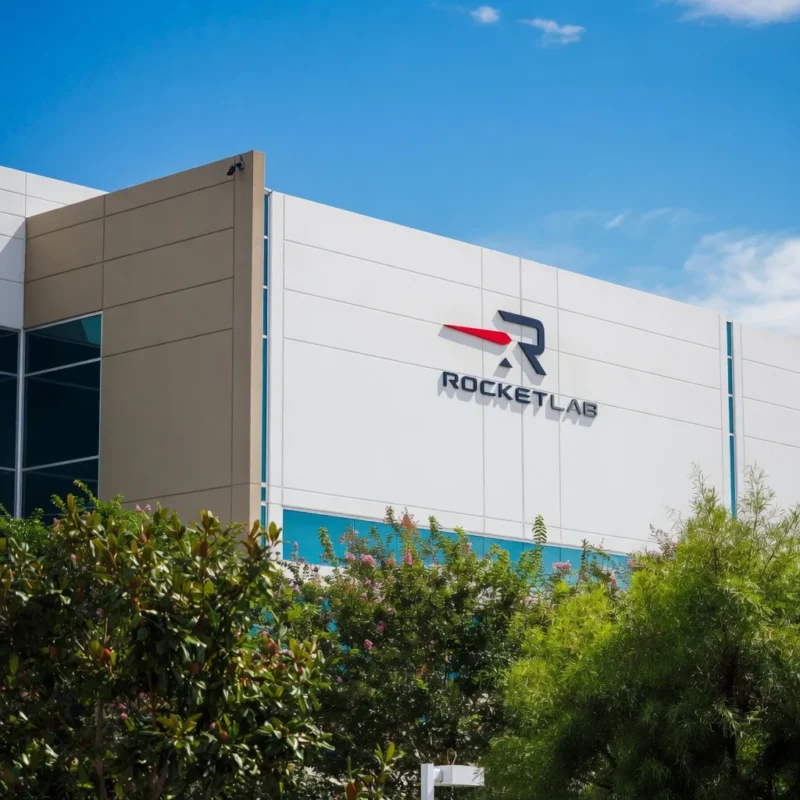
While Wall Street obsesses over SpaceX’s forthcoming public debut, Rocket Lab (RKLB) has been methodically expanding its mission portfolio. The company’s April 22 launch placed eight satellites into orbit for the Japan Aerospace Exploration Agency (JAXA) — representing its second dedicated mission for the Japanese space authority in recent months and continuing a strong 2026 launch cadence.
Peter Beck, Rocket Lab’s CEO, emphasized that Electron has become “the preferred small launcher for national space agencies.” The mission’s diverse payload featured ocean observation technology, an educational satellite, a multispectral imaging demonstration unit, and an innovative deployable antenna utilizing origami-inspired engineering that expands to 25 times its stowed dimensions.
The flawless mission execution comes at a strategic moment in the commercial space sector.
SpaceX leadership recently convened with investment bankers to orchestrate a June public offering. The company’s $1.75 trillion target valuation would position it as the world’s eighth-most valuable enterprise, surpassing both Tesla and Meta. Unusually, retail investors may receive up to 30% of the IPO allocation, significantly exceeding the standard 5–10% distribution.

This exceptionally high retail participation has sparked concern among market observers. Financial analysts caution that such allocation levels might fuel meme stock-like trading behavior, potentially severing the connection between share price and underlying business performance.
SpaceX Shows Troubling Revenue Deceleration
According to private market intelligence firm Sacra, SpaceX recorded 18% revenue growth during 2025. While positive on the surface, this figure reveals concerning momentum when contextualized against 51% expansion in 2024 and 89% growth in 2023. The consecutive slowdown raises fundamental questions.
Compounding these concerns is the xAI transaction. Elon Musk’s artificial intelligence venture was absorbed by SpaceX in February through a $250 billion stock deal. The AI industry remains intensely competitive and capital-intensive. The Information’s reporting indicates this strategic shift contributed to SpaceX’s $5 billion loss throughout 2025, with AI-related expenditures representing the primary drain.
Prospective shareholders entering at the $1.75 trillion valuation are essentially wagering on dramatic future acceleration from an enterprise currently experiencing growth deceleration and substantial operating losses.
Rocket Lab Commands a Premium Valuation Too
Rocket Lab isn’t positioned as a value play either. With a $49 billion market capitalization and a price-to-sales ratio of 74, the company trades at stretched multiples by conventional standards. Such valuation demands near-flawless operational performance.
The company’s most anticipated milestone is Neutron, a medium-lift launch vehicle engineered to compete directly against SpaceX’s workhorse Falcon 9. Neutron’s inaugural flight is scheduled for later in 2026. Any schedule slippage could trigger significant downside pressure on shares.
RKLB has demonstrated considerable volatility, trading within a 52-week range spanning $20.23 to $99.58. The company maintains a gross margin of 31.66%.
However, when comparing a $49 billion valuation against SpaceX’s $1.75 trillion target, Rocket Lab presents substantially greater percentage growth potential — assuming operational plans materialize as intended.
The recent JAXA deployment represents Rocket Lab’s second mission exclusively dedicated to the Japanese agency within months, building on the December 2025 RAISE-4 launch success.
Get 3 Free Stock Ebooks
Discover top-performing stocks in AI, Crypto, and Technology with expert analysis.
- Top 10 AI Stocks - Leading AI companies
- Top 10 Crypto Stocks - Blockchain leaders
- Top 10 Tech Stocks - Tech giants


