


Key Takeaways
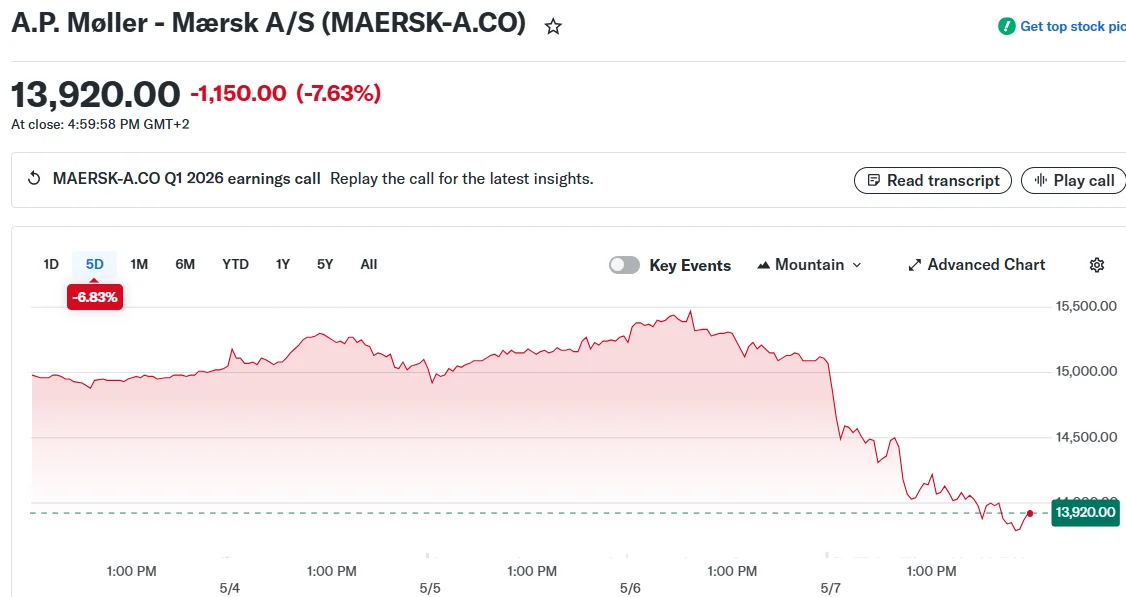
- Shares of Maersk plummeted 7.5% in Copenhagen following first-quarter earnings release
- First-quarter EBITDA reached $1.73bn, surpassing $1.66bn analyst expectations but down sharply from prior-year $2.71bn
- Company maintained full-year outlook with global container volume growth forecast at 2%–4%
- Iranian blockade of Strait of Hormuz drives fuel expenses and operational challenges higher
- Asia-Europe shipping rates have erased nearly all post-conflict increases
Despite delivering first-quarter results that topped Wall Street expectations on Thursday, Maersk witnessed a significant selloff as market participants turned their attention to deteriorating forward-looking conditions.
The Copenhagen-based shipping powerhouse posted first-quarter EBITDA of $1.73bn, exceeding the consensus estimate of $1.66bn among analysts. However, this represented a substantial decline from the $2.71bn generated during the comparable quarter last year.
Shares declined 7.5% in Copenhagen markets, significantly underperforming the broader market index which remained essentially unchanged.
Shipping rates experienced downward pressure throughout much of the quarter as persistent capacity oversupply weighed on pricing power. Rates only staged a dramatic recovery in the final weeks of the period following the intensification of the Iran situation in late February.
The conflict commenced on February 28 with simultaneous military operations by the United States and Israel targeting Iranian positions. As a result, the Q1 financial performance doesn’t completely capture the conflict’s ramifications for worldwide logistics networks.

Tehran’s closure of the strategically critical Strait of Hormuz to commercial shipping has compelled carriers to implement alternative routing strategies, elevating fuel expenditures and creating widespread disruption across traditional maritime corridors.
Ongoing Conflict Sustains Cost Pressures
Maersk has implemented new routing protocols that send vessels around the African continent, bypassing both the Suez Canal and Bab el-Mandeb waterways. This represents a strategic shift from previous intentions to progressively restore certain services through the Suez corridor.
Chief Executive Vincent Clerc offered a sobering assessment of the energy landscape. “The energy crisis does not go away the day peace comes,” he stated during a media briefing, emphasizing that petroleum industry leaders anticipate sustained elevated expenses “at minimum several more months.”
The shipping company left its annual guidance intact, reaffirming projections for worldwide container volume expansion between 2% and 4%. Nevertheless, management highlighted that market conditions remain highly unpredictable.
Executives cautioned that increased energy pricing combined with commercial restrictions affecting the Upper Gulf region — representing approximately 6% of global containerized trade volumes in 2025 — create meaningful downward pressure on growth projections.
Wall Street Sees Constrained Upside Potential
Morgan Stanley research team indicated they observe “limited scope for earnings upgrades” stemming from the quarterly update, suggesting any estimate adjustments would primarily follow freight rate trajectories.
Analysts highlighted that pricing on principal European shipping lanes has essentially eliminated all increases observed since the Iranian conflict began. Meanwhile, new vessel capacity continues entering the market at a pace exceeding demand growth — Maersk itself commissioned eight new ships during February.
Jyske Bank equity analyst Haider Anjum expressed concern about potential earnings reductions later this year. “Freight rate developments are not expected to be able to compensate for the higher fuel costs,” he noted in research commentary.
The Morgan Stanley team identified one possible positive catalyst: bunker fuel supply constraints, which could accelerate vessel idling decisions. While this dynamic isn’t yet evident in current market data, they recommended continued monitoring.
Maersk indicated it is attempting to transfer elevated operating costs to its customer base, though the ultimate success of this strategy remains uncertain given prevailing rate dynamics.
The Asia-Europe shipping rate has retreated nearly to pre-conflict levels even as bunker fuel costs remain substantially elevated — a dynamic that market observers suggest could compress profit margins throughout upcoming quarters.
Get 3 Free Stock Ebooks
Discover top-performing stocks in AI, Crypto, and Technology with expert analysis.
- Top 10 AI Stocks - Leading AI companies
- Top 10 Crypto Stocks - Blockchain leaders
- Top 10 Tech Stocks - Tech giants


