


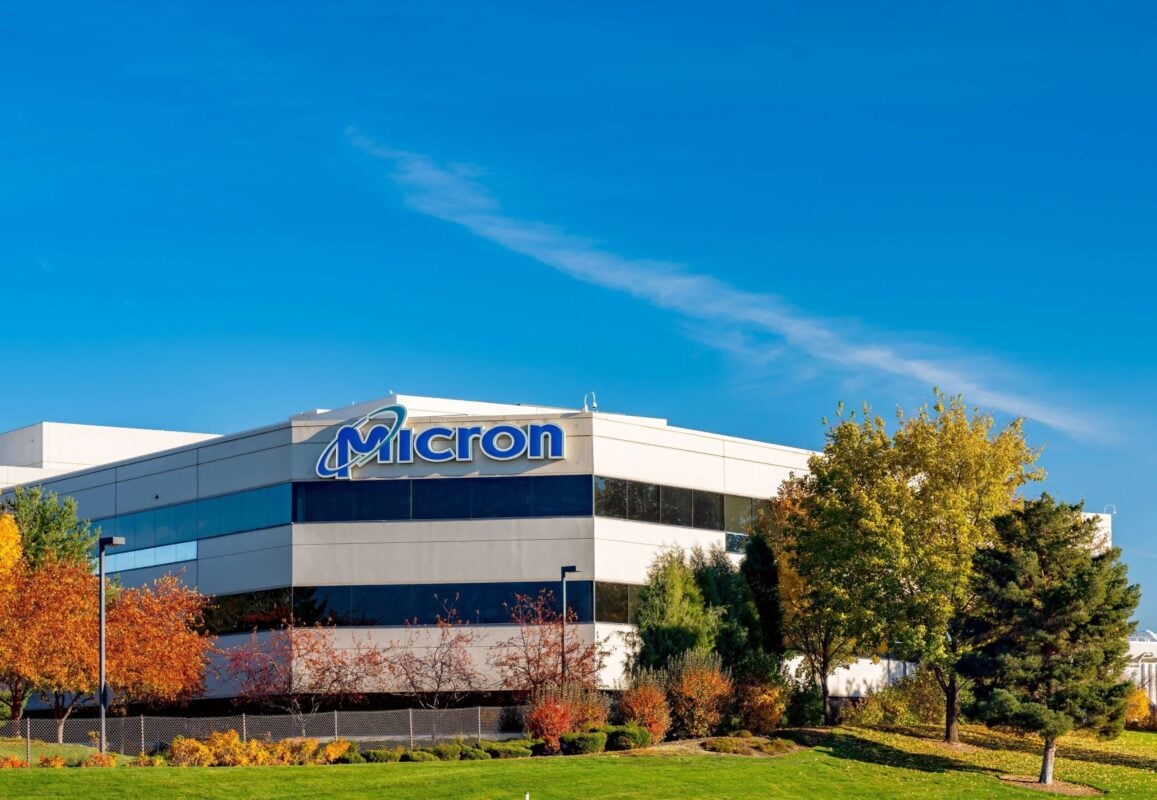
Key Takeaways
- Micron (MU) has climbed 90% in 2025 and skyrocketed over 570% across the last 12 months
- Wall Street consensus shows 27 of 30 analysts recommend buying, with no sell recommendations
- Analyst projections span $400 to $1,000 per share, suggesting up to 84% potential gains
- Quarterly revenue exploded from $13.6B to $23.9B, with $33.5B anticipated in the upcoming period
- Current production capacity addresses only 50-67% of existing medium-term market needs
Micron Technology (MU) shares have rocketed 90% since January, currently hovering around $541.99, and market analysts believe significant room for growth remains. The most aggressive forecast on Wall Street pegs the stock at $1,000, representing approximately 84% appreciation from present valuations.
The semiconductor manufacturer has delivered a staggering 570% return over the trailing year, propelled by soaring appetite for memory solutions essential to artificial intelligence computing infrastructure.
Among the 30 financial analysts tracking MU, an overwhelming 27 maintain Buy recommendations. Remarkably, zero analysts suggest selling the stock. Price objectives stretch from a conservative $400 floor to an ambitious $1,000 ceiling.
This substantial spread in targets highlights significant debate regarding the stock’s remaining upside potential.

The revenue trajectory has been nothing short of remarkable. Two fiscal quarters back, Micron reported $13.6 billion in sales. The most recent quarter saw that figure leap to $23.9 billion. Company guidance points toward $33.5 billion for the coming quarter.
Should this momentum persist, Micron would ascend into the ranks of the world’s highest-grossing corporations within just a few years.
Production Constraints Fuel Pricing Power
The fundamental catalyst driving this performance is straightforward: memory chip demand dramatically outstrips available supply. Micron’s own analysis indicates the company can satisfy merely half to two-thirds of the medium-term orders it’s receiving.
High-bandwidth memory (HBM), the critical component powering AI data center operations, represents the pivotal product category. Micron’s projections show the HBM addressable market expanding from $35 billion to $100 billion by 2028.
This supply-demand imbalance extends beyond Micron. Competing memory manufacturers confront identical capacity limitations, creating upward pressure on pricing throughout the industry.
Analyst consensus forecasts place Micron’s revenue at $169 billion by fiscal year-end 2027. To contextualize this figure, Taiwan Semiconductor recorded $133 billion in trailing twelve-month revenue and commands a $2 trillion valuation. Micron’s current market capitalization stands near $611 billion.
Commodity Nature Limits Valuation Multiple
Despite overwhelmingly positive fundamentals, market participants remain circumspect. MU commands merely 8.6 times forward earnings, a valuation discount reflecting memory chips’ inherently cyclical characteristics.
Memory semiconductors function as commodity goods. Minimal product differentiation exists between manufacturers, meaning price discovery depends almost exclusively on supply-demand equilibrium.
When consumption weakens, pricing collapses rapidly. This pattern has repeated throughout industry history, explaining why investors refuse to award premium valuation multiples to Micron even during expansion phases.
Micron’s 52-week trading band extends from $78.54 to $545.91, demonstrating the extraordinary volatility characteristic of this security.
Shares concluded Monday’s session at $541.99, advancing 4.80% and trading near the annual peak.
Get 3 Free Stock Ebooks
Discover top-performing stocks in AI, Crypto, and Technology with expert analysis.
- Top 10 AI Stocks - Leading AI companies
- Top 10 Crypto Stocks - Blockchain leaders
- Top 10 Tech Stocks - Tech giants


