



Key Takeaways
- RBC Capital Markets elevated its 12-month S&P 500 forecast from 7,750 to 7,900
- The revised forecast suggests potential upside of 7.7% above Thursday’s closing price of 7,335.66
- The firm points to a bifurcated economy where AI companies thrive while traditional sectors struggle
- U.S. healthcare sector downgraded to Market Weight amid negative earnings trends and capital outflows
- Key concerns include elevated chip stock valuations and ongoing Middle East tensions
RBC Capital Markets announced an upward revision to its S&P 500 price forecast on Friday, pushing the target to 7,900 from the previous 7,750 level. The adjustment was made by Lori Calvasina, who leads U.S. equity strategy at RBC.
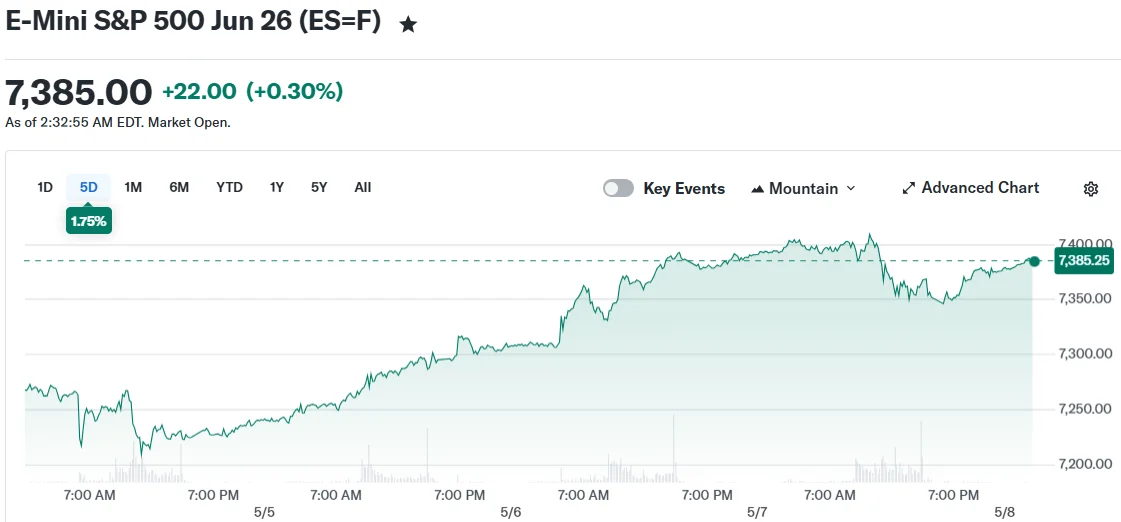
The revised projection follows a substantial rally that saw the S&P 500 surge over 16% since hitting a bottom on March 30. With Thursday’s session ending at 7,335.66, the updated forecast suggests approximately 7.7% additional growth potential.
RBC’s methodology centered on its proprietary valuation and earnings-per-share framework instead of averaging its five forecasting approaches. The strategists indicated this specific model better accounts for what they describe as a bifurcated economic environment.
This characterization highlights the divergence between market segments. Technology firms focused on artificial intelligence are delivering robust profit growth, while other index constituents grapple with challenges stemming from geopolitical turmoil in the Middle East.
The firm implemented a 5% reduction to street-level earnings projections for Q1 2027, arriving at approximately $329 per share. Earnings forecasts for AI-focused companies remained unchanged from consensus expectations, whereas estimates for other index components were reduced by 7.5%.

Economic Variables Underpinning the Forecast
Regarding macroeconomic assumptions, RBC incorporated an inflation rate of 3.3%, exceeding Wall Street consensus. The strategists also projected the Federal Reserve would maintain current interest rate levels and anticipated 10-year Treasury yields hovering around 4.5%.
These parameters generated an implied trailing price-to-earnings ratio of approximately 24 times.
RBC acknowledged that calculating the average across all five forecasting models would yield a higher target of 8,100. Nevertheless, the firm selected 7,900 as its official projection, stating this figure more appropriately balances downside risks against growth opportunities.
The adjustment aligns with comparable upgrades from J.P. Morgan and Barclays in recent weeks. Both institutions referenced diminishing geopolitical concerns and strengthening earnings trends as rationale for their bullish revisions.
RBC maintained its tactical preference for growth stocks over value names within large-cap equities. The firm also continues favoring domestic stocks relative to international markets and expressed measured optimism toward small-capitalization companies.
Healthcare Sector Rating Cut
Accompanying the index target increase, RBC announced a sector-level adjustment. The firm lowered its stance on U.S. healthcare equities to Market Weight from the previous Overweight rating.
The downgrade reflected worsening earnings revision trends, significant mutual fund redemptions, and disappointing feedback from RBC’s latest analyst questionnaire.
RBC identified multiple threats to its optimistic scenario. These include the possibility of further downward adjustments to 2027 profit estimates and excessive valuations among semiconductor manufacturers.
The strategists characterized the Middle East situation as the primary tail risk capable of triggering a U.S. economic contraction. However, they noted that most publicly traded corporations have indicated confidence in navigating the current disruptions.
The S&P 500 recorded its strongest monthly percentage advance since November 2020 during the previous month.
Get 3 Free Stock Ebooks
Discover top-performing stocks in AI, Crypto, and Technology with expert analysis.
- Top 10 AI Stocks - Leading AI companies
- Top 10 Crypto Stocks - Blockchain leaders
- Top 10 Tech Stocks - Tech giants


