


Key Takeaways
- Banking Committee Chair Tim Scott seeks unanimous Republican backing among all 13 GOP members before proceeding with markup
- Senator John Kennedy refuses support, partially due to frustration over an unrelated housing measure stalled in negotiations
- Senator Thom Tillis advocates for mid-May committee action but demands inclusion of conflict-of-interest provisions
- Outstanding concerns encompass stablecoin incentive structures, decentralized finance protections, and presidential crypto holdings
- Industry analysts estimate passage probability between 15% and 25% for the current legislative session
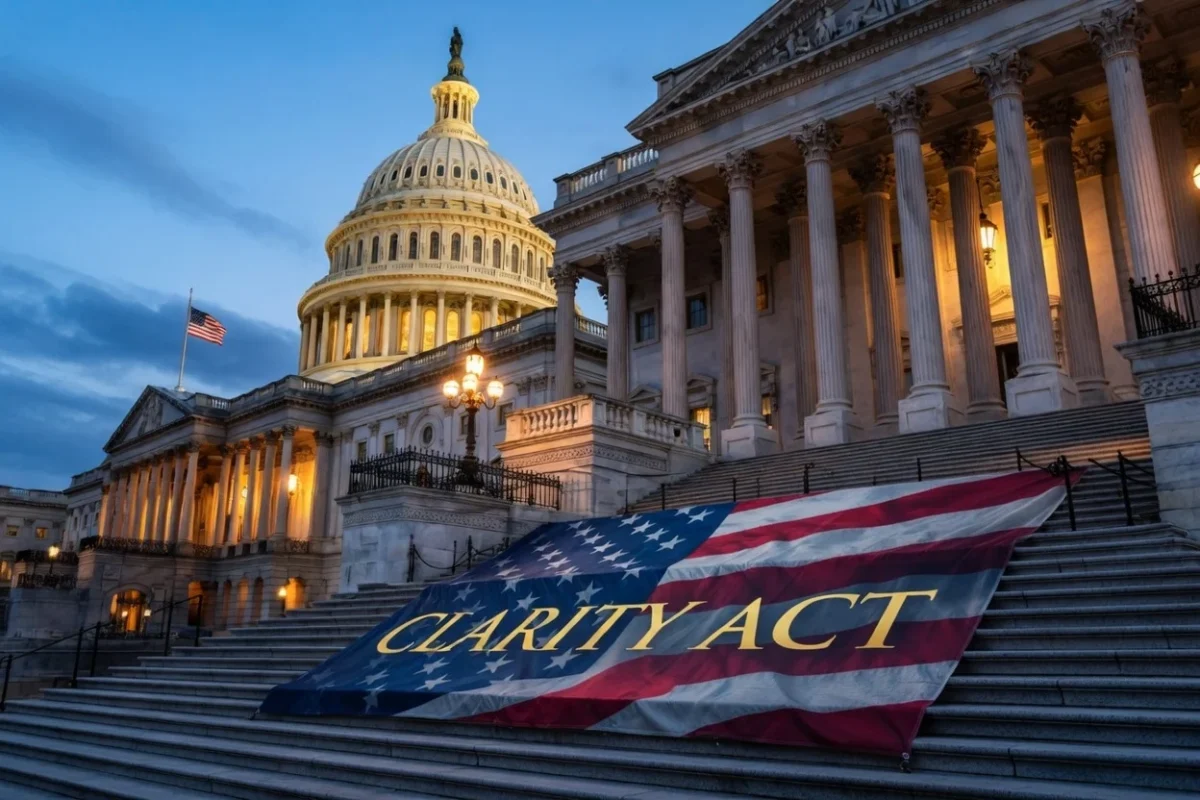
The comprehensive cryptocurrency regulation known as the CLARITY Act approaches a potential committee hearing in May, yet internal Republican disagreements and contentious policy questions threaten to derail its momentum.
Tim Scott, who chairs the Senate Banking Committee, has declared his intention to secure backing from every Republican member before advancing the legislation. While he announced that Thom Tillis and several colleagues have joined the effort, universal consensus remains elusive.
In statements to Fox Business, Scott characterized negotiations as entering the “red zone,” expressing optimism about achieving bipartisan committee action in May and potentially bringing the measure to the full Senate chamber during the June-July timeframe.
Tillis, functioning as a principal Republican architect of the bill, has requested Scott schedule formal markup proceedings and indicated that revised legislative text could be prepared within days of that hearing. However, Tillis issued an unequivocal warning: he will vote against the legislation if it advances to the full Senate without adequate conflict-of-interest safeguards.
John Kennedy stands among the Republicans refusing to commit support. Reporting from Punchbowl News suggests Kennedy’s opposition relates significantly to broader frustrations with House leadership and the administration regarding separate housing legislation that has stalled, rather than objections specific to cryptocurrency policy.
Conflict-of-Interest Provisions and Presidential Holdings Create Complications
Democratic senators have elevated ethics requirements to a non-negotiable position. Angela Alsobrooks stated plainly that achieving cross-party committee support requires first addressing illicit finance prevention and potential conflicts of interest.

Chair Scott maintains that ethics-related provisions fall outside his committee’s proper jurisdiction. This procedural dispute leaves the question unresolved and potentially requiring intervention from other committees before any full Senate consideration.
President Trump’s extensive cryptocurrency portfolio has amplified the ethics debate. Bloomberg analysis concluded Trump has generated no less than $1.4 billion through various digital asset enterprises, including participation in World Liberty Financial, a decentralized finance platform offering stablecoins. Trump family interests also include a 20% ownership position in American Bitcoin, a mining operation.
Trump recently organized a Mar-a-Lago fundraising event specifically for individuals holding the TRUMP memecoin, prompting sharp criticism from Democratic legislators.
The House-passed version of this legislation, also named Clarity, contains specific language prohibiting congressional members and high-ranking executive officials from issuing digital commodities during their government service. This restriction has generated strong opposition from the White House.
Stablecoin Incentive Structure and Decentralized Finance Language Remain Disputed
Beyond ethics considerations, the bill has encountered resistance regarding how stablecoin reward mechanisms should be regulated. Public disagreements between a senior White House cryptocurrency adviser and traditional banking institutions have exposed deep divisions.
Provisions addressing decentralized finance development also face intense examination. Legislators and law enforcement organizations worry that certain proposed protections for software developers could inadvertently create prosecution obstacles for financial crime investigations.
Chuck Grassley, who leads the Senate Judiciary Committee, is currently engaged in substantive discussions with Cynthia Lummis to resolve these law enforcement apprehensions.
The legislation confronts significant time constraints. The Senate enters its five-week summer adjournment in August as midterm campaign season intensifies. Failure to complete committee consideration and floor passage before that recess would dramatically reduce the bill’s viability.
An industry lobbyist familiar with negotiations assessed passage likelihood for this calendar year at merely 15% to 25%. Galaxy, a cryptocurrency research organization, offered a slightly more optimistic projection of approximately 50%.
Get 3 Free Stock Ebooks
Discover top-performing stocks in AI, Crypto, and Technology with expert analysis.
- Top 10 AI Stocks - Leading AI companies
- Top 10 Crypto Stocks - Blockchain leaders
- Top 10 Tech Stocks - Tech giants


