


Key Takeaways
- Rocket Lab is scheduled to announce Q1 2026 financial results after trading hours on May 7, with consensus estimates calling for approximately $190 million in revenue—reflecting over 50% annual growth.
- Shares of RKLB gained 7.5% during Wednesday’s trading session and have climbed more than 25% in the past 30 days leading up to the earnings announcement.
- Market volatility indicators from options activity suggest a potential 13.59% price movement in either direction—significantly exceeding the typical 4.65% post-earnings fluctuation.
- Market participants are particularly interested in management commentary regarding the Neutron rocket initiative, anticipated to debut in the latter part of 2026 or beginning of 2027.
- The company maintains an impressive $1.85 billion order backlog, though its valuation reflects a premium at 46x forward price-to-sales compared to the sector median of 11.64x.
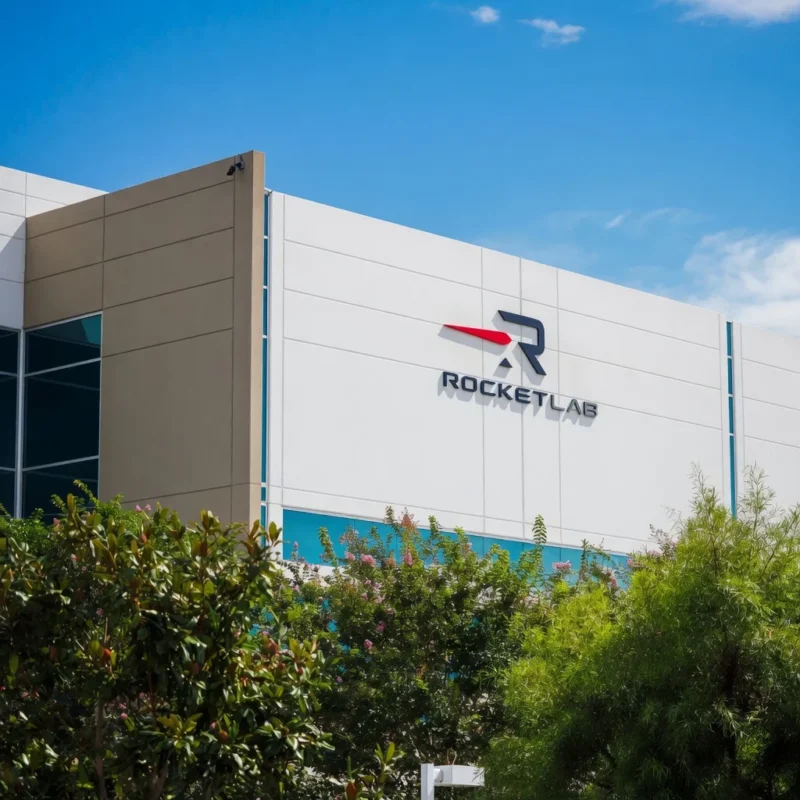
Rocket Lab (RKLB) is set to unveil its first quarter 2026 financial performance following market close today, May 7. As the announcement approaches, RKLB shares stand at $84.65, reflecting a 7.5% increase from the previous day’s close and marking a substantial 25% gain throughout the past month.
Analyst projections point to an earnings loss of $0.07 per share for the period, which would represent meaningful progress compared to the $0.12 per share deficit reported during the same quarter last year. Revenue projections cluster around $189–$191 million, indicating annual growth exceeding 50%.
While profitability remains elusive, the company’s expansion momentum is undeniable.
Derivatives markets are signaling expectations for a 13.59% price swing following the earnings disclosure. This figure substantially surpasses RKLB’s typical post-announcement movement of 4.65%, indicating that traders view this quarterly report as particularly consequential.

Rocket Lab has exceeded analyst expectations in just one of its last four quarterly reports, falling short in three instances—with an average variance of 4.29%.
Neutron Rocket Development Takes Center Stage
While financial metrics matter, investor attention this quarter centers squarely on the Neutron rocket initiative. Neutron represents a 43-meter, partially reusable launch vehicle engineered for satellite deployment and cargo transport missions.
Successful deployment in late 2026 or early 2027 would position Rocket Lab as a legitimate competitor to SpaceX’s Falcon 9—a market segment commanding substantially higher profit margins.
Investors will scrutinize any guidance from leadership regarding Neutron’s development progress and launch timeline.
The quarterly performance may also showcase contributions from two strategic purchases—Optical Support, Inc. (OSI) and Precision Components Limited (PCL). Both transactions were designed to enhance the company’s defense contracting and satellite production operations.
Order Backlog and Profitability Metrics Under Scrutiny
Rocket Lab reported a company-record $1.85 billion backlog at the conclusion of Q4 2025. Management projects approximately 37% of this pipeline will materialize as revenue over the next twelve months—though supply chain coordination challenges could postpone some revenue recognition.
GAAP gross margin reached 34.4% throughout 2025. Shareholders will be looking for improvement in this metric, particularly as continued research and development expenditures plus Neutron program investments weigh on profitability.
The stock commands a forward price-to-sales multiple of 46x, dramatically exceeding the industry benchmark of 11.64x.
This valuation premium creates minimal margin for disappointment. Additionally, trailing twelve-month return on invested capital (ROIC) remains negative—indicating current capital deployment has yet to generate adequate returns.
According to TipRanks analysis, RKLB maintains a Moderate Buy rating with 9 analysts recommending purchase and 4 suggesting hold positions over the most recent three-month period. The consensus price target sits at $89.00, suggesting approximately 5.14% appreciation potential from present trading levels.
Get 3 Free Stock Ebooks
Discover top-performing stocks in AI, Crypto, and Technology with expert analysis.
- Top 10 AI Stocks - Leading AI companies
- Top 10 Crypto Stocks - Blockchain leaders
- Top 10 Tech Stocks - Tech giants


