


TLDR
- Melius Research launched coverage with a buy rating and $1,350 price objective
- Cantor Fitzgerald increased its forecast to $1,400; Morgan Stanley boosted to $1,100
- NAND pricing projected to climb 70–90% sequentially in Q1 2026
- Tight supply conditions in NAND expected to persist into 2027–2028
- Morgan Stanley predicts gross margins nearing 80% with earnings exceeding Street estimates
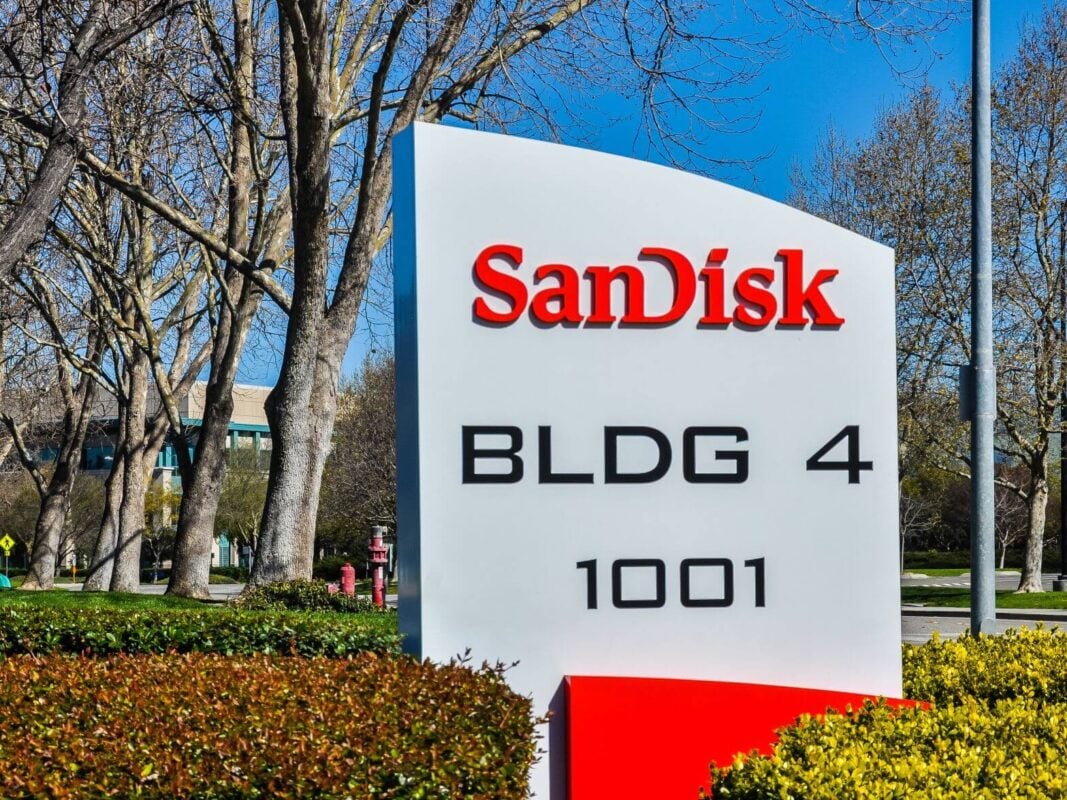
Shares of Sandisk reached a record high near $990 last Friday and extended gains into the new week. The memory chip manufacturer surged more than 7% Monday, hitting $1,063, following a cascade of bullish analyst calls and elevated price forecasts.
Melius Research led the charge, launching coverage with a buy recommendation and a $1,350 price objective. That represents approximately 36% potential upside from late last week’s trading levels.
Both Cantor Fitzgerald and Morgan Stanley joined in upgrading the stock. Cantor increased its forecast to $1,400, while Morgan Stanley elevated its target to $1,100, each pointing to better-than-anticipated fundamentals in the memory semiconductor space.
The unified thesis from these three firms centers on one key theme: NAND flash memory prices are accelerating, inventory remains constrained, and artificial intelligence datacenter demand shows no signs of slowing.

Industry forecasts indicate NAND average selling prices could jump between 70–90% on a sequential basis during the first quarter of 2026. This degree of pricing strength is uncommon in the chip sector, and Wall Street believes it’s fueling a significant profit expansion for Sandisk.
Morgan Stanley has revised its projections to show gross margins climbing toward 80%, with revenue forecasts for 2026 and 2027 substantially above current Street consensus. The bank also anticipates Sandisk will exceed expectations when it reports next quarter’s financial results.
Melius positioned its bullish outlook around a fundamental transformation in demand patterns. The research firm contends that high-bandwidth memory, which pairs with AI accelerators, remains in the nascent phase of an extended growth trajectory that may extend “through the end of the decade.”
The traditional worry surrounding memory stocks revolves around cyclicality. Chip demand historically swings between boom and bust periods, which has made investors hesitant to assign premium valuations to Sandisk.
What’s Keeping Supply Tight
Although DRAM producers are expanding capacity — partly by repurposing certain NAND production lines — minimal new cleanroom capital is being directed specifically toward NAND manufacturing. This supply-demand imbalance is forecast to maintain market tightness at minimum through 2027–2028.
Hyperscale cloud operators, consumer electronics manufacturers, and corporate buyers are all vying for the same limited NAND inventory. The result is a sold-out market with pricing power favoring suppliers.
A notable long-term trend gaining analyst attention involves the expansion of long-term supply agreements between memory producers and their customers. Comparable LTA frameworks have already transformed DRAM pricing dynamics for Micron and Samsung. Should NAND adopt similar contract structures, it could introduce greater pricing predictability and more consistent profitability for Sandisk moving ahead.
Valuation Still Looks Cheap
Sandisk endured three consecutive years of losses before returning to profitability in the current fiscal year. Wall Street consensus projects 2026 earnings around $41.75 per share, expanding to over $107 in 2027. Even looking out to 2030, analyst estimates maintain earnings above $43 — exceeding what the company may deliver this year.
Trading at less than 25 times forward earnings, the stock appears undervalued relative to those profit projections. Morgan Stanley highlighted that Sandisk trades at a discount to Micron when measured on a forward cash flow multiple basis.
Market participants will be monitoring upcoming quarterly results, potential LTA contract announcements, and capital deployment strategies including share repurchase activity as free cash flow generation accelerates.
Get 3 Free Stock Ebooks
Discover top-performing stocks in AI, Crypto, and Technology with expert analysis.
- Top 10 AI Stocks - Leading AI companies
- Top 10 Crypto Stocks - Blockchain leaders
- Top 10 Tech Stocks - Tech giants


