


Key Takeaways
- Elon Musk’s SpaceX has filed confidentially to go public, aiming for a $1.75 trillion market cap with a $75 billion fundraise
- AI powerhouses OpenAI and Anthropic are also preparing for 2026 debuts, with combined valuations potentially exceeding $3 trillion
- 2026’s IPO landscape features fewer companies but significantly larger offerings — capital raised jumped 35% while listing volume dropped 41.5%
- Historical performance data paints a cautionary picture: the majority of massive IPOs since 1999 declined during their first half-year as public companies
- The aerospace company generated approximately $16 billion in revenue with $8 billion in profits during 2025
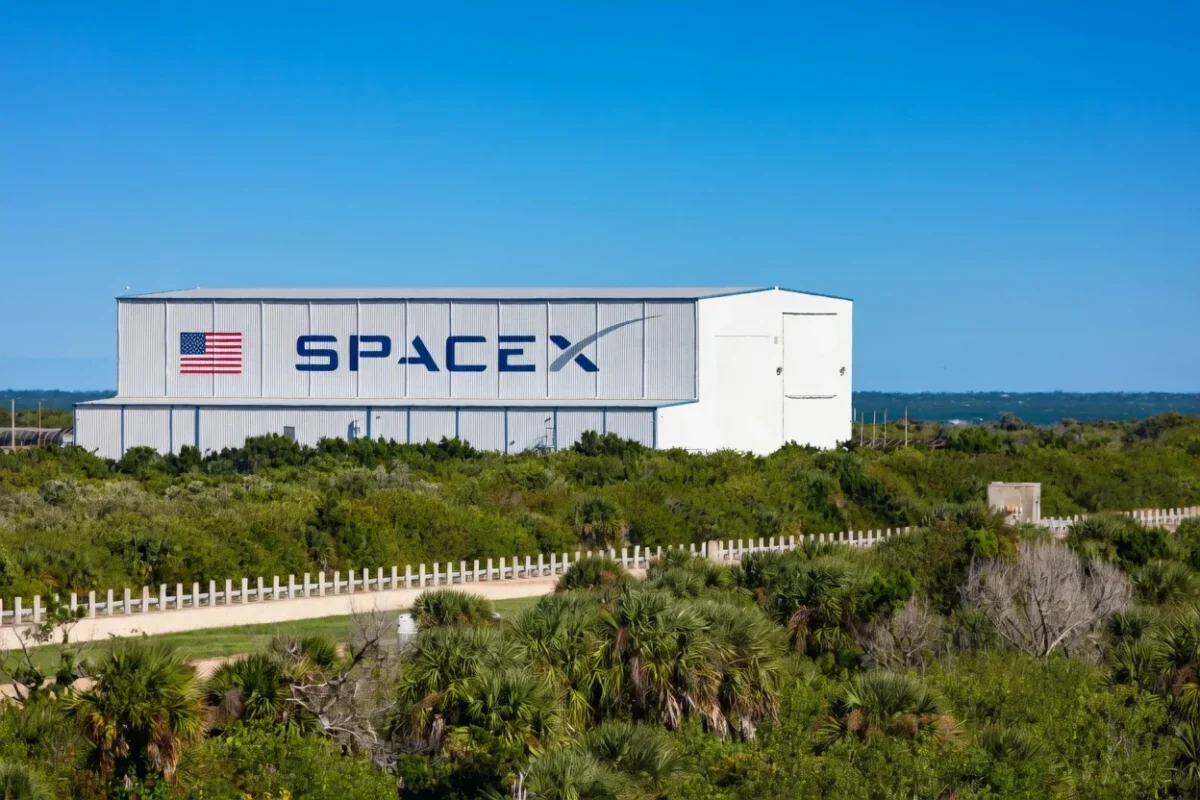
Elon Musk’s aerospace enterprise has submitted confidential paperwork for a public market debut that could shatter all previous IPO records. SpaceX is pursuing a staggering $1.75 trillion valuation while seeking to raise $75 billion from investors.
Should the company achieve these targets, it would surpass Tesla to become the eighth-most valuable publicly traded corporation in America.
Musk, who also helms Tesla, has delivered extraordinary returns for that company’s shareholders — approximately 23,000% gains since its 2010 market debut. Many investors are wondering whether SpaceX might replicate that remarkable performance.
The space exploration company brought in revenues reaching $16 billion throughout 2025, alongside profits of $8 billion. These figures demonstrate considerably stronger fundamentals than most companies exhibit when entering public markets.
Beyond rocket launches, the company manages Starlink, its satellite-based internet service. Earlier this year, it combined operations with Musk’s xAI venture, which encompasses the Grok artificial intelligence system and the X social network.
SpaceX won’t be the only headline-grabbing IPO candidate. Both OpenAI and Anthropic, leading players in artificial intelligence, are anticipated to submit their own public offering paperwork before 2026 ends. The trio’s combined market valuations could surpass $3 trillion.

During a recent quarterly earnings discussion, Goldman Sachs CEO David Solomon noted that equity markets have demonstrated “extremely resilient” characteristics, suggesting IPO momentum may build further. Meanwhile, Morgan Stanley CEO Ted Pick observed that investor standards for new listings remain “very high” in today’s market conditions.
The IPO Market’s Transformation
The 2026 initial public offering landscape reflects a distinct shift toward quality over quantity. By mid-April, just 38 companies valued above $50 million had completed public listings — representing a 41.5% decrease from the comparable timeframe in 2025. However, total capital raised climbed 35% to reach $13.3 billion, per Renaissance Capital data.
This week witnessed filtration specialist Madison Air complete the year’s largest offering, securing $2.2 billion at a $13.3 billion valuation. Shares surged nearly 20% during the opening session. Defense technology company Arxis collected $1.1 billion and saw its stock price jump 38% on day one.
Not every 2026 IPO has enjoyed such success. Cryptocurrency platform BitGo, oncology biotech Eikon Therapeutics, and diabetes medical device manufacturer MiniMed are all currently trading well beneath their initial offering prices.
Past Performance Suggests Caution
Despite considerable enthusiasm surrounding SpaceX’s potential market entry, historical patterns indicate challenging early periods for ultra-large IPOs.
Since 1999, most massive public offerings have underperformed during their initial six months. Facebook plummeted 38% within half a year of trading. Alibaba declined 9%, General Motors dropped 8%, and Saudi Aramco fell 15%. Visa stood as the exception, gaining 23%. Across these mega-deals, the average six-month performance showed roughly 10% losses.
For SpaceX, a similar 10% pullback from its projected valuation would erase approximately $175 billion in shareholder wealth.
Retail investors must also consider whether the most substantial profit opportunities already occurred during private funding stages. Pre-IPO investment vehicles from ARK Invest, Robinhood, Baron Capital, and similar firms provide early access, though many have experienced significant volatility recently.
SpaceX has not disclosed when it will make its filing public or provided specific timing for when shares might begin trading.
Get 3 Free Stock Ebooks
Discover top-performing stocks in AI, Crypto, and Technology with expert analysis.
- Top 10 AI Stocks - Leading AI companies
- Top 10 Crypto Stocks - Blockchain leaders
- Top 10 Tech Stocks - Tech giants


