


Key Takeaways
- Equity futures declined Monday following a weekend surge in US-Iran hostilities that jeopardized diplomatic efforts
- Dow futures sank 0.6%, while S&P 500 and Nasdaq 100 contracts declined 0.5%
- American naval forces captured an Iranian vessel; Tehran responded by attacking ships and sealing the Strait of Hormuz
- Crude oil prices jumped dramatically, with WTI climbing 5.7% to approximately $87/barrel and Brent advancing 4.7% to roughly $95/barrel
- Gold retreated 1.3%, the greenback gained 0.1%, and Bitcoin dipped 0.5% to $74,942
Equity index futures traded in negative territory Monday morning following a weekend military confrontation between Washington and Tehran that dampened optimism for diplomatic resolution and triggered a sharp rally in energy markets.
Dow Jones Industrial Average futures declined 394 points, representing a 0.6% loss. Both S&P 500 and Nasdaq 100 futures contracts retreated approximately 0.5%.
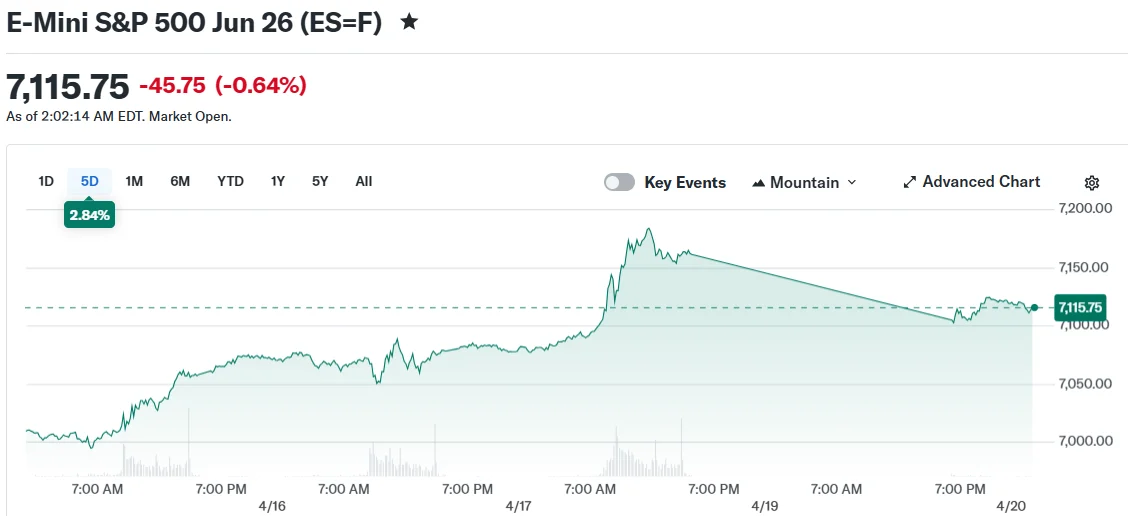
The downturn arrives on the heels of an impressive rally across major indices. Both the S&P 500 and Nasdaq concluded last week at all-time peaks. The Nasdaq had just completed its 13th straight session of gains — the longest such streak in more than three decades, dating back to 1992.
This bullish trend now confronts a significant challenge.
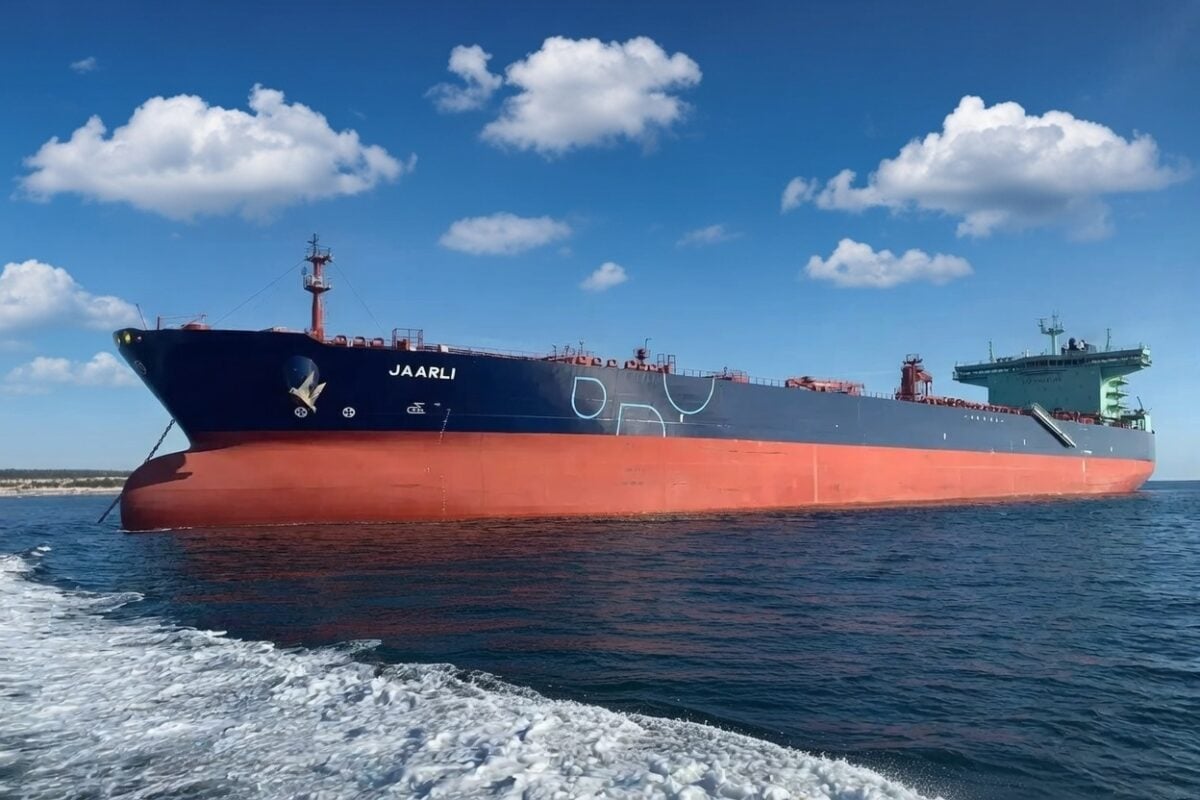
During the weekend, President Trump announced that American naval forces had intercepted an Iranian commercial vessel trying to evade the blockade of the Strait of Hormuz, damaging its propulsion system. Tehran retaliated by launching attacks on maritime traffic in the strategic waterway and completely blocking passage, reversing an earlier commitment to permit limited vessel movement.

Tehran’s official news service also challenged accounts of upcoming peace discussions, stating that the “outlook for constructive talks remains bleak.” American representatives are reportedly still planning to travel to Pakistan for continued negotiations.
Energy Markets Rally, Mixed Safe-Haven Response
Oil markets responded swiftly to the developments. Brent crude surged 4.8% to approximately $94.70 per barrel. WTI advanced 5.1% to $86.82. While both benchmarks remain beneath the psychologically significant $100 threshold that could intensify inflation concerns, the upward trajectory is unsettling market participants.
The heightened tensions surrounding the Strait of Hormuz — a critical passage for approximately 20% of worldwide petroleum shipments — is reviving inflation anxieties just as financial markets had begun pricing in greater stability.
Deutsche Bank’s macro strategist Jim Reid highlighted an unsettling historical parallel. He observed that the S&P 500 rallied over 10% during the initial phase of the Ukraine conflict as traders anticipated a swift diplomatic resolution. “That episode is a clear warning sign,” he cautioned.
The US dollar index strengthened modestly by 0.1% versus major currencies. Gold, traditionally viewed as a crisis hedge, surprisingly dropped 1.3% to $4,818 per ounce. Bitcoin decreased 0.5% across 24 hours to $74,942. The benchmark 10-year Treasury yield climbed 3 basis points to 4.27%.
Week Ahead Preview
Corporate earnings reports continue at a rapid pace. Tesla (TSLA), INTC), and United Airlines ($UAL) are scheduled to announce quarterly results this week, providing investors opportunities to concentrate on company performance instead of geopolitical developments.
As of Monday’s pre-market session, Dow futures stood at 49,365, S&P 500 futures registered 7,129.50, and Nasdaq 100 futures traded at 26,718.75.
Iran’s Islamic Republic News Agency maintained its skeptical stance regarding diplomatic breakthrough possibilities as of Sunday.
Get 3 Free Stock Ebooks
Discover top-performing stocks in AI, Crypto, and Technology with expert analysis.
- Top 10 AI Stocks - Leading AI companies
- Top 10 Crypto Stocks - Blockchain leaders
- Top 10 Tech Stocks - Tech giants


