


TLDRs
- South Korea online sales hit record $17.4B, driven by Tesla demand surge.
- Tesla online car sales pushed auto segment up 109.9% year over year.
- Mobile shopping reached new highs as consumers shift to digital purchases.
- Traditional retailers face pressure despite record-breaking ecommerce market growth.
South Korea’s online retail sector has reached a historic milestone, with total sales climbing 13.3% year over year to a record 25.6 trillion won (approximately US$17.4 billion) in March.
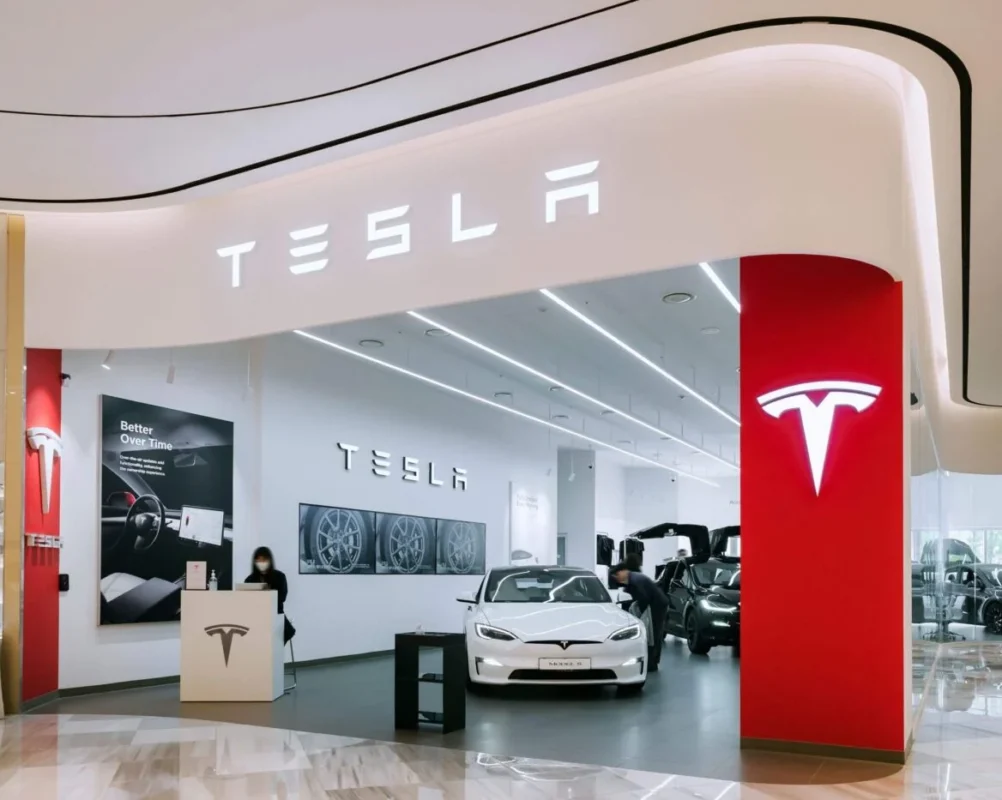
The surge reflects a broader shift in consumer behavior, but one of the most striking drivers behind the growth is the explosive demand for Tesla (TSLA) vehicles, which have increasingly been purchased through digital channels.
According to official data, the monthly total increased by about 3 trillion won (US$2.06 billion) compared to the same period last year, marking the highest level since the government began tracking online retail performance in 2017. While groceries, food services, and general consumer goods contributed to the rise, the automotive segment stood out as the most dramatic growth category.
Auto Demand Reaches Turning Point
Sales of automobiles and auto accessories surged by 109.9% year over year, largely fueled by Tesla’s online ordering system in South Korea. The EV maker has long relied on a direct-to-consumer model, and its digital-first approach continues to reshape how vehicles are purchased in the country.
Tesla’s sales momentum has been amplified by aggressive pricing strategies. Reports indicate that steep price reductions helped boost its South Korean sales by more than 330% year over year in March alone. As a result, Tesla accounted for roughly 69% of imported electric vehicle registrations during the period, underscoring its dominant position in the fast-growing EV segment.

Digital Car Buying Expands Fast
Tesla began selling vehicles through its online platform in South Korea back in 2017, and what was once a niche experiment is now influencing the broader automotive industry. Other global manufacturers, including BMW, Mercedes-Benz, Polestar, and Hyundai Motor Co., are increasingly testing or expanding online sales channels.
This shift marks a significant transformation in how cars are marketed and sold, particularly in a country where traditional dealership networks have historically dominated. The move toward digital ordering is now seen as both a competitive necessity and a response to evolving consumer expectations.
However, the transition is not uniform across all automakers. Hyundai, for example, faces structural challenges in fully digitizing its sales model due to its extensive company-run dealership network and unionized workforce. In contrast, Tesla’s leaner structure allows it to operate without the same internal constraints, giving it an edge in scaling online-first sales strategies.
Mobile Commerce Leads Growth
Beyond vehicles, mobile commerce also played a key role in South Korea’s record-breaking performance. Purchases made via smartphones and tablets rose 11.6% to reach an all-time high of 19.4 trillion won (US$13.2 billion). This reinforces the country’s position as one of the most digitally connected retail markets globally.
Consumers are increasingly comfortable completing high-value transactions through mobile devices, further blurring the line between traditional retail and e-commerce. The trend is particularly important for sectors like automotive and electronics, where online purchasing was previously limited.
Retail Growth Hides Market Strain
Despite the headline growth, the broader retail ecosystem is facing underlying pressures. While Tesla-driven demand and digital adoption have lifted overall figures, several established South Korean e-commerce platforms are struggling with financial strain and restructuring challenges.
Some firms, including TMON Inc. and WeMakePrice Co., both owned by Singapore-based Qoo10 Pte., have entered court receivership amid liquidity issues. The situation highlights growing competition and consolidation risks within the sector, even as overall market size expands.
At the same time, the record-breaking performance of online retail suggests a structural shift rather than a temporary spike. The combination of Tesla-led automotive sales, rising mobile commerce, and increasing digital adoption across industries points to a long-term transformation in South Korea’s consumer economy.
Get 3 Free Stock Ebooks
Discover top-performing stocks in AI, Crypto, and Technology with expert analysis.
- Top 10 AI Stocks - Leading AI companies
- Top 10 Crypto Stocks - Blockchain leaders
- Top 10 Tech Stocks - Tech giants


