


Key Takeaways
- Telegram is set to take over from the TON Foundation as the network’s primary development force and will operate as its biggest validator
- The network holds $752 million in stablecoins with $39.7 million in daily DEX trading volume, demonstrating genuine on-chain engagement
- Chain fees total just $8,086 per day despite significant activity, revealing inefficient value capture for a network of this scale
- Monthly unlocks from the TON Believers Fund release approximately 36.59 million TON tokens, with the upcoming distribution valued at roughly $75 million
- A 300,000 TON minimum stake requirement for validators, combined with Telegram’s expanding influence, creates potential decentralization issues
Toncoin stands apart from most cryptocurrency projects by solving the distribution challenge before it becomes a problem. While competing blockchains dedicate years to user acquisition through expensive marketing campaigns, token incentives, and grant programs, TON benefits from an entirely different growth strategy.
The TON Wallet operates natively within Telegram’s ecosystem. Users maintain full custody of their private keys while enjoying an intuitive mobile experience. This fusion of security and usability remains uncommon across the cryptocurrency landscape.
With Telegram’s user base exceeding one billion registered accounts, TON gains immediate access to an audience that rivals can only aspire to reach.
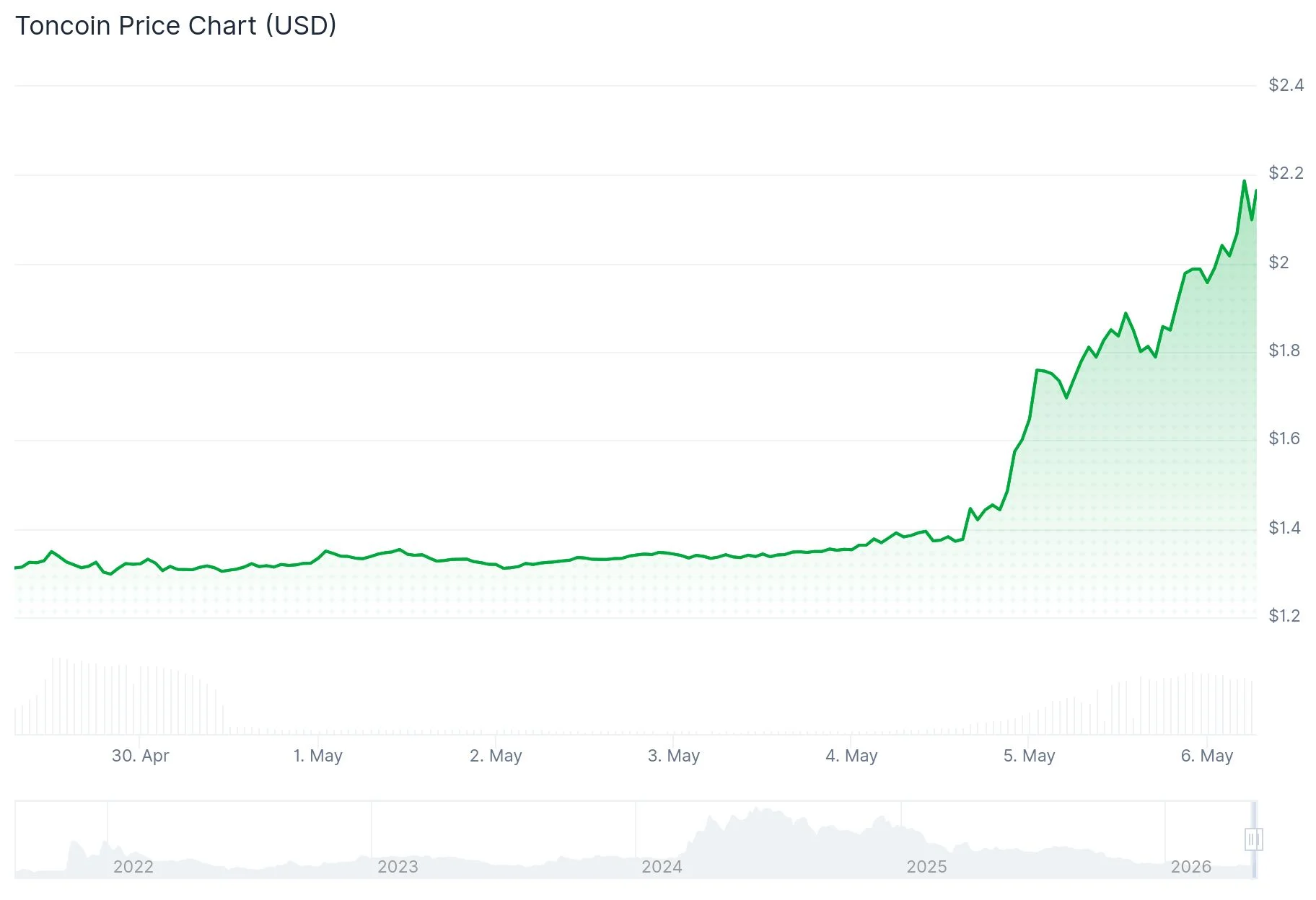
During May 2026, Pavel Durov, Telegram’s founder, revealed plans for Telegram to supplant the TON Foundation as the network’s main developmental authority. Additionally, Telegram will establish itself as the network’s dominant validator.
This declaration sparked fresh interest in TON while highlighting the deepening integration between both platforms.

Analyzing the On-Chain Metrics
According to DeFiLlama’s tracking data, approximately $752 million worth of stablecoins currently reside on the TON blockchain. Daily decentralized exchange volume reaches about $39.7 million, while perpetuals trading generates roughly $1.48 million in 24-hour volume.
These figures demonstrate that both developers and users are actively selecting TON for their blockchain needs. Capital is flowing into the network, and transaction activity reflects genuine usage.
Yet the network generates only approximately $8,086 in daily fees, with revenue hovering around $4,043 per day. For a blockchain commanding a market capitalization between $5.6 billion and $5.7 billion, this fee performance appears inadequate.
Fee generation serves as a critical indicator because it demonstrates how much economic value a network successfully retains. When substantial activity produces minimal fees, it suggests users are engaging with the platform without the network effectively monetizing that engagement.
Supply Schedule and Validator Economics
CoinGecko reports approximately 2.7 billion TON tokens currently circulating in the market. The original TON whitepaper established an initial supply ceiling of 5 billion tokens, with subsequent growth occurring through validator reward distribution.
The TON Believers Fund presents additional considerations. Messari’s data indicates this fund releases approximately 36.59 million TON monthly. About 1.098 billion TON tokens remain locked, with distributions scheduled to continue through roughly October 2028.
DeFiLlama’s unlock monitoring system shows the next scheduled distribution valued at approximately $75 million. This persistent influx of new supply generates continuous downward pressure on token prices.
Regarding validator participation, the TON network mandates a minimum stake of 300,000 TON. Reports suggest practical participation thresholds often exceed this baseline requirement.
As Telegram prepares to assume the role of largest validator, the network’s power structure shifts toward greater centralization around one dominant participant. While this concentration may enhance operational efficiency and network stability, it represents a departure from decentralization principles.
Telegram’s evolution into TON’s primary validator marks the latest development influencing how market participants and builders evaluate the network’s trajectory.
Get 3 Free Stock Ebooks
Discover top-performing stocks in AI, Crypto, and Technology with expert analysis.
- Top 10 AI Stocks - Leading AI companies
- Top 10 Crypto Stocks - Blockchain leaders
- Top 10 Tech Stocks - Tech giants


