


Key Takeaways
- President Trump indicated in a Fortune magazine interview that rate cuts may be postponed until the conclusion of hostilities with Iran
- Prospective Fed Chair Kevin Warsh has declined to commit to any specific rate reduction timeline
- Consumer price inflation registered at 3.8%, significantly exceeding the Federal Reserve’s 2% objective
- Two-year Treasury yields surged past 4%, marking their peak level in 2025
- The blockaded Strait of Hormuz continues to drive an energy crisis that sustains elevated inflation
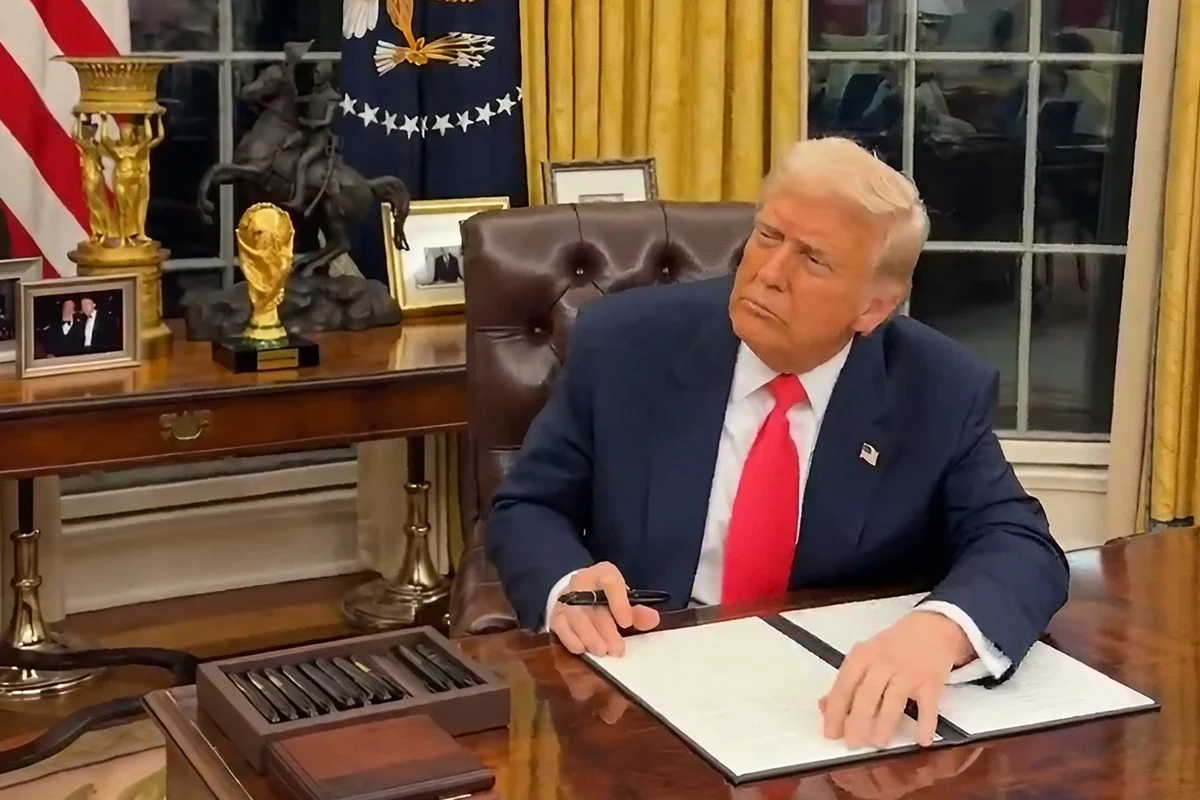
President Donald Trump has publicly stated that interest rate reductions may need to be deferred until the conclusion of military operations with Iran. This revelation came during a conversation with Fortune magazine that was released Monday.
“You can’t really look at the figures until the war is over,” Trump said.
Trump also said Iran was “dying to sign” a ceasefire deal but accused the country of backing out of agreed terms. He said Iran would send over paperwork that had “no relationship to the deal you made.”
The ongoing Middle Eastern conflict is exerting substantial pressure on worldwide energy systems. The Strait of Hormuz, a critical passage for international petroleum transport, continues to face closure. Deutsche Bank analyst Jim Reid informed investors that Trump’s statement downplaying the necessity of reopening the Strait has intensified concerns about an extended energy supply disruption.
The blocked waterway poses a greater challenge for China compared to the United States, given that America maintains net energy exporter status. China represents Iran’s primary oil purchaser. Trump’s recent diplomatic mission to Beijing yielded limited tangible outcomes, though Chinese officials acknowledged the eventual necessity of reopening the strategic passage.
Warsh Confronts Growing Monetary Policy Challenges at the Fed
President-elect Federal Reserve Chairman Kevin Warsh has informed the Senate that he has avoided making specific pledges regarding interest rate reductions. During his April confirmation proceedings, he declared that “inflation is a choice.”
Warsh has discussed how artificial intelligence advancement might enhance productivity levels, potentially creating conditions favorable for future monetary easing. However, financial markets currently show no expectation of imminent cuts.
The most recent consumer price index figure registered at 3.8%, substantially above the central bank’s 2% inflation target. This differential complicates the rationale for near-term rate reductions.

Yields on government debt instruments have climbed across various maturities. Two-year Treasury yields jumped beyond 4% during the current week, establishing a 2025 high-water mark. Both 30-year and 20-year maturities now exceed 5%.
Fixed Income Markets Flash Warning Signs
Escalating long-duration yields effectively constrict financial conditions without requiring Federal Reserve intervention. Several market observers suggest this dynamic might actually provide Warsh with justification to implement modest short-term rate adjustments as a counterbalance.
Joseph Brusuelas, principal economist at RSM, noted that elevated inflation expectations necessitate Fed preparation for scenarios involving continued price increases. “He may get the chance to prove he actually believes it,” Brusuelas said, referring to Warsh’s confirmation hearing comment.
The 2-year Treasury instrument serves as a market barometer for anticipated rate trajectory over coming years. Its rapid ascent above 4% this week demonstrates that investors foresee no immediate monetary easing.
Currently, Trump’s campaign for reduced borrowing costs confronts substantial economic data indicating opposite conditions. Barring significant inflation moderation and resolution of the Iranian situation, rate cuts remain improbable in the foreseeable future.
Get 3 Free Stock Ebooks
Discover top-performing stocks in AI, Crypto, and Technology with expert analysis.
- Top 10 AI Stocks - Leading AI companies
- Top 10 Crypto Stocks - Blockchain leaders
- Top 10 Tech Stocks - Tech giants


