



TLDR
- Tehran has offered to reopen the Strait of Hormuz while requesting postponement of nuclear discussions
- Dow futures declined 0.2% Monday; S&P 500 and Nasdaq futures remained unchanged
- WTI crude surpassed $96 per barrel, Brent crude rose above $100
- Quarterly results from five “Magnificent Seven” tech giants expected this week
- Federal Reserve policy meeting scheduled, potentially Jerome Powell’s penultimate session as chairman
Equity futures for US markets showed minimal movement Monday morning as traders evaluated fresh developments from Iran and prepared for a critical week packed with corporate earnings reports.
The S&P 500 and Nasdaq futures traded essentially unchanged following record closing highs achieved by both benchmarks during the previous week. Futures tied to the Dow Jones Industrial Average retreated approximately 0.2%.
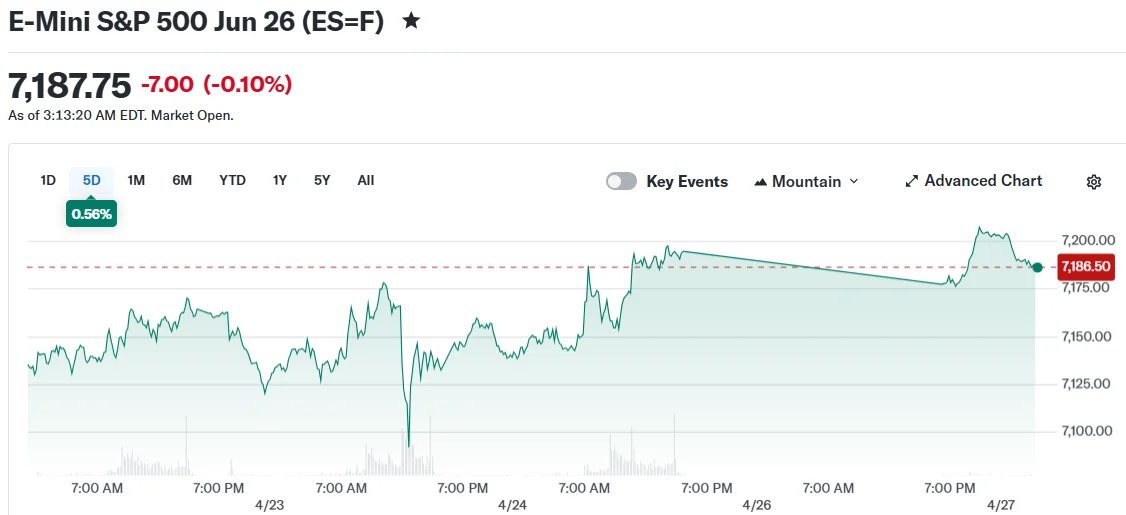
The modest decline followed an Axios report indicating Iran has presented Washington with a fresh proposal to reopen the Strait of Hormuz and conclude hostilities. The proposal, however, defers nuclear program negotiations to an undetermined future date.
Since late February, Tehran has maintained control over the Strait of Hormuz through a combination of missile deployments, naval mines, and rapid attack vessels preventing passage through the strategic waterway.
Approximately one-fifth of global petroleum supplies transit through the Strait. The blockade has driven energy costs upward and intensified inflationary pressures throughout numerous sectors.

According to the Axios reporting, Iran’s proposal could diminish Washington’s negotiating position in subsequent diplomatic engagements. Two primary American objectives have centered on decreasing Tehran’s enriched uranium reserves and halting additional enrichment activities.
Military operations targeting Iran’s nuclear facilities were conducted by US forces during mid-2025. The current status of Tehran’s nuclear program remains undisclosed.
Diplomatic efforts have essentially reached an impasse. While President Trump authorized an extension of the ceasefire last week, he subsequently cancelled a scheduled diplomatic mission to Pakistan after Iranian representatives departed Islamabad prematurely.
Energy Markets Rally
Crude oil valuations experienced substantial gains on Monday. Brent crude futures advanced more than 2%, reclaiming the $100 per barrel threshold. West Texas Intermediate exceeded $96 per barrel.
The upward movement underscores persistent anxiety regarding worldwide petroleum availability during the ongoing Strait closure. Multiple major Asian economies have already experienced consequences from elevated energy expenditures.
Previously, Trump had urged NATO member states to participate in naval operations aimed at reopening the Hormuz passage. A US naval blockade targeting Iran continues, representing a significant obstacle in negotiation efforts.
Technology Sector Earnings Take Center Stage
Separate from the Iranian situation, market participants are positioning for an exceptionally busy earnings reporting period. Five members of the prominent Magnificent Seven technology companies are scheduled to release quarterly financial results during the coming days.
Investor attention will focus intensely on these performances following equities’ resilience despite persistent geopolitical tensions. Any underwhelming results could challenge the recent rally in stock prices.
The Federal Reserve’s policy committee also convenes this week. This gathering is anticipated to represent the penultimate meeting under Jerome Powell’s leadership before Kevin Warsh assumes the chairmanship.
Market observers will scrutinize any guidance regarding interest rate policy, especially as inflation concerns remain connected to the continuing Hormuz blockade and rising petroleum prices.
As of Monday morning, neither the Iranian nor American governments have officially confirmed Iran’s proposal to reopen the Strait of Hormuz as described in the Axios report.
Get 3 Free Stock Ebooks
Discover top-performing stocks in AI, Crypto, and Technology with expert analysis.
- Top 10 AI Stocks - Leading AI companies
- Top 10 Crypto Stocks - Blockchain leaders
- Top 10 Tech Stocks - Tech giants


