


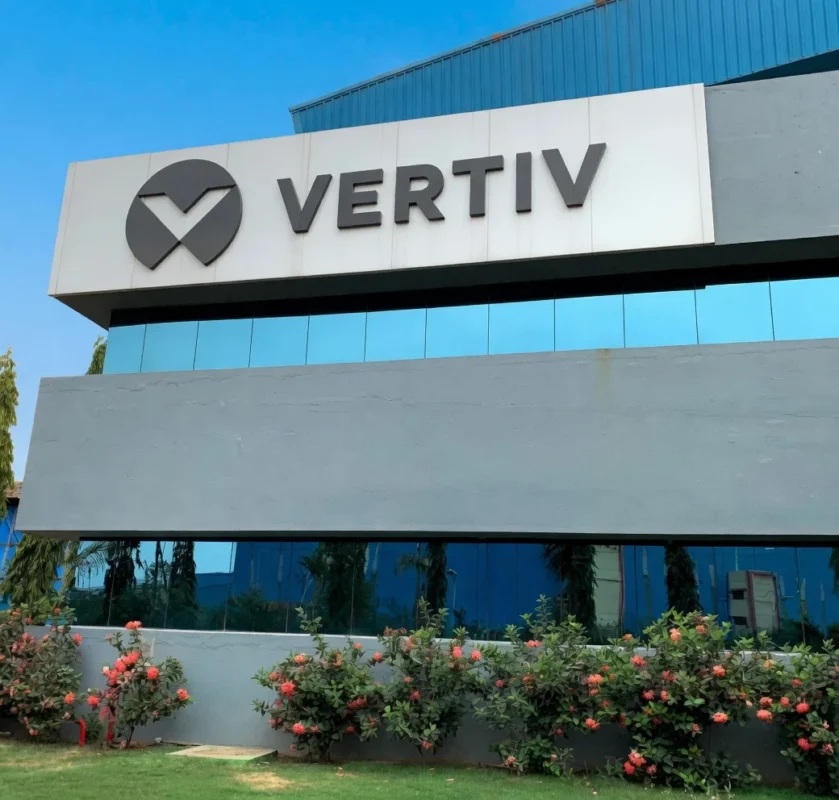
Key Highlights
- Vertiv shares jumped 5.4% on Thursday following first-quarter adjusted earnings per share of $1.17, surpassing the Street’s $1.00 estimate
- First-quarter revenue reached $2.65B, marking a 30.1% increase from the prior year and edging past the $2.63B consensus forecast
- The company increased its full-year 2026 EPS outlook to a range of $6.30–$6.40
- Five major Wall Street firms—Morgan Stanley, Oppenheimer, TD Cowen, RBC, and Citi—elevated their price targets after reviewing the quarterly report
- Company insiders have offloaded approximately 489,761 shares valued at roughly $123M in recent months, despite institutional ownership remaining near 90%
Vertiv Holdings shares advanced 5.4% during Thursday’s trading session, finishing at $321.60 after reaching an intraday peak of $325.25. The stock had closed at $305.14 in the previous session.
The rally followed Vertiv’s release of first-quarter adjusted earnings of $1.17 per share, significantly exceeding analyst projections of $1.00. The company generated $2.65 billion in quarterly revenue, representing a 30.1% year-over-year increase.
In a curious turn of events, the stock had declined 2.3% during the previous trading day—when the actual earnings announcement occurred—as management’s Q2 forecast fell short of elevated Street expectations going into the report.
For the second quarter, management projected EPS between $1.37 and $1.43, while full-year 2026 guidance was increased to $6.30–$6.40. Both forecasts landed modestly below certain Wall Street estimates.

The subsequent rally on Thursday was primarily fueled by enthusiastic analyst commentary. Multiple prominent investment firms elevated their price objectives after thoroughly examining the quarterly results.
Wall Street Firms Raise Price Objectives
Morgan Stanley’s Christopher Snyder increased his price target to $350 from $285 while maintaining a Buy recommendation. He emphasized that persistent order momentum demonstrated Q4’s performance wasn’t an anomaly, and suggested the financial model remains positioned for upward revisions despite the guidance increase.
Oppenheimer analyst Noah Kaye elevated his target to $330 from $320 while reaffirming his Buy stance. He highlighted that deferred revenue patterns indicate robust order flow and pipeline expansion, creating potential for additional guidance increases later this year.
TD Cowen’s Michael Elias raised his objective to $347 from $269, also maintaining a Buy rating. He referenced vigorous U.S. data center leasing momentum and projected that record orders could materialize as soon as the second quarter of 2026.
RBC increased its target from $344 to $356 alongside an Outperform designation. Citi advanced its target from $340 to $353, also with a Buy recommendation.
Jefferies represents the exception—the firm maintained a Hold rating while actually reducing its target to $260 from $280.
Collectively, Wall Street maintains a Strong Buy consensus on Vertiv, featuring 17 Buy recommendations against just one Hold rating. The mean price target stands at $330, suggesting limited upside from present levels after VRT’s impressive 99% year-to-date surge.
Notable Insider Divestment Activity
While major institutional investors have been accumulating shares—Vanguard, State Street, Geode, and Invesco all expanded their holdings last quarter—corporate insiders have been reducing their positions.
During the past three months, company insiders have divested approximately 489,761 shares with a combined value near $123 million. Director Steven Reinemund disposed of 65,000 shares at approximately $254 per share in February, decreasing his ownership by nearly 49%. Director Jan Van Dokkum sold 38,647 shares at $254.87, trimming his holdings by more than 60%.
Institutional investors presently control roughly 89.9% of outstanding shares.
Vertiv also announced a quarterly dividend distribution of $0.0625 per share, which was disbursed on March 26. The annualized dividend yield currently registers at 0.1%.
The stock trades at a price-to-earnings ratio of 94.31 and exhibits a beta of 2.04, indicating both its premium market valuation and heightened price volatility compared to the broader equity market.
Get 3 Free Stock Ebooks
Discover top-performing stocks in AI, Crypto, and Technology with expert analysis.
- Top 10 AI Stocks - Leading AI companies
- Top 10 Crypto Stocks - Blockchain leaders
- Top 10 Tech Stocks - Tech giants


