


Quick Summary
- In February 2026, NYRA implemented strict regulations targeting computer-assisted wagering (CAW) participation in betting markets
- Following these restrictions, CAW’s portion of Aqueduct handle declined from approximately 22% to roughly 13%
- Aqueduct’s winter meet experienced a 24% total handle decrease, influenced by race cancellations and adverse weather conditions
- Computer-assisted betting represents about 30% of America’s $11 billion annual racing wagering market
- Industry analysts caution that racing is hemorrhaging recreational bettors, drawing parallels to Las Vegas’s mistakes with casual gamblers
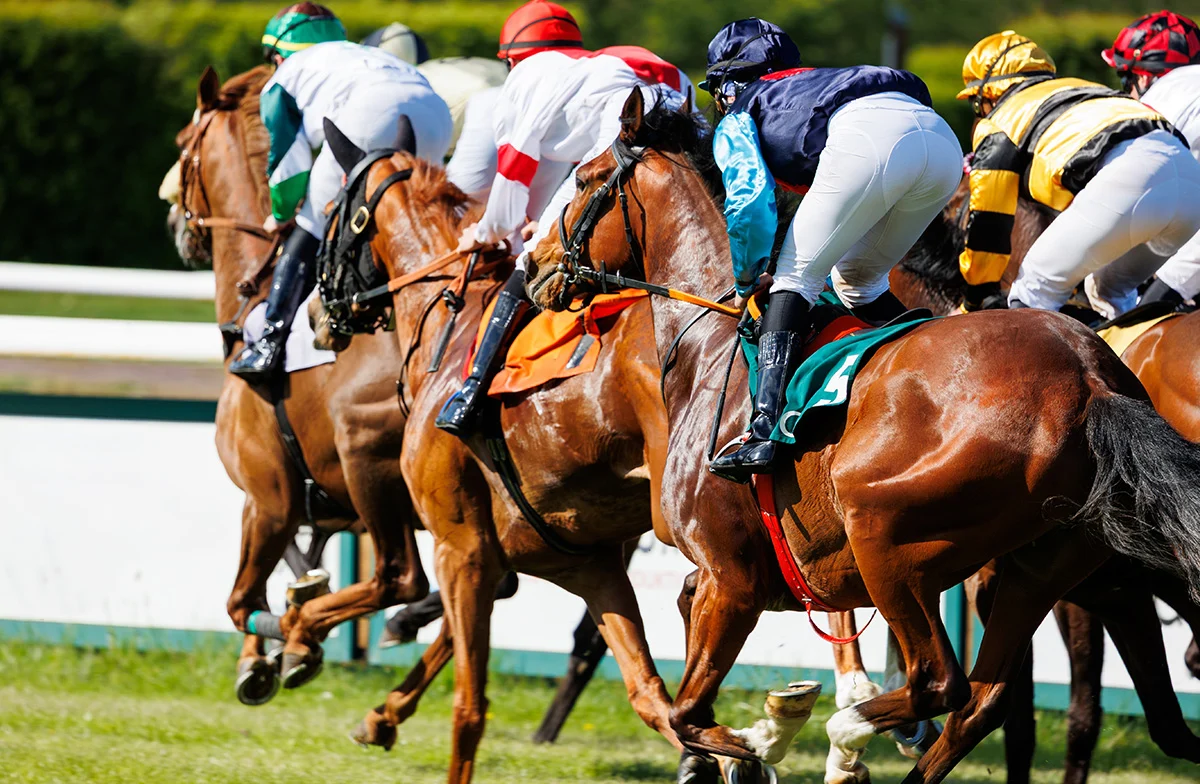
The thoroughbred racing industry is mounting a counteroffensive against algorithm-driven betting systems in hopes of reclaiming its grassroots wagering audience. Whether these measures can reverse years of decline remains an open question.
Computer-assisted wagering — commonly known as CAW — empowers high-stakes players to execute massive betting volumes through sophisticated data algorithms and mathematical models. Average racetrack patrons lack access to these advanced systems. Detractors argue that CAW undermines payout values by dramatically altering odds during the countdown to post time.
Dave Portnoy, who founded Barstool Sports, expressed his exasperation on X during the fall season. According to him, bettors must now achieve double the success rate to earn equivalent returns compared to what they received just two years earlier.
New Regulations From NYRA
On February 6, 2026, the New York Racing Association rolled out enhanced restrictions. Computer-assisted accounts now face prohibitions on submitting batch wagers throughout all pool categories, including sophisticated wagers such as exactas and trifectas, during the final sixty seconds before races begin.
An earlier regulation, active for half a decade, had previously prevented these accounts from executing high-volume win-pool wagers within two minutes of post. These updated protocols expand those limitations significantly.
Every bettor, CAW users included, now confronts a six-bet-per-second ceiling once races reach the one-minute warning. NYRA has additionally barred computer-assisted accounts from participating in late pick-5 and pick-6 wagering sequences altogether.

Initial data reveals significant shifts. Between February 11 and May 25 at Aqueduct, computer-assisted wagering represented approximately 13% of aggregate betting volume. Previously, that percentage consistently remained near 22%.
The impact CAW exerts on exacta pricing declined by over half following implementation of these restrictions.
Jack Jeziorski, who serves as president of NYRA Content Management, noted that CAW’s handle percentage also decreased during the opening two days of the Belmont Racing Festival held at Saratoga in June 2026.
Overall Wagering Declines
Total betting activity has simultaneously contracted. The winter meet at Aqueduct generated $194.6 million in handle, representing nearly a 24% reduction from the previous year’s $255.6 million, based on Daily Racing Form statistics.
NYRA calculated that roughly 5% of that decline stems directly from CAW restrictions. The remaining shortfall resulted from 35 canceled races, primarily attributed to inclement weather patterns and insufficient horse field sizes.
Aqueduct’s spring meet produced $82.2 million in total handle, marking a 19.3% year-over-year decrease. Daily average handle slipped from $6.4 million down to $5.5 million.
According to Jeziorski, NYRA is observing preliminary indicators that retail bettors are reacting positively to enhanced wagering conditions.
Industry-Wide Implications
Computer-assisted wagering comprises approximately 30% of America’s total racing handle. That translates to roughly $3.3 billion of the $11.04 billion wagered throughout 2025, according to statistics compiled by The Jockey Club.
Smaller racing venues rely heavily on that volume for financial sustainability, according to Dr. Marshall Gramm, who chairs the economics department at Rhodes College. Gramm also maintains racehorse ownership and has published scholarly research on the racing industry.
Gramm cited the Churchill Downs Stakes on Kentucky Derby Day as a clear demonstration of CAW’s market influence. T O Elvis, the eventual winner, started with morning line odds of 12-1. Eleventh-hour computer-assisted wagers compressed those odds to 5-1 by race conclusion.
The win pool for that particular race reached approximately $4.5 million — representing about 80% of the entire Breeders’ Cup Classic handle from the prior year.
Gramm drew comparisons between horse racing’s trajectory and Las Vegas gaming establishments that reduced slot machine returns and modified blackjack rules. Initial revenue increases gave way to sustained customer exodus.
“Horse racing finds itself in an identical predicament,” Gramm explained. “We’re systematically eliminating prospective new participants.”
Fixed-odds betting is attracting growing interest as a potential solution. Kentucky legislators approved enabling legislation in 2026, though Churchill Downs has indicated no immediate intentions to implement such offerings.
Get 3 Free Stock Ebooks
Discover top-performing stocks in AI, Crypto, and Technology with expert analysis.
- Top 10 AI Stocks - Leading AI companies
- Top 10 Crypto Stocks - Blockchain leaders
- Top 10 Tech Stocks - Tech giants


