


Key Takeaways
- Brent crude rallied more than 3% to reach $106 per barrel Friday following a three-session selloff
- Diplomatic negotiations between Washington and Tehran continue with Pakistani mediation
- Iran’s supreme leader allegedly ordered all enriched uranium to remain within Iranian borders, creating diplomatic obstacles
- The Strait of Hormuz continues to face severe restrictions, constraining global oil availability
- Goldman Sachs reports worldwide crude inventories declining at unprecedented rates
Energy markets experienced significant upward momentum Friday as investors monitored evolving diplomatic efforts between the United States and Iran. Brent crude futures advanced 3.3% to reach $106 per barrel, while West Texas Intermediate climbed 2.9% to approximately $99 per barrel. Despite Friday’s gains, both benchmarks remained positioned for weekly declines.
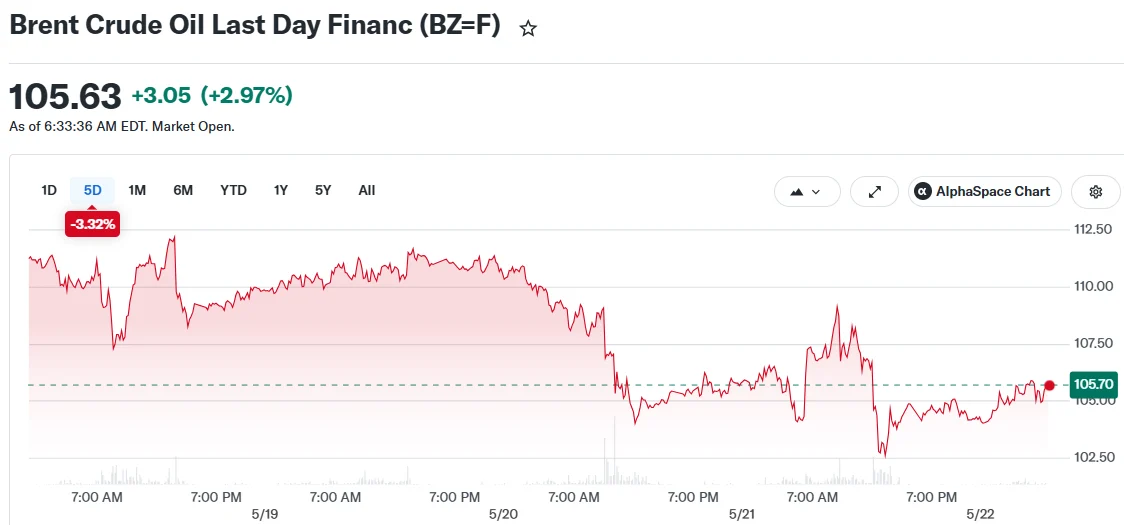
Friday’s surge followed three consecutive trading sessions of losses. Energy traders have witnessed significant volatility as diplomatic developments alternate between encouraging and concerning signals.
Tensions between Washington and Tehran escalated in late February following a coordinated military operation involving U.S. and Israeli forces. The hostilities subsequently expanded throughout several Middle Eastern territories, encompassing critical oil-producing nations in the Persian Gulf region.
Diplomatic Efforts Advance Despite Significant Obstacles
Pakistan has emerged as a crucial intermediary in the negotiations. Iran’s top diplomat engaged with Pakistani Interior Minister Syed Mohsin Naqvi, who is spearheading efforts to establish a comprehensive peace framework.
According to Reuters, Pakistani officials delivered Washington’s most recent proposal to Iranian authorities approximately 48 hours before the ministerial meeting.

U.S. Secretary of State Marco Rubio acknowledged that negotiations have demonstrated “good signs” of advancement. However, he cautioned against excessive optimism and emphasized the importance of monitoring developments in the coming days.
Iran’s foreign ministry characterized the latest American proposal as having “narrowed the gaps.” Oil markets responded to this statement with measured optimism.
However, a substantial complication surfaced Thursday. Reuters disclosed that Iran’s Supreme Leader Mojtaba Khamenei had reportedly mandated that enriched uranium must not be transferred outside Iranian territory. This directive appears to directly conflict with a primary demand from President Trump’s administration.
The White House disputed this reporting, with an unnamed official telling Fox News the claim was inaccurate.
Hormuz Bottleneck Maintains Supply Constraints
The Strait of Hormuz continues experiencing severe restrictions on tanker movement. Approximately 20% of global petroleum supplies typically transit through this critical chokepoint.
Iranian and Omani officials have been negotiating a potential fee structure for vessels navigating the strait. President Trump has expressed opposition to such an arrangement.
Analysts at ING noted that uncertainty entering the weekend leaves energy markets “susceptible to seesaw price moves” should new information emerge.
Goldman Sachs reported that worldwide crude inventories are experiencing drawdowns at historic speeds due to military conflict and supply chain disruptions.
Commerzbank strategists cautioned that prolonged diplomatic failure and continued Hormuz restrictions would intensify market focus on inventory levels.
The International Energy Agency announced its readiness to authorize additional emergency reserve releases if circumstances warrant. The agency already executed one strategic release in March.
As of Friday’s close, a temporary ceasefire remained operational, though a comprehensive peace agreement has yet to materialize. The conflict has now extended beyond two months and continues exerting significant pressure on worldwide energy markets.
Get 3 Free Stock Ebooks
Discover top-performing stocks in AI, Crypto, and Technology with expert analysis.
- Top 10 AI Stocks - Leading AI companies
- Top 10 Crypto Stocks - Blockchain leaders
- Top 10 Tech Stocks - Tech giants


