


TLDRs
- Delta flight to Lagos turned back mid-Atlantic after operational issue and returned to Atlanta.
- Passengers spent nearly eight hours airborne before flight was canceled upon return.
- Airline rebooked travelers but gave limited details on cause of disruption.
- Incident raises questions over reliability of key Atlanta–Lagos long-haul route.
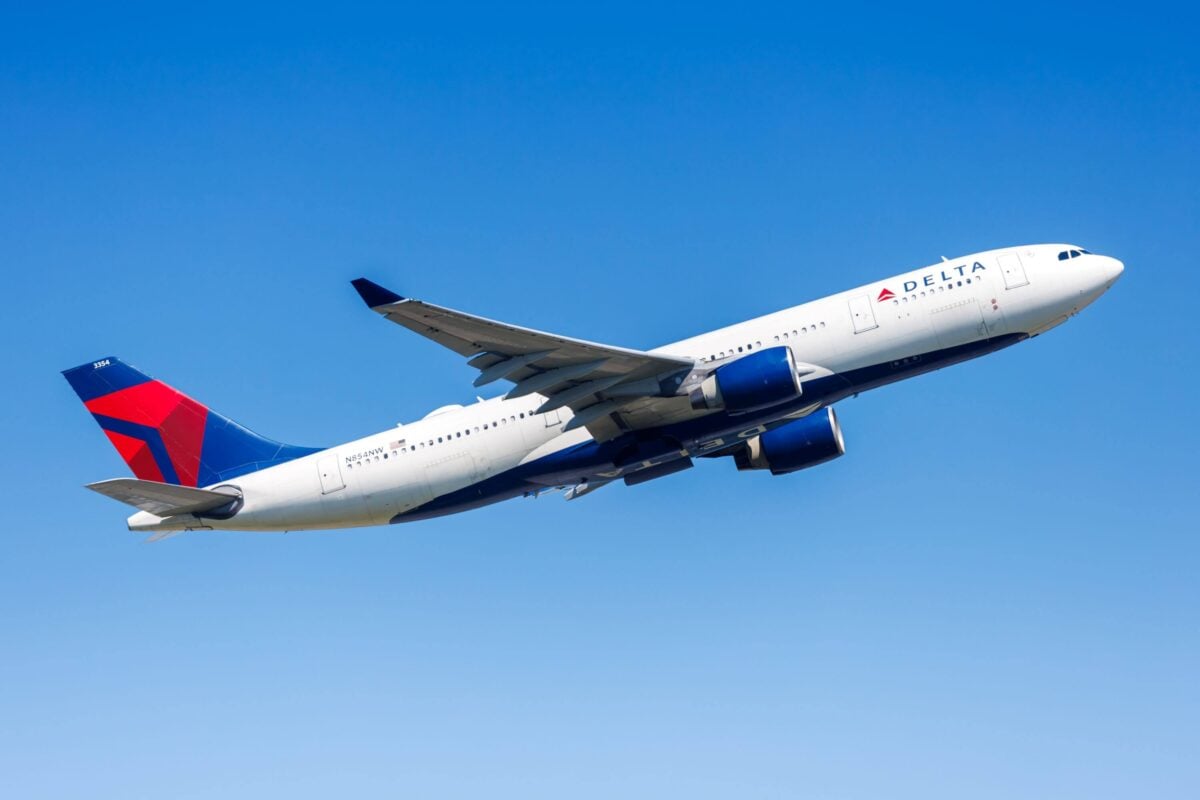
Delta Air Lines has come under renewed attention after one of its long-haul services to Nigeria was forced to reverse course over the Atlantic Ocean due to what the airline described as an “operational issue.”
Flight 54, operating from Atlanta to Lagos, did not reach its destination and instead returned to its departure hub after nearly eight hours in the air.
Eight Hours Aloft, No Destination
The Airbus A330-200 had already completed most of its eastbound journey when it turned back. According to flight tracking data, the aircraft departed Hartsfield-Jackson Atlanta International Airport in the evening, climbed to cruising altitude, and spent several hours progressing toward Africa before reversing direction mid-Atlantic.
By the time it landed back in Atlanta early the next day, passengers had effectively spent almost a full workday in the air without reaching Lagos. The airline later confirmed the flight was canceled upon return.

Passengers Face Disruption and Uncertainty
The reversal left more than 200 travelers unexpectedly back at their starting point, triggering frustration over limited communication and unclear onward travel arrangements. While Delta rebooked affected passengers on subsequent flights, some reported delays in receiving details about accommodations and alternative routes.
The airline stated that the aircraft landed safely and without incident, but did not provide specifics on what triggered the decision to turn the aircraft around, only referring to it broadly as an operational disruption.
Unanswered Questions Over Cause
Despite the safe landing, uncertainty continues to surround the root cause of the diversion. Industry speculation ranges from technical irregularities to operational or logistical factors, but Delta has not confirmed any details.
Following the incident, the aircraft remained in Atlanta for inspection, and the service was officially canceled. The disruption also affected the return leg between Lagos and Atlanta, which required rebooking passengers onto alternative flights.
Lagos Route Under Competitive Pressure
Delta’s Atlanta–Lagos corridor is part of a broader competitive transatlantic network that also includes services from other major carriers. The route is considered strategically important due to strong business, diaspora, and tourism traffic between the United States and Nigeria.
While operational disruptions are not uncommon in long-haul aviation, extended mid-air turnbacks are rare and tend to draw scrutiny due to their impact on passenger experience and operational costs.
For Delta, the incident adds pressure on an already high-profile international route, where reliability is a key factor in maintaining customer trust.
Get 3 Free Stock Ebooks
Discover top-performing stocks in AI, Crypto, and Technology with expert analysis.
- Top 10 AI Stocks - Leading AI companies
- Top 10 Crypto Stocks - Blockchain leaders
- Top 10 Tech Stocks - Tech giants


