



Key Takeaways
- The Dow Jones Industrial Average surged more than 500 points (1%) on Thursday, June 4, even as the S&P 500 and Nasdaq declined
- Broadcom (AVGO) stock plummeted over 14% following an AI chip revenue forecast that disappointed Wall Street
- Semiconductor sector weakness dragged the iShares Semiconductor ETF down 4.4%, pressuring tech stocks broadly
- Congress voted to conclude military operations with Iran after tensions escalated earlier this week
- SpaceX disclosed plans for a massive $75 billion initial public offering in regulatory documents
American equity markets experienced a notable divergence on Thursday, with traditional industrial stocks rallying while technology shares tumbled.
The Dow Jones Industrial Average advanced more than 500 points, representing approximately a 1% gain. Meanwhile, the S&P 500 declined roughly 0.2–0.3%, while the Nasdaq Composite dropped over 1%.
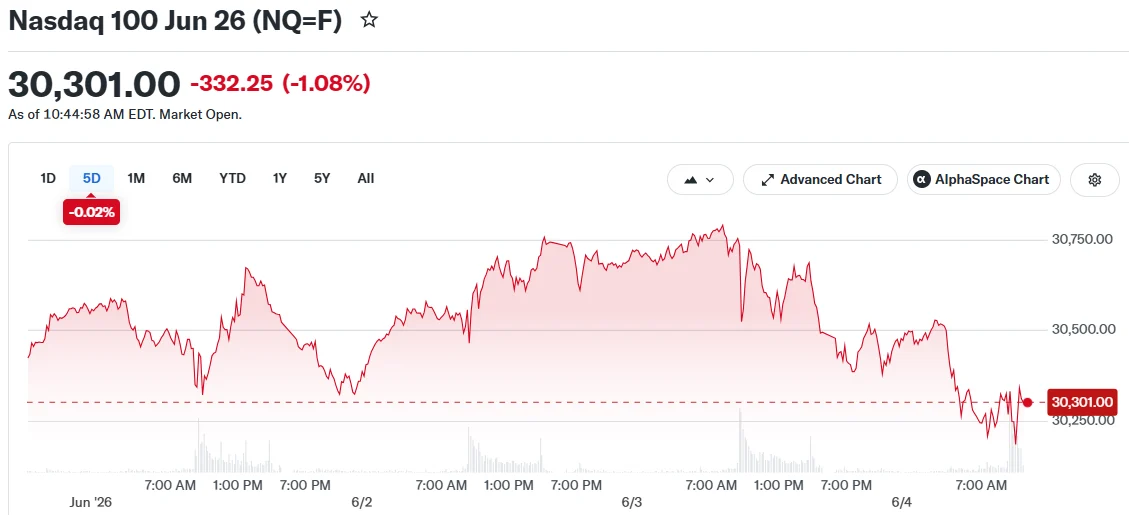
The divergence stood out as particularly noteworthy. The majority of components within both the Dow and S&P 500 posted gains during the session. However, substantial declines among semiconductor stocks proved powerful enough to drag the broader indexes into negative territory.
Broadcom’s Outlook Sparks Technology Sector Retreat
Broadcom stock tumbled more than 14% on Thursday following the chipmaker’s artificial intelligence revenue projection, which failed to meet elevated investor expectations.
While Broadcom’s quarterly earnings results exceeded analyst estimates, the guidance failed to satisfy shareholders after the stock’s substantial appreciation over the previous twelve months. The earnings beat and modest forecast increase proved insufficient to maintain momentum.

“All it takes is one company to at least temporarily wreck the party,” noted Paul Hickey, co-founder of Bespoke Investment Group. “Yesterday, the party pooper was Broadcom.”
The iShares Semiconductor ETF tumbled 4.4% during Thursday’s trading session. Additional chip manufacturers including Micron and Sandisk experienced declines as well.
Nvidia, the sole semiconductor company among Dow components, demonstrated relative resilience with just a 0.3% decline.
The technology-concentrated Nasdaq had posted consecutive daily gains for approximately two weeks prior to Thursday’s reversal. Market observers had cautioned that the rally was increasingly concentrated among fewer stocks — a trend that can leave indexes vulnerable to sudden reversals.
Geopolitical Developments, Employment Data, and SpaceX’s IPO Plans
Investors also processed new geopolitical headlines. The House of Representatives passed legislation on Wednesday to terminate military engagement with Iran. This legislative action followed a significant escalation earlier in the week — representing the most serious confrontation since an April ceasefire agreement.
Oil prices retreated on Thursday as President Trump outlined potential conditions for a ceasefire agreement. Both the dollar and Treasury yields softened in response.
With Friday’s May employment report approaching, market participants received two Thursday labor market indicators: weekly unemployment claims from the Bureau of Labor Statistics and corporate layoff statistics from Challenger, Gray & Christmas. Holiday-week effects contributed to elevated jobless claims.
Separately, SpaceX disclosed in a Securities and Exchange Commission filing its intention to pursue a $75 billion initial public offering — potentially ranking among the largest public debuts in history.
Corporate earnings season continued with anticipated quarterly results from Ciena Corporation, Lululemon Athletica, and DocuSign scheduled for Thursday.
Earlier this week, Alphabet’s capital raise reinforced market expectations for continued robust artificial intelligence investment. However, following the technology sector’s sharp rally, Broadcom’s results proved sufficient to unsettle investor confidence.
Both the S&P 500 and Nasdaq were tracking toward consecutive daily losses as the afternoon trading session progressed.
Get 3 Free Stock Ebooks
Discover top-performing stocks in AI, Crypto, and Technology with expert analysis.
- Top 10 AI Stocks - Leading AI companies
- Top 10 Crypto Stocks - Blockchain leaders
- Top 10 Tech Stocks - Tech giants


