


Key Takeaways
- Spot gold climbed 0.3% to approximately $4,700 during the opening of the two-day Trump-Xi meeting
- Chinese President Xi reported “positive progress” in trade discussions; Trump praised bilateral relations as stronger than ever
- U.S. producer price index advanced at the quickest rate since 2022, constraining gold’s upward momentum
- India increased import tariffs on gold and silver from 6% to 15%, potentially dampening physical market demand
- Senate approved Kevin Warsh as Federal Reserve chair while expectations for rate reductions remain subdued
Gold markets registered modest upward movement on Thursday as traders monitored the significant diplomatic meeting between U.S. President Donald Trump and Chinese President Xi Jinping, though accelerating inflation figures prevented more substantial advances.
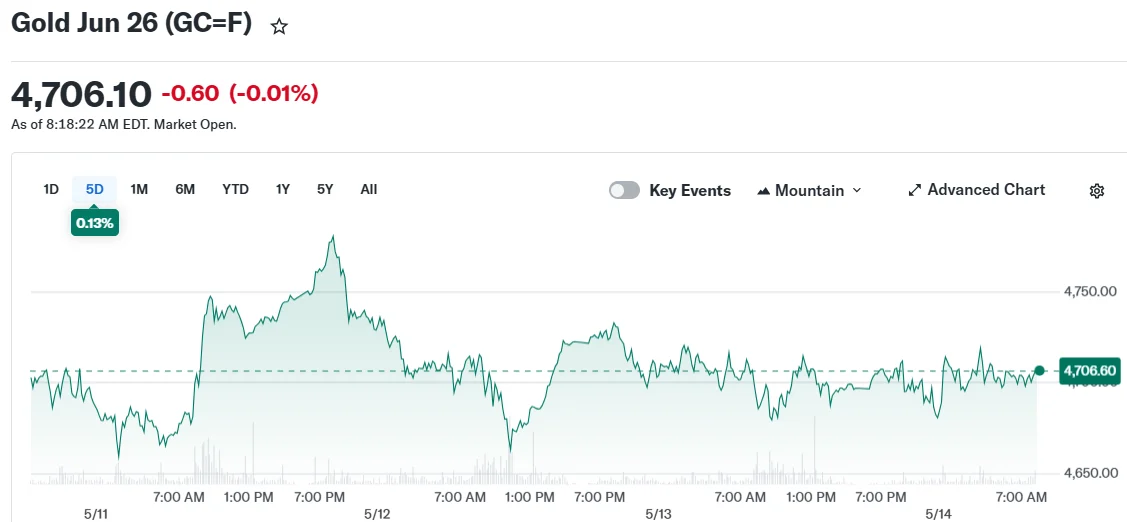
Spot gold advanced 0.3% to reach $4,700.25 per ounce during morning sessions. U.S. gold futures declined 0.2% to settle at $4,697.97. The marginal increase followed a two-day period of declining values.
The bilateral summit between the two global powers commenced in China for a two-day dialogue that captured significant attention from commodities traders. President Xi informed state-controlled media outlets that trade discussions were demonstrating “positive progress.” President Trump characterized Xi as “a great leader” and projected that relations between Washington and Beijing would be “better than ever before.”
Market participants were simultaneously monitoring developments related to the ongoing Iran conflict and its ramifications for worldwide petroleum supplies. Both Iran and the United States have implemented blockades at the Strait of Hormuz, a critical maritime passage responsible for transporting approximately 20% of global oil supplies. This disruption has driven crude prices significantly beyond the $100 per barrel threshold.
Certain market observers speculated that Trump might attempt to enlist China, which purchases substantial volumes of Iranian oil, to facilitate peace negotiations. Whether Beijing would assume such a mediating position remains uncertain.

Inflationary Pressures Constrain Gold Advances
Elevated oil prices have contributed to rising inflation throughout major global economies. The U.S. producer price index registered its most rapid increase in April since 2022. Consumer price measurements similarly exceeded analyst projections, primarily attributed to elevated energy expenses connected to the Iranian crisis.
These figures strengthened market expectations that the Federal Reserve will maintain elevated interest rates for an extended duration. This presents challenges for gold, which generates no interest income and typically experiences weaker performance during periods of sustained high rates.
The U.S. Dollar Index maintained levels close to a two-week peak following the inflation announcements. A strengthened dollar increases gold’s cost for international buyers transacting in alternative currencies, potentially suppressing overall demand.
The U.S. Senate additionally confirmed Kevin Warsh’s appointment as the incoming Federal Reserve chair on Wednesday, succeeding Jerome Powell. Warsh assumes leadership during a period when the Fed confronts competing pressures from inflation concerns and Trump administration appeals for interest rate reductions.
India Implements Higher Gold Import Tariffs
India revealed plans to raise import tariffs on gold and silver, escalating the rate from 6% to 15%. The policy adjustment aims to curtail the nation’s foreign purchases and bolster its foreign currency reserves.
India ranks among the globe’s most significant gold-consuming markets, satisfying the majority of its requirements through international imports. Combined gold and silver purchases account for approximately 11% of the country’s aggregate import volume.
Analysts from ING Group projected that the tariff escalation will likely diminish physical gold demand within India during the immediate future, creating downward pressure on domestic purchases and import activity.
Silver decreased 0.6% to $87.01 per ounce. Platinum declined 0.4% to $2,128.60. Copper futures on the London Metal Exchange retreated 1.3% to $13,953.33 per ton, withdrawing after reaching a peak of $14,191.48 per ton on Wednesday. Copper’s record high stands at $14,531.70 per ton, established in late January.
ING analysts observed that copper stockpiles outside the United States remain constrained, rendering prices vulnerable to additional demand fluctuations.
Get 3 Free Stock Ebooks
Discover top-performing stocks in AI, Crypto, and Technology with expert analysis.
- Top 10 AI Stocks - Leading AI companies
- Top 10 Crypto Stocks - Blockchain leaders
- Top 10 Tech Stocks - Tech giants


