


Key Highlights
- Bullion declined 0.5–0.6% on Tuesday, settling near $4,540–$4,544 per ounce
- Elevated Treasury yields and dollar strength are weighing on precious metals
- President Trump delayed additional Iran military action following Gulf nations’ diplomatic appeals
- The precious metal has declined approximately 14% since Middle East hostilities escalated
- Goldman Sachs reaffirmed its $5,400 per ounce year-end forecast for gold
Precious metals retreated on Tuesday as investors processed conflicting developments surrounding the US-Iran standoff. Spot gold shed 0.6% during early market hours, settling near $4,540 per ounce. Futures contracts for the yellow metal similarly weakened, declining 0.3% to reach $4,543.62 per ounce.
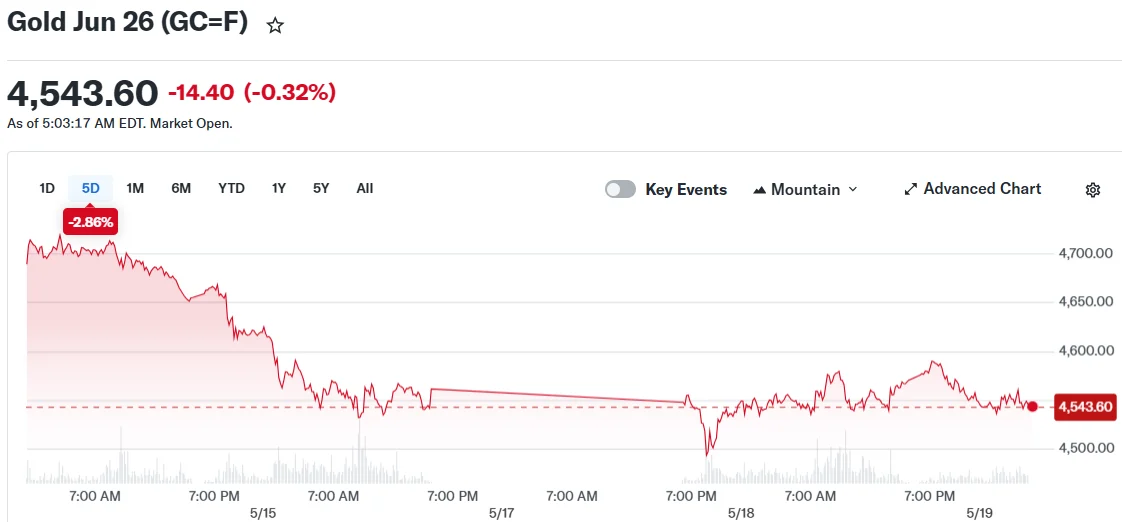
Tuesday’s decline followed a modest rebound during the previous session. Opportunistic buyers had emerged after bullion touched its lowest level in two-and-a-half months.
President Trump revealed Monday that he had greenlit fresh military operations against Iran but opted to delay implementation. Gulf state leaders from Qatar, Saudi Arabia, and the United Arab Emirates requested additional time to explore diplomatic channels.
Investors responded with measured caution to these developments. Although oil prices retreated following Trump’s announcement, persistent doubts about achieving a permanent resolution maintained market anxiety.
Interest Rate Environment Compounds Bullion Weakness
Treasury yields hovered near multi-year peaks on Tuesday. High yields diminish gold’s attractiveness since the metal generates no income for holders.

The US dollar climbed 0.2%, further eroding gold’s appeal by increasing its cost for international purchasers. These combined forces intensified downward momentum on the metal.
International fixed-income markets had experienced intense selling activity in recent sessions. US 10-year yields dropped 0.6% Monday evening following Trump’s statements, providing temporary market respite.
Japanese 10-year government bond yields had also retreated marginally from 29-year highs. The bond market turbulence stemmed from inflation anxieties connected to the Iran crisis.
The ongoing conflict has disrupted shipping through the Strait of Hormuz, a critical artery for worldwide petroleum transport. Despite Tuesday’s pullback, oil prices remain elevated, sustaining inflationary pressures.
Precious Metal Tumbles 14% During Conflict Period
Gold has surrendered nearly 14% of its value since the Iran hostilities commenced. The commodity has oscillated within a constrained band recently as traders weigh inflation threats against potential monetary policy easing.
Vasu Menon, a market strategist at Oversea-Chinese Banking Corp, indicated that Middle Eastern developments, petroleum valuations, and bond market dynamics could continue pressuring gold near-term. Nevertheless, he maintains that gold serves as an effective buffer against worldwide instability.
Goldman Sachs maintained its $5,400 per ounce year-end price objective. The financial institution pointed to anticipated robust central bank purchasing activity as fundamental support for its optimistic outlook.
Silver experienced sharper losses on Tuesday, dropping 2.2% to $76.05 per ounce. Platinum and palladium similarly posted declines.
Trump has consistently oscillated between threatening military intervention against Iran and reversing course, generating market turbulence across asset classes. Market participants are monitoring developments for definitive indications whether diplomatic efforts will prevail or military confrontation will intensify.
Get 3 Free Stock Ebooks
Discover top-performing stocks in AI, Crypto, and Technology with expert analysis.
- Top 10 AI Stocks - Leading AI companies
- Top 10 Crypto Stocks - Blockchain leaders
- Top 10 Tech Stocks - Tech giants


