


TLDR
- Gold declined 0.7% to $4,030 per ounce amid persistent inflation worries driven by climbing oil prices
- June U.S. producer prices unexpectedly declined 0.3%, surpassing forecasts, yet traders ignored the positive signal
- Fresh U.S. military action against Iranian facilities drove crude higher for four consecutive sessions
- Federal Reserve policymakers, including Chairman Kevin Warsh, reaffirmed dedication to achieving 2% inflation
- Investors now focus on upcoming Fed commentary for insights into monetary policy direction
Gold continued its downward trajectory on Thursday as escalating crude oil prices maintained inflation anxieties at the forefront, negating the positive impact of an unexpected decline in U.S. wholesale prices.
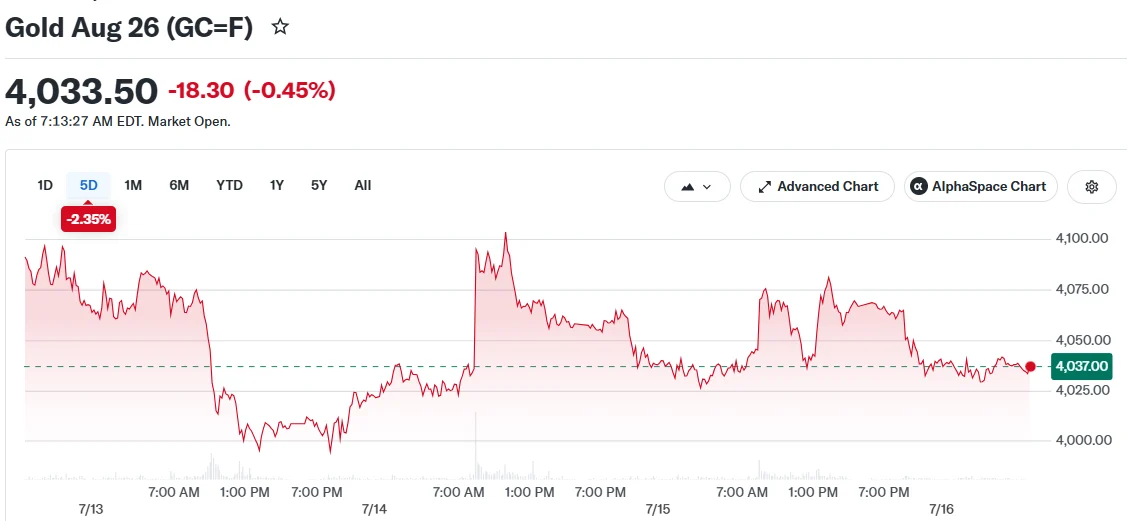
As of 06:05 ET, spot gold retreated 0.7% to $4,030.37 per ounce. Futures contracts for gold eased 0.4% to $4,037.10. Silver tumbled 1.7% to $56.78, while platinum decreased 0.6% to $1,667.20.
The decline occurred even as data revealed U.S. producer prices contracted 0.3% in June, significantly better than economist projections for a flat reading. This followed similarly encouraging consumer inflation figures released earlier in the week.
Combined, these economic indicators pointed toward cooling price pressures. However, market participants declined to respond favorably.
Crude Rally Rekindles Inflation Anxieties
The explanation centered on petroleum markets. Intensifying hostilities in the Middle East propelled oil prices upward for a fourth consecutive trading day.

The United States executed a fifth straight day of military strikes targeting Iranian infrastructure. President Donald Trump pledged to maintain military pressure until Iran ceases attacks on international shipping vessels and reopens passage through the Strait of Hormuz.
Both Brent and West Texas Intermediate crude benchmarks continued their ascent as traders monitored potential supply interruptions through the critical shipping channel.
Elevated petroleum prices increase the probability that inflation remains entrenched above the Federal Reserve’s 2% objective. This scenario could compel the central bank to maintain restrictive interest rates for an extended period beyond market expectations.
ANZ analysts highlighted that the critical issue is whether Federal Reserve officials interpret the oil price surge as a transitory disturbance or an enduring inflation threat.
Central Bank Policymakers Maintain Vigilance
Federal Reserve Chairman Kevin Warsh indicated this week that central bank officials remain steadfast in their commitment to restoring inflation to the 2% target. He emphasized that the Fed would recalibrate interest rates should price pressures demonstrate greater persistence.
Warsh also dismissed suggestions that substantial investment in artificial intelligence would independently generate higher inflation.
Fed Governor Lisa Cook stated she would endorse additional policy tightening if inflation remains elevated. New York Federal Reserve President John Williams described current interest rate levels as “well positioned” to guide inflation back toward the target.
Analysts at MUFG suggested gold’s immediate trajectory will hinge on whether climbing oil prices translate into broader U.S. inflation or remain a temporary geopolitical disturbance.
Traders are now monitoring forthcoming Federal Reserve speeches for clearer signals regarding the monetary policy trajectory.
Rising Treasury yields and dollar strength, both potential consequences if the Fed maintains its current stance, typically pressure gold by increasing its cost for international purchasers and diminishing its attractiveness as a non-interest-bearing asset.
Gold has maintained support above the $4,000 threshold thus far, but sustained pressure from energy markets and a hawkish Federal Reserve could challenge that level in upcoming trading sessions.
Get 3 Free Stock Ebooks
Discover top-performing stocks in AI, Crypto, and Technology with expert analysis.
- Top 10 AI Stocks - Leading AI companies
- Top 10 Crypto Stocks - Blockchain leaders
- Top 10 Tech Stocks - Tech giants


