


Key Highlights
- Hewlett Packard Enterprise delivered record fiscal Q3 adjusted earnings per share of $1.11, surpassing analyst expectations of $0.93, with quarterly revenue reaching $12.2 billion—a 34% year-over-year increase
- The company’s Cloud and AI segment generated $9 billion in revenue, climbing 25%, while its networking division experienced explosive 75% growth to $2.9 billion
- Management increased fiscal 2026 revenue growth guidance to 34%-37% and boosted fiscal 2027 projections to 13%-17% expansion
- Shares declined more than 5% in extended trading hours despite the earnings beat, as concerns over margin compression and component shortages dominated investor sentiment
- Chief Executive Antonio Neri cautioned that supply availability will stay “very constrained” until 2028, with memory components representing the primary supply chain challenge
Shares of Hewlett Packard Enterprise tumbled over 5% during after-hours trading Wednesday following the technology company’s release of record-breaking quarterly results. Prior to the earnings announcement, the stock had surged 116% year-to-date.
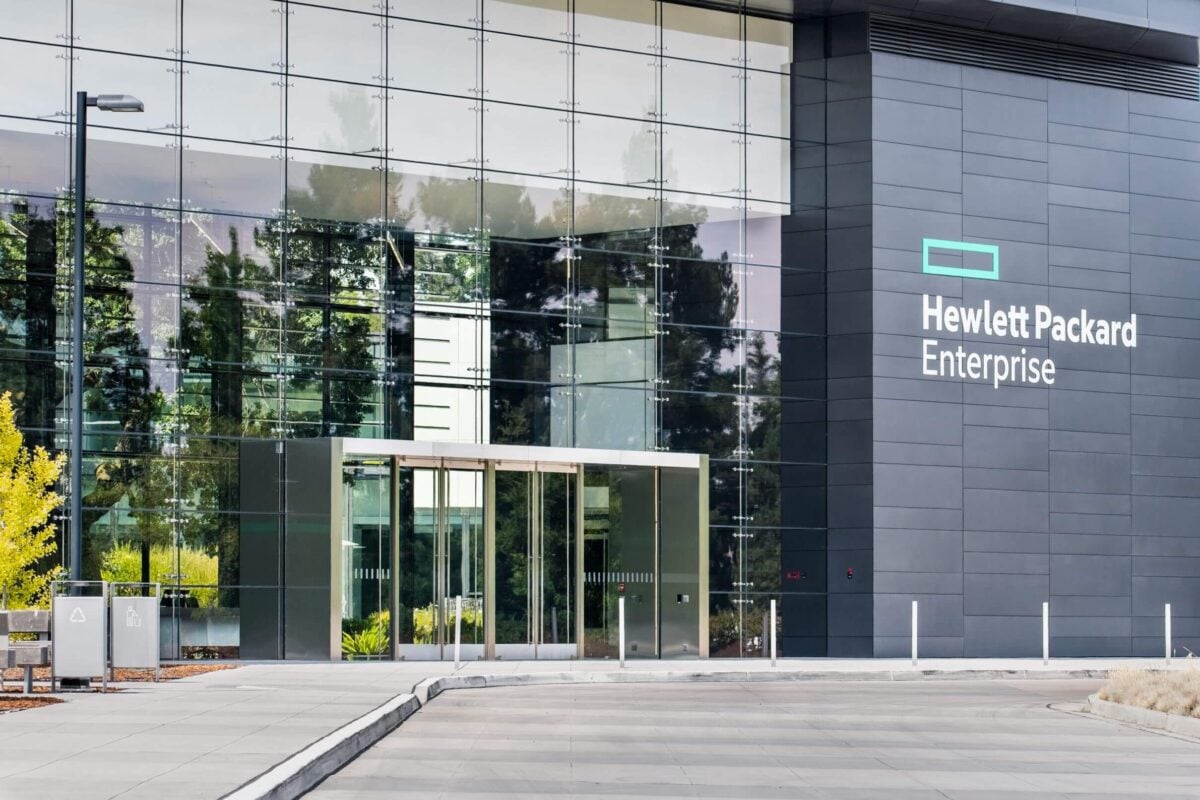
Hewlett Packard Enterprise Company, HPE
The company’s adjusted earnings per share landed at $1.11, representing a significant jump from $0.44 in the same period last year and comfortably exceeding the Wall Street consensus estimate of $0.93. Quarterly revenue of $12.2 billion climbed 34% compared to the prior year and surpassed analyst projections of $12 billion.
The Cloud and AI division delivered $9 billion in quarterly revenue, marking a 25% year-over-year increase. Server sales climbed 35% to reach $6.8 billion. The networking segment experienced particularly robust growth, soaring 75% to $2.9 billion.
The company also revealed an expanded partnership with Oracle focused on deploying HPE Juniper Networking solutions throughout Oracle’s artificial intelligence data center infrastructure.

Chief Executive Antonio Neri characterized the performance as “turning exceptional demand into durable, profitable growth.”
However, market participants responded cautiously to the announcement.
Component Shortages to Persist Until 2028
The enterprise technology provider’s most significant challenge currently involves securing adequate components to satisfy customer demand. Chief Financial Officer Marie Myers identified memory as the primary supply chain constraint, with NAND flash storage, processors, and hard drives also presenting difficulties.
“Demand is far outstripping supply,” Myers told Reuters.
While HPE has negotiated extended supply agreements to secure better access to critical components, shortages are anticipated to continue impacting order fulfillment capabilities and profitability margins.
Company leadership projected that operating margins will contract sequentially during the October quarter, primarily due to an increased proportion of AI system sales and competitive pricing dynamics.
Neri stated he does not anticipate supply constraints easing “anytime soon” and forecasts these challenges persisting through 2028.
The company’s inventory balance reached $11.82 billion at the conclusion of July, representing an increase from $7.16 billion one year prior. Myers explained the expansion reflects elevated commodity prices and strategic purchasing to accommodate expanding order volumes and backlog.
Company Increases Fiscal Year Projections
Hewlett Packard Enterprise elevated its revenue growth outlook for fiscal 2026 to a range of 34% to 37%, up from previous guidance of 29% to 33%.
For the upcoming October quarter, management projected revenue between $13.9 billion and $14.8 billion, with the midpoint exceeding the $13 billion analyst consensus. The adjusted EPS forecast of $1.20 to $1.30 also surpassed the $1.07 Street estimate.
Management additionally raised fiscal 2027 revenue growth expectations to 13% to 17%.
The company completed its Juniper Networks acquisition in July 2025 to strengthen its networking capabilities, which are now projected to expand 73% to 74% for the complete fiscal year.
Myers observed that enterprise artificial intelligence adoption is “really starting to settle in,” with the company anticipating this momentum to fuel expansion beyond the current fiscal year.
These quarterly results arrive following upgraded forecasts from Dell Technologies and Super Micro Computer, as technology companies collectively prepare to invest over $730 billion in AI infrastructure during the current year.
Get 3 Free Stock Ebooks
Discover top-performing stocks in AI, Crypto, and Technology with expert analysis.
- Top 10 AI Stocks - Leading AI companies
- Top 10 Crypto Stocks - Blockchain leaders
- Top 10 Tech Stocks - Tech giants


